Dermatographia Treatment: Every Option Compared and How to Build a Plan
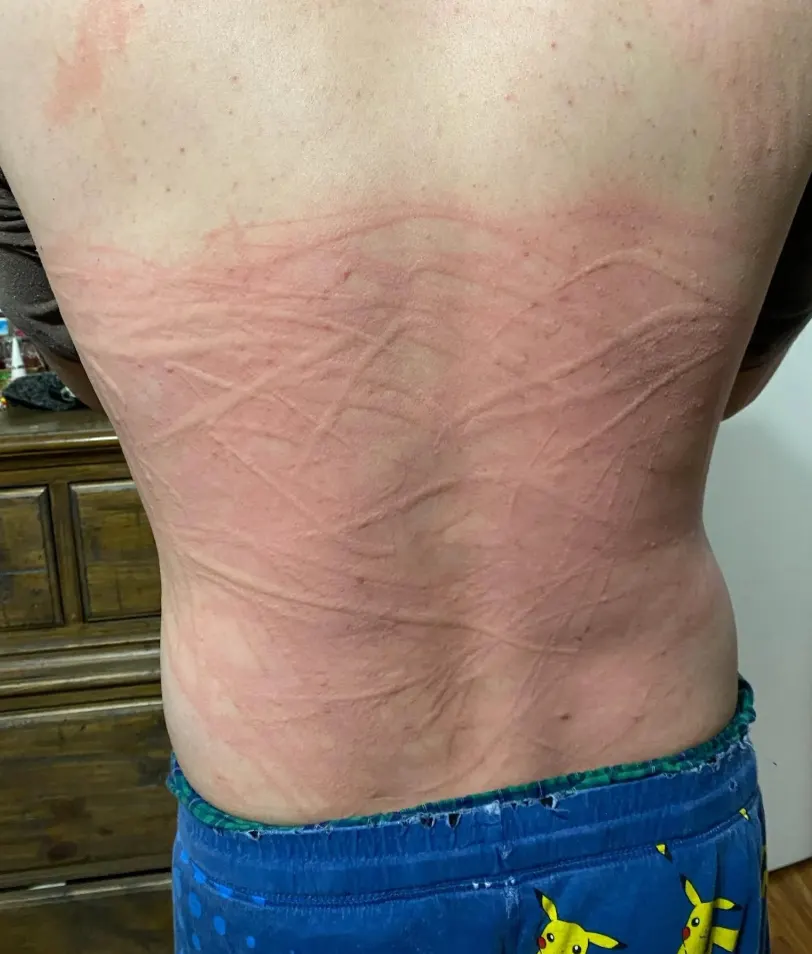
Short answerEffective dermatographia treatment stacks four layers: a daily preventive second-generation antihistamine at a dose your clinician sets, mechanical friction removal, consistent skin barrier repair, and heat and stress control. Second-line options such as adding an H2 blocker, a nighttime sedating antihistamine, or omalizumab are decisions for a physician when first-line control is not enough.
Every treatment option, compared
Before the detail, here is the whole landscape in one place: what each dermatographia treatment does, how quickly it works, and how strong the case for it is.
| Treatment | What it does | Time to effect | Evidence |
|---|---|---|---|
| Daily second-generation H1 antihistamine (cetirizine, loratadine, fexofenadine, bilastine) | Blocks histamine receptors before friction happens | Days to 2 weeks of consistent use | First line — strongest evidence |
| Supervised dose escalation of the same antihistamine | Raises receptor blockade when standard dosing is not enough | 1–4 weeks | Guideline-supported, clinician-directed only |
| Added H2 blocker | Targets a second histamine receptor family | 2–4 weeks | Mixed; sometimes added as a trial |
| Leukotriene modifier (e.g. montelukast) | Blocks a separate inflammatory pathway | 2–4 weeks | Add-on option in some patients |
| Omalizumab (biologic) | Targets IgE in severe refractory chronic urticaria | Weeks to months | Strong in refractory cases; specialist prescribing |
| Friction reduction (clothing, straps, nails, towel habits) | Removes the mechanical trigger that starts every welt | Immediate | Consistently reported; free |
| Barrier care — bland ceramide moisturiser twice daily | Raises the itch threshold so there is less scratching | 1–2 weeks | Good supportive evidence |
| Cold compress on an active reaction | Constricts dilated vessels and dampens itch signalling | Minutes | Symptomatic relief only |
| Sleep and stress management | Raises the threshold at which reactions start | Weeks | Well documented as a modifier |
| Topical steroids | Little effect on a pressure-driven reaction | — | Not supported for this use |
| Broad elimination diets | Rarely helpful without a genuine allergy | — | Not supported; narrow testing is better |
Why most plans fail
The two most common mistakes are taking an antihistamine only after welts appear, and changing four things at once so you never learn which one worked. Reactive dosing means you are always treating a flare that has already happened; preventive dosing means the histamine block is already in place when pressure arrives.
A plan you follow imperfectly for six months beats a perfect plan you abandon in nine days. Build for the boring version of yourself.
The other quiet failure mode is treating this as a project with an end date. I spent years looking for the point where I could stop the routine entirely. There usually is not one. The realistic target is a routine light enough to sustain indefinitely — a moisturiser you actually enjoy using, a wardrobe you do not resent, and a pill you barely notice taking — rather than an intense short program you plan to graduate from.
Layer 1: antihistamines, used preventively
Second-generation, non-sedating antihistamines are the accepted first line for chronic inducible urticaria. Guidelines allow dose escalation above the standard over-the-counter dose when standard dosing is not enough — but that escalation is a clinician's call, not something to self-prescribe.
Consistency matters more than the specific molecule for most people. Missing doses two or three times a week is a common reason a 'failed' antihistamine trial was never really given a fair test. Set a phone reminder at the same time daily until it becomes automatic — for me that took about three weeks before I stopped needing the alarm.
- Take it daily and preventively, at the same time each day, rather than in response to a flare.
- Give any dose level a genuine two-week trial before judging it.
- If one molecule does little, another in the same class often works better — switching is normal.
- Some clinicians add an H2 blocker, or a sedating antihistamine at night when itch is wrecking sleep.
Layer 2: take the friction out of your day
This is the layer people skip and the one that changed the most for me. Every repeated mechanical contact is a small dose of the trigger, and they add up across a day until the skin sits permanently near its threshold.
Do a slow walk-through of a typical day and note every point of repeated contact: the elastic in your socks, the strap on your watch, the seam in your jeans pocket, the way your bag sits on one shoulder for an hour on the commute. Most people find four or five contact points they had never consciously registered as pressure sources, simply because they had stopped noticing them.
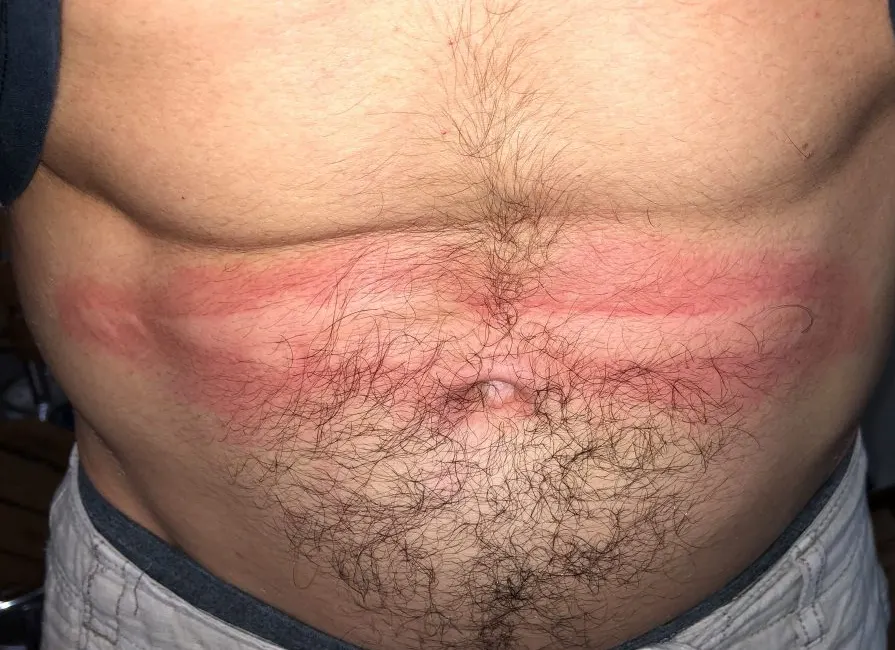
- Seamless, loose, smooth-weave clothing; avoid tight waistbands, bra bands, and elastic cuffs.
- Cross-body bag straps and backpacks are frequent offenders — switch shoulders or switch bags.
- Pat dry after showering instead of rubbing, and drop the water temperature.
- Silk or high-quality cotton bedding reduces overnight friction and heat.
- Trim nails short so unconscious night scratching does less damage.
Layer 3: repair the barrier
Dry, compromised skin reacts at lower pressure. A fragrance-free ceramide moisturiser applied to damp skin twice daily is unglamorous and slow, and it is the reason my baseline reactivity dropped. Give it eight weeks before you decide whether it helped.
Fragrance, essential oils, and harsh surfactants work against this layer. Simplify the routine until it is boring.
Application technique matters as much as the product. Applying to towel-dried but still slightly damp skin within a few minutes of showering traps more moisture than applying to fully dry skin later. It is a small habit change, but over months it compounds noticeably.
Layer 4: heat and stress
Both act system-wide rather than at one spot, which is why a stressful week produces flares in places nothing touched. Cooler showers, a cooler bedroom, and any stress practice you will genuinely keep doing all raise the threshold. Cold exposure helps some people acutely; it is not a cure, but it does calm an active flare.
I keep a cold pack in the freezer specifically for bad flare evenings — not as a treatment, just as a way to get through an hour of intense itching while the antihistamine and barrier routine do the slower work in the background.
Three plans by severity
Pick the one that matches where you are now, run it for eight weeks without adding anything else, then reassess.
- Mild — welts only from deliberate scratching: barrier routine twice daily, friction audit of clothing and bags, antihistamine kept for bad days.
- Moderate — daily welts from ordinary contact: everything above plus a daily preventive antihistamine, cooler showers, and silk bedding.
- Severe — constant itch, disrupted sleep, welts lasting hours: everything above, plus a clinician appointment to discuss dose escalation, an H2 blocker, a nighttime sedating antihistamine, or referral for options such as omalizumab.
Second-line options a clinician might discuss
If layers one through four are genuinely in place for eight to twelve weeks and control is still poor, that is the point to ask specifically about escalation rather than trying yet another over-the-counter product. Options a physician might consider include higher-than-standard antihistamine dosing, adding an H2 blocker such as famotidine, a short course of a sedating antihistamine at night for sleep, or in more resistant chronic urticaria cases, a biologic such as omalizumab. These are prescribing decisions that depend on your full medical history, and none of them should be pursued without a clinician involved.
Tracking whether the plan is working
Keep the same simple log described elsewhere on this site: welt severity, itch, and duration, scored daily. Review it every two weeks rather than daily, because day-to-day noise is large and can discourage you before a real trend has had time to show up. Bring the log to appointments — it turns a vague 'it's been rough' into something a clinician can actually act on.
When to seek urgent care
Welts alone, however uncomfortable, are not an emergency. But if you ever notice swelling of the lips, tongue, or throat, wheezing, or difficulty breathing alongside welts, treat that as a medical emergency and seek urgent care immediately — that combination is not ordinary dermatographia and needs assessment right away.
Related reading
If this was useful, these go deeper on the questions people ask next.
Find out what's driving your dermatographia
Answer 12 quick questions and get a personalized severity score, your top drivers, and a staged 30-day plan built around your own skin.
Get My Dermatographia ScoreFrequently asked
- What is the most effective treatment for dermatographia?
- A daily second-generation H1 antihistamine taken preventively is first-line and has the strongest evidence. It works best combined with friction reduction and barrier care; dose changes and add-on therapies such as an H2 blocker, a leukotriene modifier or a biologic are clinician decisions for cases that persist.
- How do you treat dermatographia at home?
- Reduce mechanical friction (seamless fabrics, looser straps and waistbands, short nails, patting dry instead of rubbing), moisturise damp skin twice daily with a bland fragrance-free product, use a cool compress on active reactions, and keep skin cool. Medication should be discussed with a doctor or pharmacist.
- What is the best treatment for dermatographia?
- A daily preventive second-generation antihistamine at a clinician-set dose, combined with friction removal, barrier repair, and heat and stress control. No single element works as well alone.
- Can I increase my antihistamine dose myself?
- No. Guidelines do allow doses above standard over-the-counter levels for chronic urticaria, but that decision belongs to a physician who knows your history and other medications.
- How long before a treatment plan shows results?
- Give antihistamine changes two weeks and barrier work eight weeks. Judging either sooner usually leads to abandoning something that was working.
- Is omalizumab a normal option for dermatographia?
- It is generally reserved for more resistant chronic urticaria that has not responded to standard antihistamine approaches, and it is prescribed and monitored by a specialist rather than a first-line treatment.
- Do topical steroids help dermatographia welts?
- They are not typically recommended for routine dermatographia because the welts are transient and driven by histamine release rather than ongoing inflammation; antihistamines address the mechanism more directly. Ask a dermatologist if a specific area needs targeted treatment.
- Can I combine an H1 and H2 antihistamine on my own?
- Some clinicians do combine them, but the choice of agents and doses should be made with your doctor, particularly because H2 blockers can interact with other medications.
- What should I do if my plan stops working after months of success?
- Revisit the four layers first — a missed dose pattern, a new friction source, or a stressful period are common causes — before assuming you need a new medication. If it persists past a few weeks despite that review, bring it back to your clinician.
Sources
Clinical background on this page is checked against the following published sources. My own experience and interviews are labelled as such in the text.