The Friction-Free Wardrobe
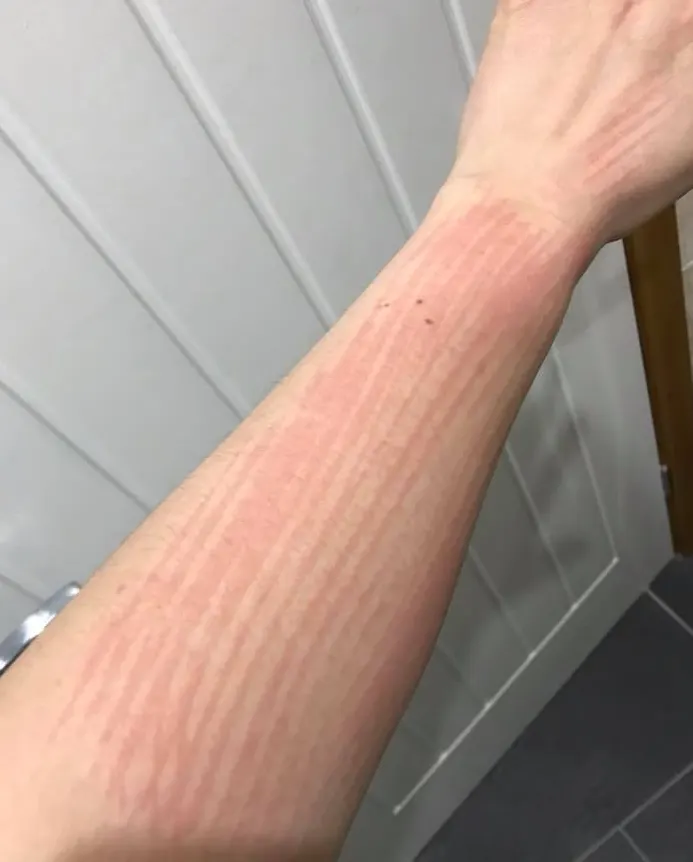
Short answerFabric choice is a physical intervention: seamless knits, breathable bamboo or modal, relaxed fits, and tagless collars remove the repeated micro-friction that provokes wheals.
Map the welts before you buy anything
For one week, note where welts appear. If they trace a waistband, a bra band, a sock cuff, or a collar seam, you have found a mechanical trigger you can remove for the price of a single garment.
I kept a very unglamorous note in my phone for about ten days: time, location on the body, and what I had been wearing or doing right before. Patterns showed up faster than I expected — my watch strap and one particular backpack strap were doing more damage than I had ever given them credit for.
What to look for
Prioritise fabric and construction over brand:
- Seamless or flat-lock construction on anything worn against the skin.
- Bamboo viscose, modal, or fine merino — smooth fibres that move with the skin.
- Tagless collars, or cut tags out entirely.
- Relaxed fits: compression multiplies contact pressure across the whole garment.
- Wide, soft elastic instead of narrow bands.
Laundry counts too
Fabric softener residue and heavily fragranced detergents leave a film that can irritate reactive skin. A fragrance-free detergent and an extra rinse cycle is a cheap experiment that occasionally solves the whole problem.
Some people also find that stiff new fabric behaves very differently after a handful of washes, once the manufacturing finish has washed out. If a new garment flares you the first time you wear it, it can be worth washing it twice before writing it off completely.
Layering and seasonal swaps
Layering introduces extra seams and extra friction points, which is worth remembering in colder months. A single well-chosen base layer in a smooth fabric can do more good than three loosely stacked layers of scratchy wool. In summer, breathable and moisture-wicking fabrics matter for a different reason: sweat trapped against skin adds heat, and heat on its own worsens wheal size for many people with dermatographia.
I keep a small rotation of base layers I trust through the colder months and swap them out for lighter bamboo tees as soon as the weather allows. It sounds fussy written down, but in practice it is just two or three garment types I know work, repeated.
Footwear, accessories, and the small stuff
Socks with tight elastic bands, underwire bras, and watch straps are underrated culprits because they sit against skin for hours without you thinking about them. Switching to seamless socks and wire-free bras removed two recurring flare sites for me almost immediately.
Jewellery and accessories worth reconsidering include anything with a clasp or buckle that presses consistently against one spot — rings that have started fitting snugly, tight hair ties worn as bracelets, and belts cinched a notch tighter than comfortable are common repeat offenders.
- Seamless socks with soft, wide cuffs.
- Wire-free, wide-band bras.
- Looser watch straps or alternating wrists.
- Belts with a notch of breathing room rather than a snug fit.
Building the wardrobe gradually
You do not need to replace everything you own in one weekend. I replaced the highest-contact items first — underwear, socks, and the shirts I wore most often — and left everything else until it wore out naturally. That approach kept the cost manageable and still removed the majority of my worst triggers within a couple of months.
Sleepwear and bedding
Nighttime is when a lot of people report their worst flares, partly from body heat trapped under blankets and partly from turning against seams while asleep. Smooth, breathable sleepwear without tight cuffs, and bedding washed in fragrance-free detergent, made a noticeable difference for me within about a week of switching.
A cooler bedroom temperature overnight also seems to help many people, since heat on its own tends to worsen wheal size regardless of what fabric is involved.
Find out what's driving your dermatographia
Answer 12 quick questions and get a personalized severity score, your top drivers, and a staged 30-day plan built around your own skin.
Get My Dermatographia ScoreFrequently asked
- Is cotton good for dermatographia?
- Soft cotton is fine, but its seams and stiff waistbands are often the real culprit. Construction matters more than the fibre itself.
- Do compression garments help urticaria?
- Not for dermatographia. Sustained pressure is itself a trigger, so relaxed fits usually work better than compression.
- How long should I trial a new fabric before judging it?
- Give it at least a few wears, ideally after one wash, since new garments can behave differently once any manufacturing finish has washed out.
- Are merino wool base layers safe for sensitive skin?
- Fine merino is often well tolerated because the fibres are smooth and thin, but coarser wool can feel scratchy and provoke a reaction, so quality matters more than the fibre name alone.
- Should I avoid tight bra bands entirely?
- Not necessarily avoid, but a wider, softer band that does not dig in over the course of a day tends to cause far fewer welts than a narrow underwire band.
Sources
Clinical background on this page is checked against the following published sources. My own experience and interviews are labelled as such in the text.