Waistbands, Straps and Collars: Pressure Marks Explained
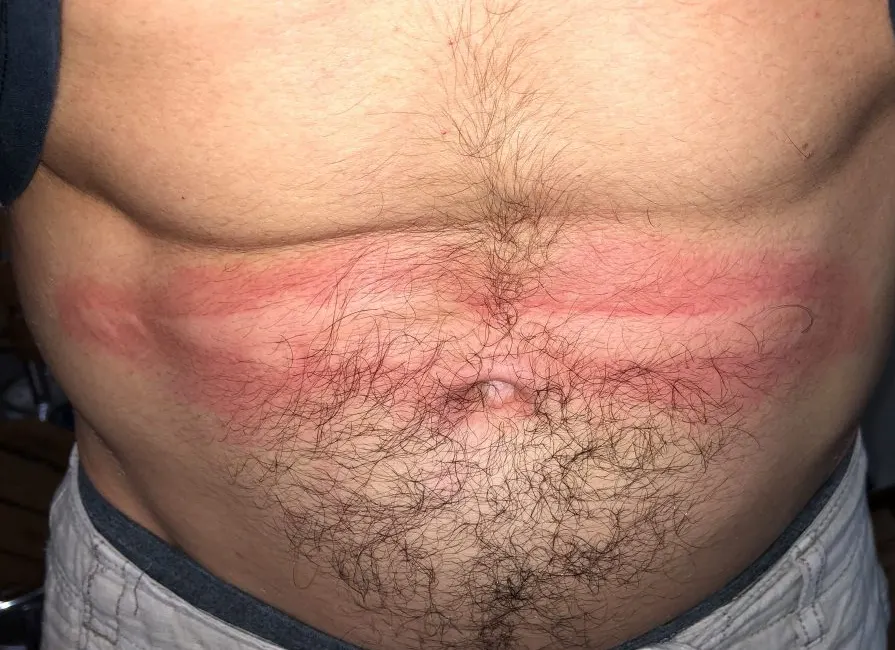
Short answerSustained pressure from waistbands, bra bands, straps and collars produces wheals in exactly the shape of the item because the force is constant rather than momentary. Loosening fit, widening straps and switching to seamless fabrics removes most of these marks without any medication change.
Momentary versus sustained pressure
A scratch is one burst of force. A waistband applies force for hours, so mast cells in that strip keep degranulating and the wheal is often wider, hotter and slower to fade than a scratch line.
The usual suspects
Most people can name their marks from the shape alone.
- Waistbands and elasticated shorts — a horizontal band across the abdomen.
- Bra bands and underwires — a mirrored line under the chest and across the back.
- Backpack and bag straps — twin vertical stripes over the shoulders.
- Watch straps, sock cuffs and tight sleeves — clean rings around limbs.
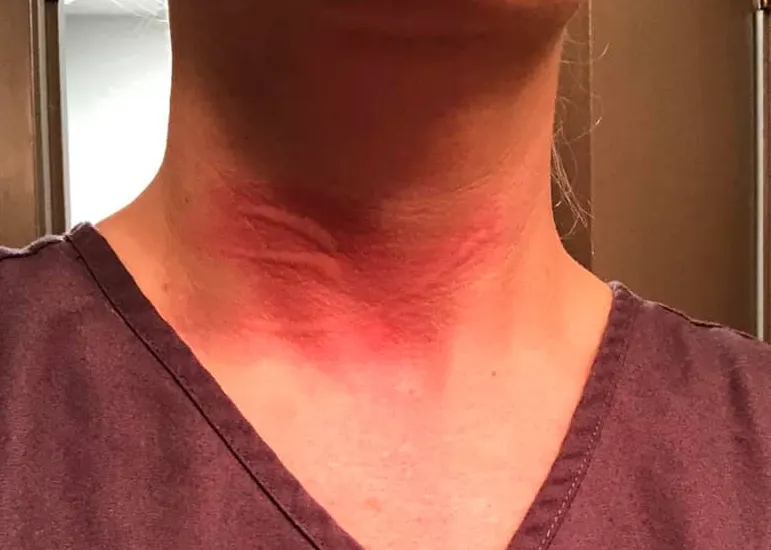
- Collars, lanyards and scarves — irritation along the neckline.
Fixes that work
Every fix here is about spreading force over a wider area, reducing tension, or removing a hard edge.
- Go one size up in anything elasticated, or choose soft-waist designs.
- Choose wide, padded straps and switch shoulders regularly.
- Wear a seamless base layer under structured garments.
- Remove watches and lanyards during long desk sessions.
Bedding counts too
Sheet creases, seams and duvet folds apply the same sustained pressure for eight hours. Smooth, breathable bedding and a cooler room reduce the morning marks a lot of people assume are unavoidable.
Footwear and sock lines
Tight sock cuffs and stiff shoe backs produce the same sustained-pressure marks as waistbands, just lower down and easier to ignore. Seamless, looser-cuffed socks and shoes with a soft heel collar reduce this considerably, especially on long walking or standing days.
Work equipment: bags, belts and lanyards
Anyone carrying a laptop bag, tool belt or ID lanyard for a full shift is applying hours of sustained pressure in the same spot every single day. Rotating which shoulder carries the load, padding a belt, or swapping a lanyard for a badge reel clipped loosely to a pocket removes a surprisingly large source of daily welting.
A practical wardrobe audit routine
Once a month, lay out a typical day's outfit and check each item for anything that presses in one place for hours: waistbands, underwire, sock cuffs, watch straps, bag straps. Anything leaving a visible mark by the end of the day is worth replacing or loosening. It sounds tedious the first time, but after the initial pass it becomes a quick habit rather than a project.
Prioritise the items you wear daily over occasional ones — a single loosened waistband or a switch to seamless socks usually removes more welting than several smaller tweaks to clothing you only wear occasionally.
What didn't work for me
I initially assumed compression clothing, marketed as supportive, would be gentler on my skin than regular fitted clothing, and it made things noticeably worse — the even pressure was still sustained pressure, and my skin reacted across the whole covered area rather than in a narrow band. It's a reminder that 'supportive' and 'gentle on reactive skin' aren't the same thing.
Common myths about pressure marks
A few ideas don't hold up: that pressure marks mean clothing is too tight in a way that would bother anyone (often it's well within normal fit, just enough for sensitised skin), that only cheap or rough fabric causes them (even soft, well-made items with a firm band can trigger a mark), and that the marks indicate bruising or damage (they're a histamine response and typically leave no lasting mark).
What to expect once you make these changes
Most people notice a fairly quick reduction in the number of visible pressure marks within the first couple of weeks of swapping out the worst offenders, since this is one of the more directly controllable triggers compared with things like stress or hormones. It won't eliminate flares entirely on its own, but paired with a consistent antihistamine routine it tends to make a noticeable dent in day-to-day symptoms.
Find out what's driving your dermatographia
Answer 12 quick questions and get a personalized severity score, your top drivers, and a staged 30-day plan built around your own skin.
Get My Dermatographia ScoreFrequently asked
- Why do I wake up with welts?
- Overnight heat plus sustained pressure from sheet creases and seams is a classic combination. Cooler bedding and smoother fabrics usually reduce it.
- Are pressure welts the same as delayed pressure urticaria?
- No. In delayed pressure urticaria swelling begins hours after the pressure and can last a day or more; discuss that pattern with a clinician.
- Can compression garments help or hurt dermatographia?
- Compression applies broad, even sustained pressure, which some people tolerate reasonably well since the force is distributed rather than concentrated in a thin band, but others still react; trial a small area first.
- Why do seatbelts always leave a mark?
- A seatbelt combines a narrow contact width with sustained pressure over a drive, which is close to a worst-case combination for dermatographia; a seatbelt pad or cover that widens the contact area often helps.
- Do wider straps really make a measurable difference?
- Yes, generally — spreading the same load over a wider area reduces the force per square centimetre of skin, which for many people is enough to keep a strap below the threshold that triggers a wheal.
- When are pressure marks worth a medical opinion?
- If the marks show up hours after the pressure rather than minutes, and feel deep, sore or burning rather than itchy, that pattern is different from dermatographia and worth describing to a clinician precisely as you experience it.
Sources
Clinical background on this page is checked against the following published sources. My own experience and interviews are labelled as such in the text.