Stress, Anxiety and Dermatographia
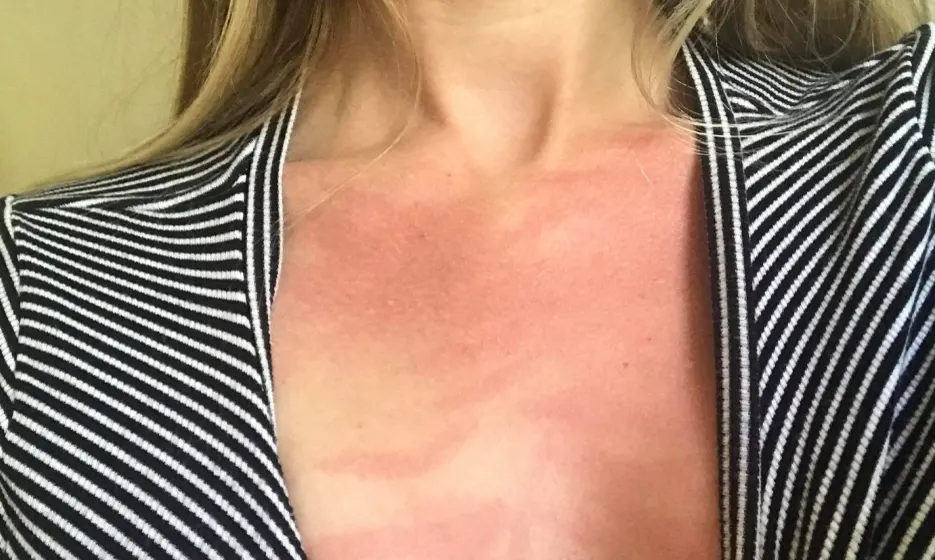
Short answerStress does not cause dermatographia, but it makes it worse. Stress hormones and stress-related neuropeptides make skin mast cells easier to tip over, so the same light pressure produces a bigger, itchier welt on a bad week than on a calm one. The itch then feeds the anxiety, which feeds the scratching. Breaking that loop — through sleep, consistent antihistamine cover, and anything that genuinely lowers your baseline stress — usually does more than chasing individual triggers.
The honest version: trigger, not cause
If your skin started writing during a divorce, a house move, a bereavement or a brutal stretch at work, it is natural to conclude that stress caused it. It almost certainly did not. Dermatographia is an inducible urticaria — the underlying tendency for skin mast cells to release histamine under mechanical pressure sits there whether you are calm or not.
What stress does is move the threshold. On a settled week, a seam might do nothing. On a week when you are sleeping five hours and running on adrenaline, the same seam leaves a raised band that itches for half an hour. Same condition, different sensitivity.
That distinction matters, because people who believe stress is the cause tend to spend months trying to relax their way out of a physical condition — and then blame themselves when the welts stay.
What stress actually does to a mast cell
Mast cells sit next to nerve endings in the dermis, and they listen to them. Under stress, nerve endings release signalling molecules — substance P and corticotropin-releasing hormone are the two named most often in the research — and mast cells carry receptors for both. The effect is to prime the cell: it takes less mechanical force to make it release its histamine granules.
Cortisol complicates the picture rather than simplifying it. Short bursts of cortisol are anti-inflammatory, which is part of why some people feel briefly better in an acute crisis and much worse a week later, when the system is depleted and cortisol is running low overnight.
This is also why stress-related flares often feel disproportionate. Nothing about the pressure changed. The reception did.
The itch–scratch–anxiety loop
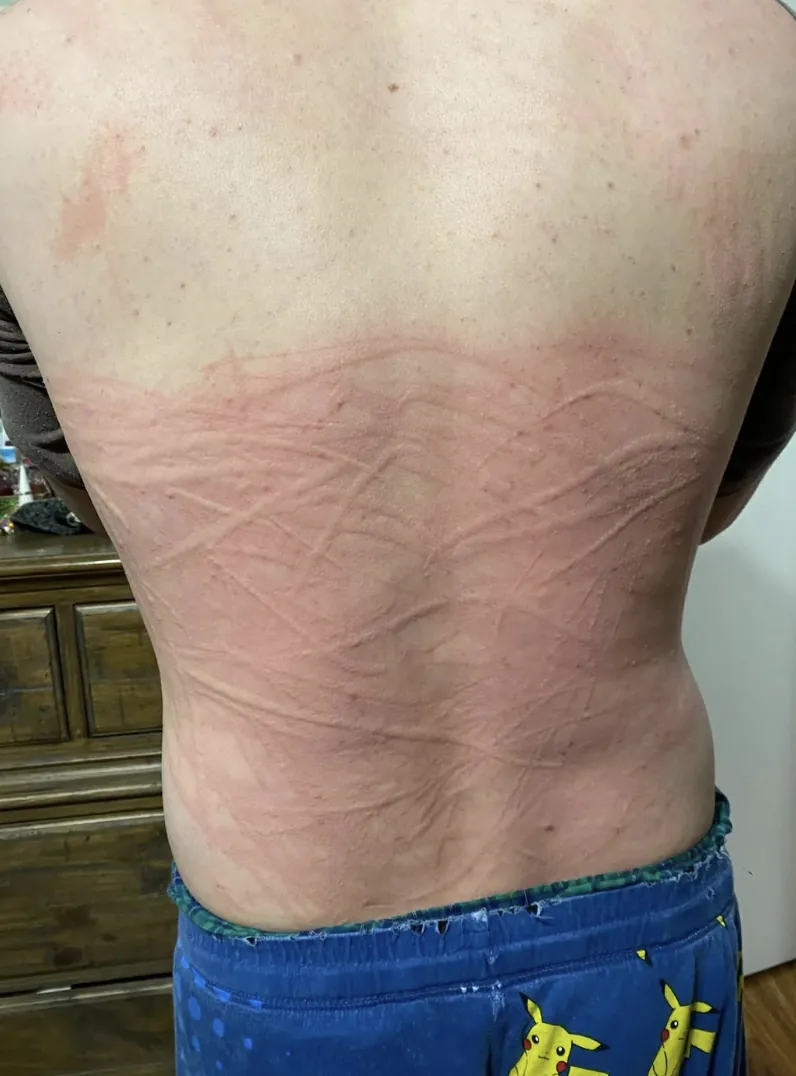
The uncomfortable part of stress-driven dermatographia is that it is circular. Stress lowers the threshold, so you welt more. Welting itches, so you scratch. Scratching is itself mechanical pressure, so it produces more welts. Visible welts on your arms or neck are embarrassing, which raises anxiety, which lowers the threshold again.
Most people can identify where they enter the loop. For me it was always evening: a difficult day, a hot shower, and then an hour of absent-minded scratching in front of the television without noticing I was doing it.
Interrupting the loop anywhere works. It does not have to be the stress end.
What helps, ranked by how much it actually moves the needle
In roughly the order that people report benefit:
- Consistent daily antihistamine cover during a stressful period, rather than reactive dosing after the welts appear — discuss dose and timing with a clinician.
- Sleep. It is the single largest lever on next-day skin reactivity, and the hardest one to pull during a stressful stretch.
- Keeping nails short and hands occupied in the evening, which cuts the mechanical half of the loop without requiring you to feel calmer.
- Cool showers rather than hot, since heat and stress stack on top of each other.
- Anything that genuinely lowers baseline arousal for you — walking, breathwork, therapy, exercise. The specific method matters far less than doing it regularly.
What does not help
Being told to relax. Elimination diets adopted during a stressful month, which usually add a second thing to worry about. Supplements marketed for cortisol, none of which have evidence in urticaria. And treating a stress flare as proof that the condition is psychosomatic — it is not, and clinicians who suggest it is are working from an outdated idea.
If someone has told you dermatographia is 'all in your head', that is worth pushing back on. The wheal is measurable, reproducible with a dermographometer, and driven by histamine. Stress modulates it. It does not invent it.
When to raise it with a doctor
If a stressful period has pushed you from occasional welts to daily symptoms that interfere with sleep or work, that is a reason to be seen rather than to wait it out. Standard-dose antihistamines are not the ceiling of treatment, and guidelines allow supervised escalation for chronic urticaria.
It is also worth saying if anxiety itself has become the larger problem. Treating the anxiety properly often improves the skin as a side effect, and it is a more honest target than trying to out-moisturise a stress response.
Find out what's driving your dermatographia
Answer 12 quick questions and get a personalized severity score, your top drivers, and a staged 30-day plan built around your own skin.
Get My Dermatographia ScoreFrequently asked
- Can stress alone bring on welts without any scratching?
- Rarely. Stress lowers the threshold rather than replacing the trigger, so there is almost always some pressure involved — clothing, leaning, or scratching you did not register.
- Why did my dermatographia start during the worst year of my life?
- A stressful period commonly reveals a tendency that was already there by pushing your reaction threshold low enough for ordinary pressure to produce visible welts.
- Will the welts stop once the stressful period ends?
- Often they settle considerably, but the underlying inducible urticaria usually remains and can flare again. Improvement is common; a clean disappearance is not guaranteed.
- Do anxiety medications help skin writing?
- They are not a treatment for urticaria, but if anxiety is driving nightly scratching and poor sleep, treating it properly often reduces how reactive the skin is. That is a conversation for your doctor.
- Is a stress flare different from an ordinary flare?
- No — the welts look and behave the same. What changes is how little pressure it takes to produce them and how long they take to settle.
Sources
Clinical background on this page is checked against the following published sources. My own experience and interviews are labelled as such in the text.