When Dermatographia Becomes Chronic Urticaria: Biologics and Xolair
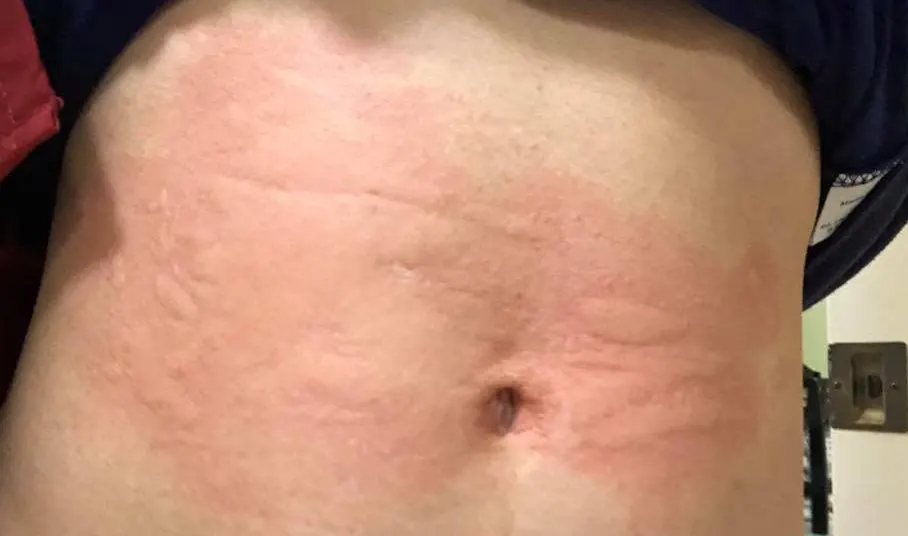
Short answerIf you have daily symptoms for more than six weeks and a supervised higher dose of antihistamines still is not controlling them, that is treatment-refractory chronic urticaria. The next step in international guidelines is usually omalizumab (Xolair), a monthly injectable antibody that lowers how easily mast cells fire.
Where the line actually sits
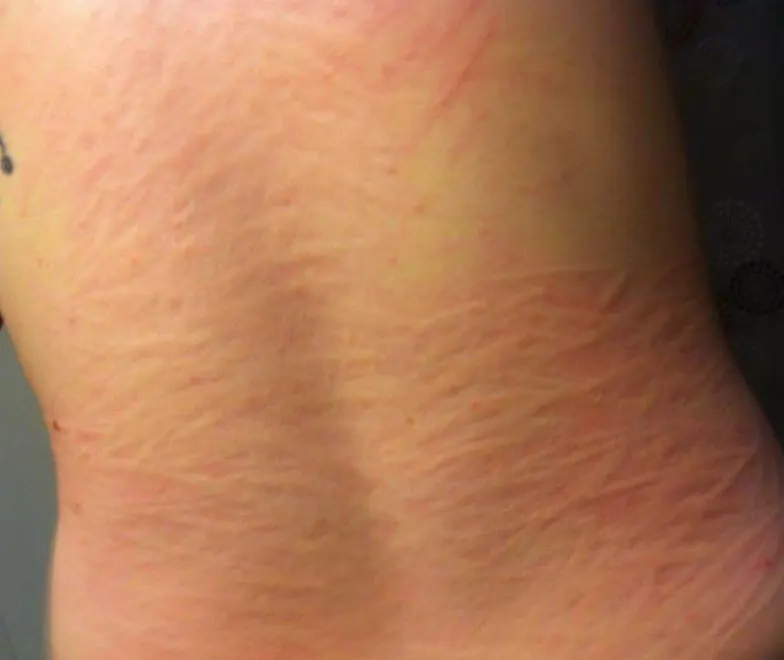
Dermatographia is a physical urticaria: pressure triggers it. Chronic spontaneous urticaria is hives arising without a clear external trigger, most days, for more than six weeks. The two coexist far more often than people realise — plenty of us have both, and the spontaneous hives get blamed on friction we did not actually apply.
That overlap matters because the treatment ladder for both is the same, and because the presence of spontaneous hives changes how a specialist will approach you.
The ladder, in order
International urticaria guidelines lay out a clear stepwise sequence. Knowing where you are on it is the single most useful thing you can bring to an appointment.
| Step | Treatment | Typical review point |
|---|---|---|
| 1 | Standard-dose second-generation H1 antihistamine, taken daily | 2–4 weeks |
| 2 | Same antihistamine up-titrated under supervision, commonly to four times standard dose | 2–4 weeks |
| 3 | Add omalizumab (Xolair), a monthly injection | Assessed over months |
| 4 | Ciclosporin or other immunomodulators in specialist care | Specialist-led |
What omalizumab actually does
Omalizumab is a monoclonal antibody that binds free IgE in the blood. With less free IgE circulating, mast cells reduce the number of IgE receptors on their surface and become considerably harder to trigger. It is given as an injection, usually every four weeks, and it is approved for chronic urticaria that has not responded to antihistamines.
It is not an antihistamine and it is not a steroid. It does not act within hours; some people respond within the first week, others take several months, and a proportion do not respond at all. That range is worth knowing about in advance so a slow start does not read as failure.
Steroids deserve a specific mention here. Oral steroids can knock a severe flare down quickly, but they are a short rescue measure only. Long courses for urticaria carry real harm and are explicitly not recommended as maintenance treatment.
Signs you have outgrown step one
You do not need to have exhausted every option to ask for a referral. These are the practical signals that the conversation should move up a step.
- Symptoms most days for more than six weeks.
- Hives appearing without any friction or pressure.
- Sleep disrupted by itch several nights a week.
- A supervised higher antihistamine dose has not changed things after a month.
- You have needed oral steroids more than once.
- Any episode involving lip, tongue or throat swelling — seek urgent care for that.
What to bring to the appointment
Specialist time is short and urticaria is invisible by the time you sit down. Arriving with evidence changes the appointment completely.
Bring dated photos, a two-week log of how many days you had hives and how badly they itched, the exact names and doses of everything you have tried and for how long, and a note of anything that reliably makes it worse. Clinicians use scored diaries such as the UAS7 to track activity — you do not need the formal tool, but a daily note of hive count and itch severity is the same information.
A realistic expectation
Escalating treatment is not a sign that something has gone badly wrong. Chronic urticaria is a condition that waxes and wanes, and many people who reach step three eventually step back down again as the underlying activity settles.
The goal a specialist works toward is usually complete symptom control rather than partial improvement, because partial control still costs you sleep and attention every day. If you have been quietly tolerating daily symptoms for years because someone once told you it was just sensitive skin, that is worth revisiting.
Find out what's driving your dermatographia
Answer 12 quick questions and get a personalized severity score, your top drivers, and a staged 30-day plan built around your own skin.
Get My Dermatographia ScoreFrequently asked
- When does dermatographia count as chronic urticaria?
- When hives or welts occur most days for more than six weeks. Dermatographia is a physical urticaria triggered by pressure; if hives also appear spontaneously without friction, that points to chronic spontaneous urticaria alongside it.
- Does Xolair work for dermatographia?
- Omalizumab is approved for chronic urticaria that has not responded to antihistamines, and physical urticarias including symptomatic dermographism are among the conditions specialists use it for. Response varies considerably between individuals.
- How long does omalizumab take to work?
- Some people notice a change within the first week or two, others need several months of monthly injections, and some do not respond. Specialists usually review after a defined trial period.
- Are steroids a treatment for chronic hives?
- Only as a short rescue course for a severe flare. Long-term oral steroids are not recommended for urticaria because of the harms they cause over time.
- At what point should I ask for a specialist referral?
- When you are on a raised daily dose of a non-sedating antihistamine and still breaking through most days. That is the recognised threshold for escalating care, and biologics are only prescribed through specialist services.
Sources
Clinical background on this page is checked against the following published sources. My own experience and interviews are labelled as such in the text.