H1 vs H2 Antihistamines
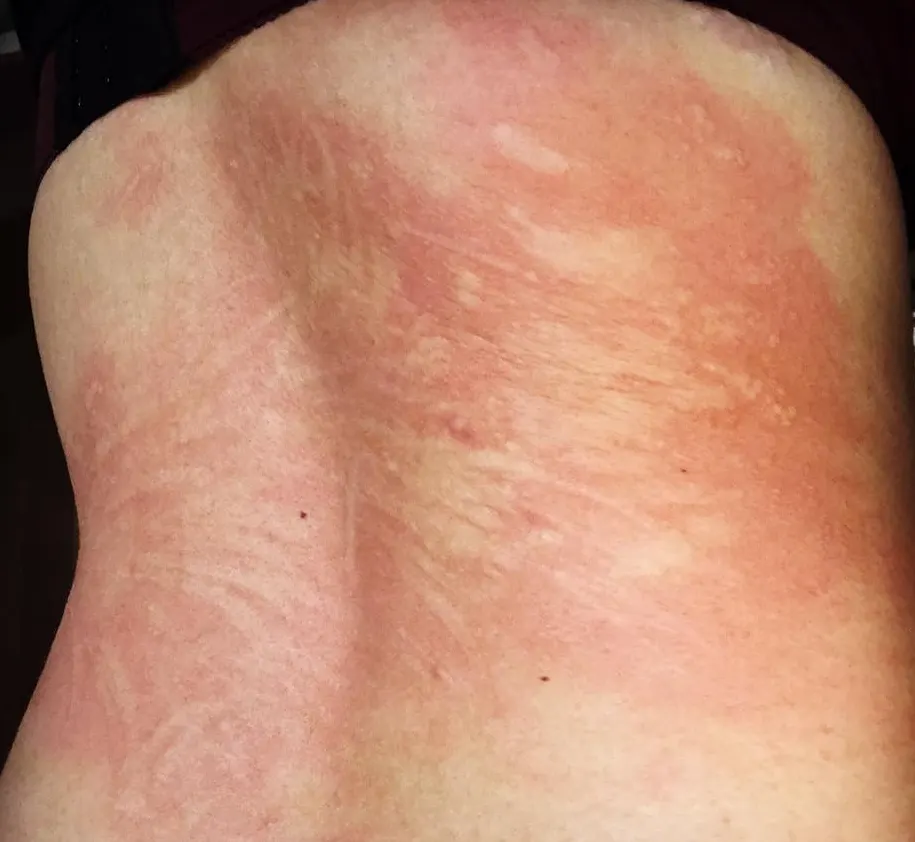
Short answerH1 blockers such as cetirizine or fexofenadine target the itch and wheal receptors in skin; H2 blockers act on a second receptor family and are sometimes added by clinicians when H1 alone is not enough.
Quick answer: is my antihistamine H1 or H2?
Most allergy tablets sold for itch and hives are H1 blockers. H2 blockers are sold mainly as heartburn medicines.
| Brand | Generic name | Type | Drowsy? |
|---|---|---|---|
| Zyrtec | cetirizine | H1 | Sometimes, mildly |
| Claritin | loratadine | H1 | Rarely |
| Allegra | fexofenadine | H1 | Rarely |
| Xyzal | levocetirizine | H1 | Sometimes, mildly |
| Benadryl | diphenhydramine | H1 (older) | Yes |
| Pepcid | famotidine | H2 | No |
H1: the first line for skin symptoms
Most of the histamine receptors in skin are H1. Blocking them is what reduces itch, redness, and the height of the wheal. Second-generation H1 blockers — cetirizine, loratadine, fexofenadine, bilastine — are preferred because they cause far less drowsiness than older options.
Guidelines for chronic urticaria commonly start at a standard daily dose and, under clinical supervision, allow it to be increased if symptoms persist. Do not escalate a dose on your own.
I went through a phase of trying three different H1 antihistamines before settling on the one that suited me. They are not interchangeable in practice even though they target the same receptor — people report differences in how long the effect lasts through the day and how much drowsiness lingers, and that variation seems to be individual rather than predictable in advance.
H2: the supporting role
A smaller share of skin histamine receptors are H2 — the same family targeted by some stomach acid medications. Because they are a minority of skin receptors, H2 blockers are not used alone for dermatographia, but a clinician may add one when H1 therapy is only partly working.
The theory behind combining the two is straightforward: if H1 blockade alone leaves some histamine activity unopposed through H2 receptors, adding a second blocker closes more of the pathway. It is not a universal fix, and some people notice no additional benefit, which is why it is typically trialed rather than prescribed automatically.
Timing matters more than people expect
Antihistamines work best preventively, not as a rescue after a flare has started. Taking a dose consistently at the same time each day keeps a steady level in your system, so friction during the day meets an already-blocked receptor.
- Consistency beats dose size for most people.
- Evening dosing suits people whose flares peak overnight or after a hot shower.
- Any change in medication or dose belongs with your physician or dermatologist.
What happens when standard doses are not enough
For a subset of people, standard daily doses of a second-generation H1 antihistamine do not fully control symptoms. In that situation, clinicians following chronic urticaria guidelines sometimes discuss up-dosing to two or four times the standard dose, adding a second antihistamine, or, less commonly, considering other prescription options entirely. These decisions carry their own tradeoffs around cost, side effects, and monitoring, so they are very much a conversation for your prescriber rather than something to self-manage.
It is worth mentioning that response to antihistamines can shift over months. A regimen that worked well for a year sometimes needs revisiting, not because the medication stopped working chemically but because a new trigger, like a change in climate, stress, or skin barrier health, has entered the picture.
Side effects worth knowing about
Second-generation H1 antihistamines are generally well tolerated, but mild fatigue, dry mouth, or headache are reported by some users, particularly at higher doses. H2 blockers are usually easy to tolerate too, though anyone on other medications should check for interactions with a pharmacist, since H2 blockers can affect how some other drugs are absorbed.
None of this is a reason to avoid treatment; it is simply worth flagging any new symptom to whoever prescribed the medication rather than assuming it will pass on its own.
Building a realistic daily routine
The single biggest lesson I took from years of trial and error is that antihistamines work best as part of a routine, not a rescue kit. Setting a phone reminder for the same time every day did more for my consistency than any change in dose ever did. Pair that with the friction-reducing habits and clothing choices described elsewhere on this site, and the antihistamine has much less work to do in the first place.
Cost, access, and generics
Second-generation antihistamines are widely available over the counter in generic form, and generics work identically to branded versions since they contain the same active ingredient at the same dose. There is no clinical reason to pay more for a branded box, and switching to a cheaper generic is a reasonable way to make a daily routine sustainable long term.
If cost is a barrier to seeing a dermatologist about escalating treatment, a general practitioner can usually manage straightforward dermatographia and refer onward only if standard approaches are not working.
Find out what's driving your dermatographia
Answer 12 quick questions and get a personalized severity score, your top drivers, and a staged 30-day plan built around your own skin.
Get My Dermatographia ScoreFrequently asked
- Are Zyrtec, Claritin, Allegra and Benadryl H1 or H2 blockers?
- All four are H1 blockers. Zyrtec (cetirizine), Claritin (loratadine) and Allegra (fexofenadine) are newer, less drowsy H1 blockers; Benadryl (diphenhydramine) is an older H1 blocker that causes drowsiness. Pepcid (famotidine) is the common H2 blocker.
- Can I take an antihistamine every day for dermatographia?
- Daily second-generation antihistamines are a common long-term approach for chronic urticaria, but the decision, dose, and duration should come from your clinician.
- Why is my antihistamine not working anymore?
- Effect can appear to fade if flares are being driven by an untreated trigger such as heat, stress, or clothing friction. Discuss dose or alternatives with a clinician rather than doubling up.
- Is it safe to mix an H1 and H2 antihistamine on my own?
- Many people tolerate the combination well, but it should be started under a clinician's guidance since they can check for interactions with other medications you take.
- Do antihistamines stop working if I take them for years?
- True tolerance to modern H1 antihistamines is uncommon, though it can feel that way if a new trigger has entered your routine; a clinician can help work out which it is.
- Should I take my antihistamine in the morning or at night?
- Either can work; the better choice usually depends on when your flares tend to peak, which is worth tracking for a couple of weeks and discussing with your clinician.
Sources
Clinical background on this page is checked against the following published sources. My own experience and interviews are labelled as such in the text.