Will Dermatographia Go Away on Its Own?
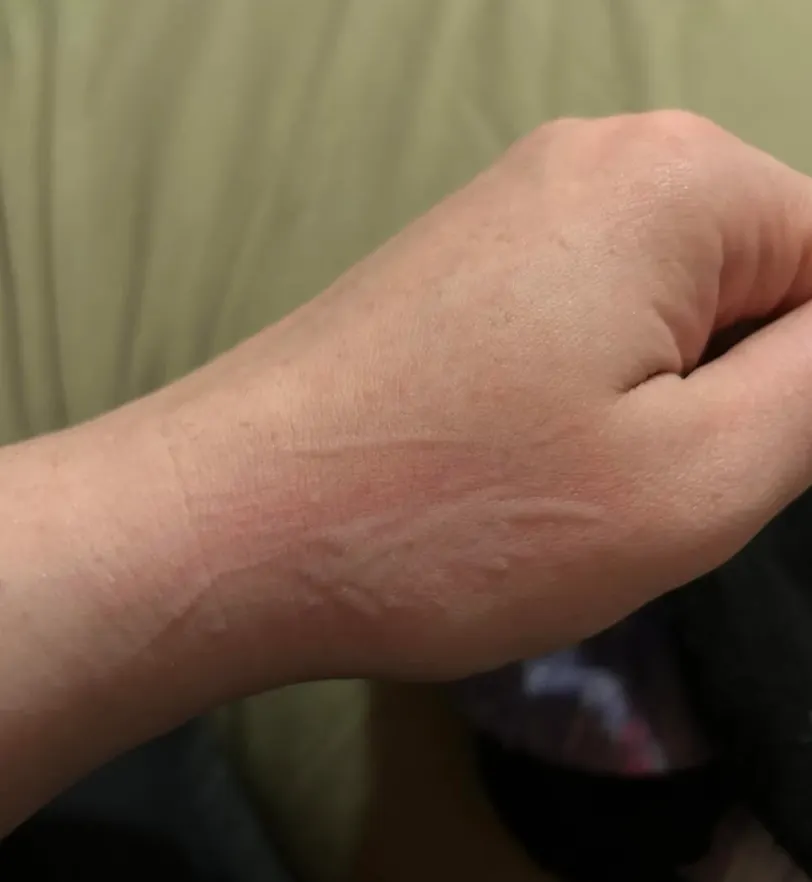
Short answerDermatographia often does resolve on its own, but the timescale is measured in years rather than weeks. Studies of chronic inducible urticaria suggest a substantial share of people see spontaneous remission within about five years, and a minority have it much longer. Cases that follow an infection, a medication or a stressful period are the most likely to fade; long-standing cases tend to persist and are managed rather than waited out.
The honest answer
Yes, it can go away by itself. No, you should probably not plan your next two years around that happening.
I have had dermatographia for more than twenty years, so I am at the long end of the distribution and I will not pretend otherwise. But I know plenty of people whose skin writing arrived after a bad chest infection, hung around for eight months, and then simply stopped. Both stories are normal.
What follows is what the evidence and a lot of community experience suggest about which one you are more likely to be in.
What the timelines look like
Research into chronic inducible urticaria, which includes dermatographia, consistently finds two things: remission is common, and it is slow. A meaningful proportion of people are clear within about five years, and a smaller group carries it for a decade or more.
Set against that, the day-to-day picture matters more than the endpoint. Severity fluctuates enormously within any given year — good months, bad months, weeks where you forget you have it and weeks where it dictates what you wear.
So the practical question is not really 'will it go away'. It is 'what is the next twelve months going to feel like', and that is something you have real influence over.
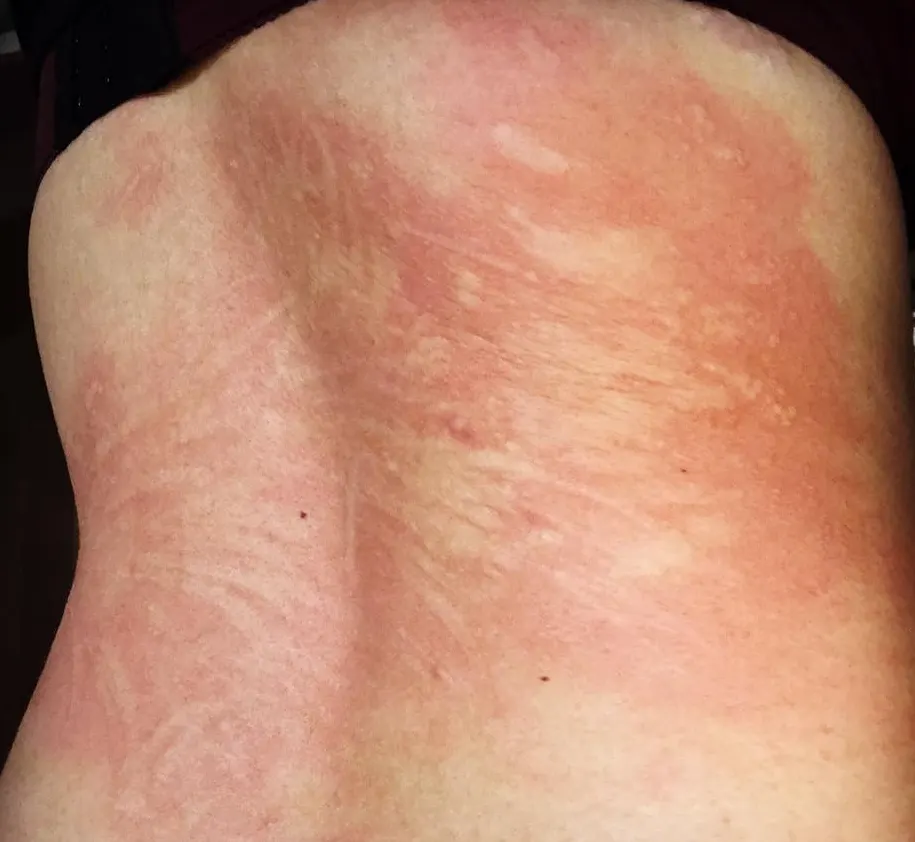
Signs it may be temporary
Some presentations are much more likely to fade. If several of these describe you, the odds are better.
- It started clearly after an infection — a virus, a chest infection, COVID, a course of illness you can date.
- It started after beginning a new medication, particularly an antibiotic or an anti-inflammatory.
- It arrived during an intense stress period — bereavement, a job crisis, a move — that has since resolved.
- It started in pregnancy or postpartum.
- It has been present for less than a year.
- It is already trending down: fewer episodes, milder marks, faster fading than three months ago.
Signs it is likely to be a long-term companion
The other side, stated plainly so you can plan around it rather than be surprised by it.
- It has been present for more than two or three years with no clear downward trend.
- There was never an identifiable trigger event — it just gradually became a thing.
- You also have another form of urticaria, or a related atopic condition like eczema or asthma.
- It has already come and gone once and returned.
What 'gone' actually looks like
Worth defining, because people expect a switch to flip and that is rarely how it goes.
In most remissions the sequence is gradual: the welts get smaller, they fade faster, the itch drops away before the visible marks do, and it takes more force to produce a mark than it used to. Then you notice you have not thought about it for a fortnight.
A useful test after a stretch of feeling clear: stop and check whether you are actually clear or just managing well. Skin that is calm on daily antihistamines is a well-controlled condition, not a resolved one. Any trial off medication is a conversation with your prescriber, not a solo experiment — but if you have been symptom-free for several months, it is a reasonable conversation to open.
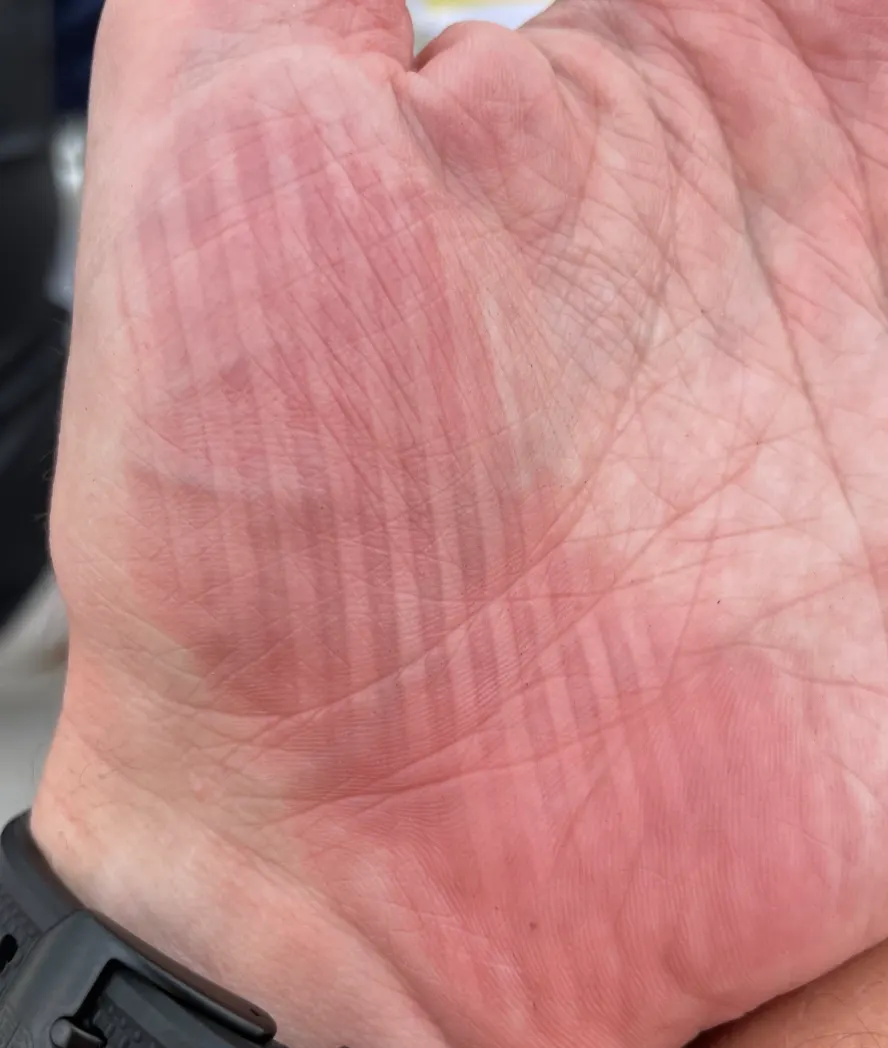
Waiting is not the same as doing nothing
Here is the part I wish someone had told me at year two. Whether or not your dermatographia eventually resolves, the intervening time is entirely yours to improve, and none of it is wasted effort.
Reducing friction lowers how often the reaction starts. Consistent first-line medication, discussed with a clinician, changes what a bad week feels like. Sleep and stress management move the threshold. None of these change the long-run odds of remission, and all of them change the next six months.
People who treat it actively also tend to report faster subjective improvement, partly because the itch-scratch loop is self-reinforcing — reducing the scratching reduces the reaction that provokes more scratching.
Track it so you actually know
Memory is a terrible instrument for this. Ask anyone whether their skin is better than it was six months ago and they will answer based on the last bad week.
A monthly score fixes that. Note how often you reacted, how long marks took to fade, and how much the itch affected sleep. Three data points across three months tell you the direction; twelve tell you the trajectory.
If you want a structured version, the quiz on this site produces a severity score you can retake every thirty days and compare — and you can see how your number sits against everyone else's on the Index.
When to stop waiting and get seen
Book an appointment rather than waiting it out if the itch is costing you sleep, if it is changing what you wear or what you do, if it has been getting worse rather than better for three months, or if you are managing it with over-the-counter medication every day without ever having had it assessed.
And urgently, regardless of how long you have had it: swelling of the lips, tongue or throat, or any difficulty breathing.
Find out what's driving your dermatographia
Answer 12 quick questions and get a personalized severity score, your top drivers, and a staged 30-day plan built around your own skin.
Get My Dermatographia ScoreFrequently asked
- Can dermatographia go away on its own?
- Yes. Spontaneous remission is common in chronic inducible urticaria, though the timescale is typically years rather than months. Cases that began after an infection, a medication or a distinct stress period are the most likely to resolve.
- How long does dermatographia usually last?
- Research on chronic inducible urticaria suggests a substantial share of people see remission within around five years, with a minority experiencing it for a decade or longer. Severity also fluctuates a great deal year to year.
- How do I know if my dermatographia is going away?
- Look for a gradual pattern: it takes more pressure to produce a mark, welts are smaller, they fade faster, and the itch drops off before the visible marks do. Tracking a monthly severity score is far more reliable than memory.
- Should I stop my antihistamines to see if it has gone?
- Not on your own. Skin that is calm on daily antihistamines is well controlled rather than resolved. If you have been symptom-free for several months, raise a supervised trial off medication with your prescriber.
- Is it worth checking in with a doctor if it seems to be fading?
- A check-in is useful mainly to plan how you step down medication. Coming off a daily antihistamine abruptly is what usually makes people think it came back, when in fact it never left.
Sources
Clinical background on this page is checked against the following published sources. My own experience and interviews are labelled as such in the text.