Dermatographia After COVID and Other Infections

Short answerPost-viral onset of dermatographia is frequently reported, including after COVID-19. Infection can leave skin mast cells transiently more reactive, and the resulting skin writing is managed exactly like any other dermatographia: preventive antihistamines, friction control and barrier care.
The pattern people describe
A viral illness, then a few weeks of feeling almost normal, then skin that suddenly welts at a towel or a seatbelt. Chronic urticaria has long been associated with post-infectious onset, and COVID-19 added a large number of new reports of the same story.
What is plausible mechanistically
Infection triggers a broad immune response, and mast cells participate in it. It is reasonable that their activation threshold stays lowered for a period afterwards. Formal evidence specific to dermatographia is limited, so this remains a plausible mechanism rather than a settled one.
Does it change management?
No. The treatment ladder is identical: consistent second-generation H1 antihistamine, remove daily friction, protect the skin barrier, and review with a clinician if standard therapy is not enough.
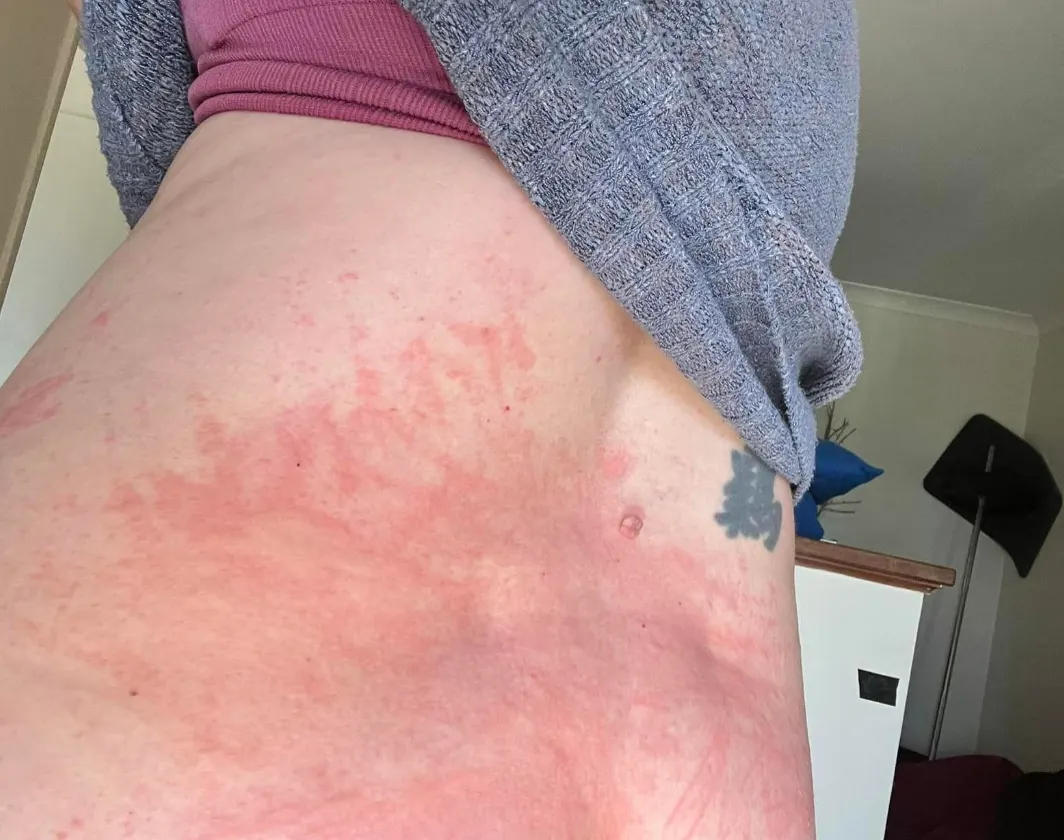
- Mention the timeline to your clinician — recent infection is useful context.
- Note any other post-viral symptoms such as fatigue or palpitations.
- Photograph flares to show the pattern rather than describing it.
Outlook
Post-viral cases often follow the general pattern of physical urticaria: an intense early phase, then gradual settling over months. That trajectory is not guaranteed, but it is the common one.
What other post-viral skin symptoms look like
Post-viral skin reactivity is not limited to dermatographia; some people also report increased flushing, delayed pressure marks, or generally drier, more reactive skin for a period after infection. All of these are thought to share the mast cell sensitivity mechanism rather than being separate problems.
When to seek a specialist referral
If post-infectious skin symptoms persist beyond several months, or if they come with other unexplained symptoms like persistent fatigue, a referral to an allergist or dermatologist experienced in chronic urticaria is reasonable, since standard primary care management may need escalation.
A practical recovery routine
If your skin turned reactive after an infection, treat the first couple of months as a settling-in period rather than a permanent state. Start a consistent daily antihistamine as advised by your clinician, keep a simple flare log alongside any other lingering post-viral symptoms like fatigue, and be patient with a barrier that may take longer than usual to calm down while your immune system is still recovering more broadly.
It's also worth pacing physical exertion during this period if you notice heat or exercise reliably brings on flares, since overheating adds another trigger on top of an already sensitised system.
What didn't work for me
After a viral illness left my skin more reactive for a stretch, I initially assumed it would resolve on its own within days and delayed starting a proper antihistamine routine, which meant a longer period of avoidable flares than necessary. Waiting it out passively wasn't the right call — starting the standard management early, even without knowing exactly how long the sensitivity would last, would have helped sooner.
Common myths about post-viral skin issues
A few assumptions circulate that don't hold up well: that post-viral dermatographia means the infection is still active in the body (it typically doesn't — the trigger has passed but the mast cell sensitivity lingers), that it's a sign of long-term immune damage (there's no evidence of that for typical presentations), and that nothing can be done until it resolves on its own (standard management works the same way regardless of the trigger).
What to expect over the following months
Most post-viral cases follow a similar arc to other sudden-onset dermatographia: a more intense first stretch, then gradual settling as the standard routine takes effect. If other post-viral symptoms like fatigue are also present and persist for months, that combination is worth a specific conversation with a clinician, since it may point to a broader post-viral pattern that benefits from coordinated care rather than treating the skin in isolation.
Find out what's driving your dermatographia
Answer 12 quick questions and get a personalized severity score, your top drivers, and a staged 30-day plan built around your own skin.
Get My Dermatographia ScoreFrequently asked
- Can I pass this on if it started after an infection?
- No. Even when it starts after an infection, the skin reaction itself cannot be passed to anyone else.
- How long does post-viral dermatographia last?
- Reports range from a few weeks to a few years. Many people see clear improvement within the first year.
- Should I avoid future vaccinations if dermatographia followed one?
- This is a decision for your clinician, who can weigh your specific history against the benefits of vaccination; a temporal link does not automatically mean future doses are unsafe.
- Can long COVID cause ongoing skin flares?
- Some people with long COVID report persistent skin sensitivity among a wider set of symptoms; the mechanism is still being studied, and management follows the same antihistamine-led approach in the meantime.
- Does having dermatographia make future infections more likely to affect my skin again?
- It's plausible that skin which has been sensitised once reacts more readily to a future illness, though this varies between people and isn't a guaranteed pattern. Keeping your usual management consistent during any future infection is a reasonable precaution.
- Should I tell my doctor the symptoms started after an infection?
- Yes, and be specific about the timeline. Post-infectious onset is well recognised and it changes what a clinician looks for, including whether the pattern is likely to settle on its own over the following months.
Sources
Clinical background on this page is checked against the following published sources. My own experience and interviews are labelled as such in the text.