Dermatographia on Darker Skin: What the Welts Actually Look Like
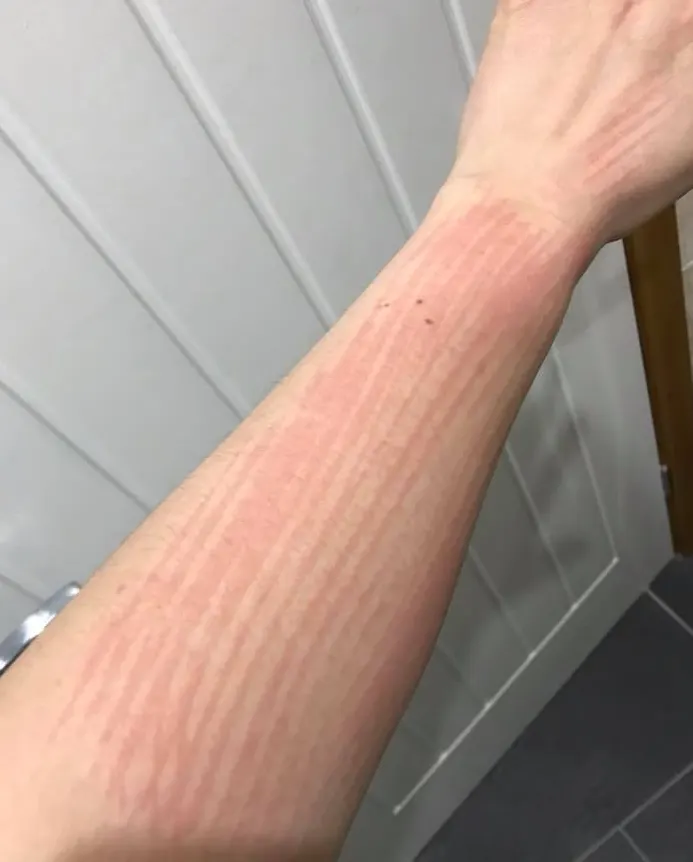
Short answerOn darker skin, dermatographia welts often don't look red. They can be purple, dark brown, greyish, or the same colour as the surrounding skin, and are easier to feel as raised lines than to see. The condition itself is the same, it responds to the same treatment, and a simple firm stroke test still shows it, as long as whoever is looking knows to check for swelling rather than redness.
Why most pictures don't match what you see
Almost every photo of dermatographia online, including many on this site, shows light skin with bright red welts. That's because most clinical photography has historically been done on lighter skin, not because the condition is rarer on darker skin.
The redness in those pictures comes from widened blood vessels. On skin with more melanin, the same change in blood flow is partly hidden, so the colour cue that everyone is taught to look for fades into the background. The swelling doesn't.
What to look and feel for
On brown and Black skin, a dermatographia welt usually shows up as:
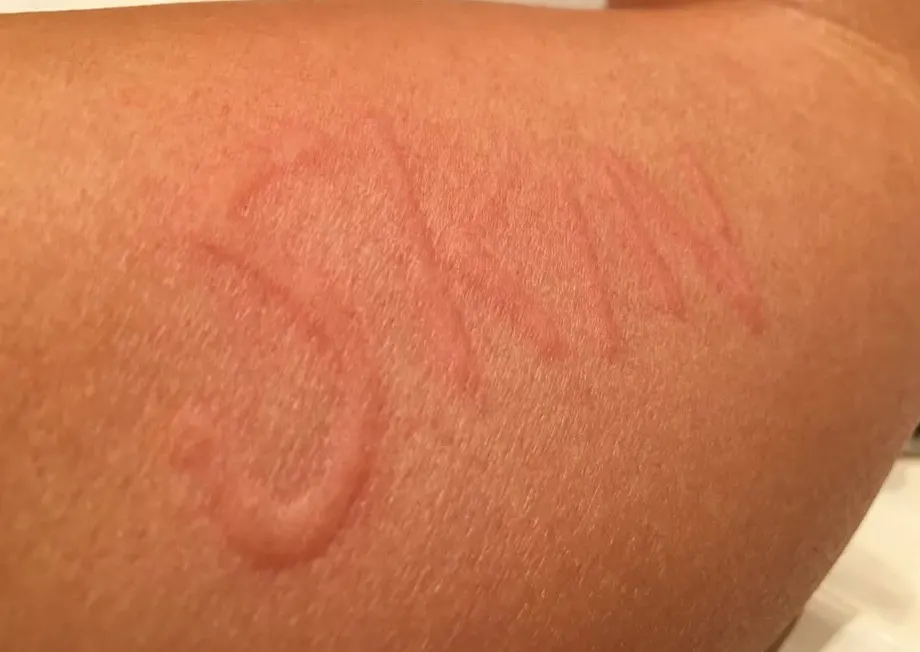
- A raised line you can feel with a fingertip, following exactly where you were scratched or pressed.
- A shade darker than the skin around it: purple, plum, deep brown or grey.
- Sometimes a lighter or shinier line, because the swollen skin is stretched tight.
- The same timing as on any skin: rising within a few minutes and fading within an hour.
- Itching or burning, which is often the first thing people notice.
Doing the stroke test on darker skin
Press firmly and draw a line on your forearm with the blunt end of a pen or a fingernail. Wait five to ten minutes. Then look at the area in good side light, from an angle rather than straight on, and run a finger gently across it.
If a raised ridge has appeared along the line, that's a positive result regardless of colour. Taking a photo with the light coming from the side makes the ridge much easier to show a doctor later.
What to say at an appointment
Welts are usually gone by the time you're seen, so bring evidence. Side-lit photos, a note of how long the marks last, and what set them off are more useful than any description.
If a clinician says they can't see redness, it's reasonable to say: "It shows up as raised lines rather than red marks on my skin — can we do a stroke test and check for swelling?" A doctor can confirm it in ten minutes.
Marks that stay behind
Dermatographia welts themselves don't scar. But on darker skin, repeated scratching can leave patches of darker skin, called post-inflammatory hyperpigmentation, that last for weeks or months. That's another reason steady antihistamine cover and short nails matter: less scratching means fewer lasting marks.
Treatment is identical on every skin type. Daily non-drowsy antihistamines, less friction, and good barrier care are the foundation.
Find out what's driving your dermatographia
Answer 12 quick questions and get a personalized severity score, your top drivers, and a staged 30-day plan built around your own skin.
Get My Dermatographia ScoreFrequently asked
- Does dermatographia look different on Black or brown skin?
- Yes. Welts often look purple, brown, grey or skin-coloured instead of red, and are easier to feel as raised lines than to see.
- Is dermatographia less common on darker skin?
- There's no good evidence that it is. It's more likely to be missed, because most reference photos show red welts on light skin.
- Can dermatographia leave dark marks?
- The welts don't, but repeated scratching can leave darker patches that fade over weeks or months. Reducing scratching prevents most of them.
Sources
Clinical background on this page is checked against the following published sources. My own experience and interviews are labelled as such in the text.