How Long Do Dermatographia Welts Last?
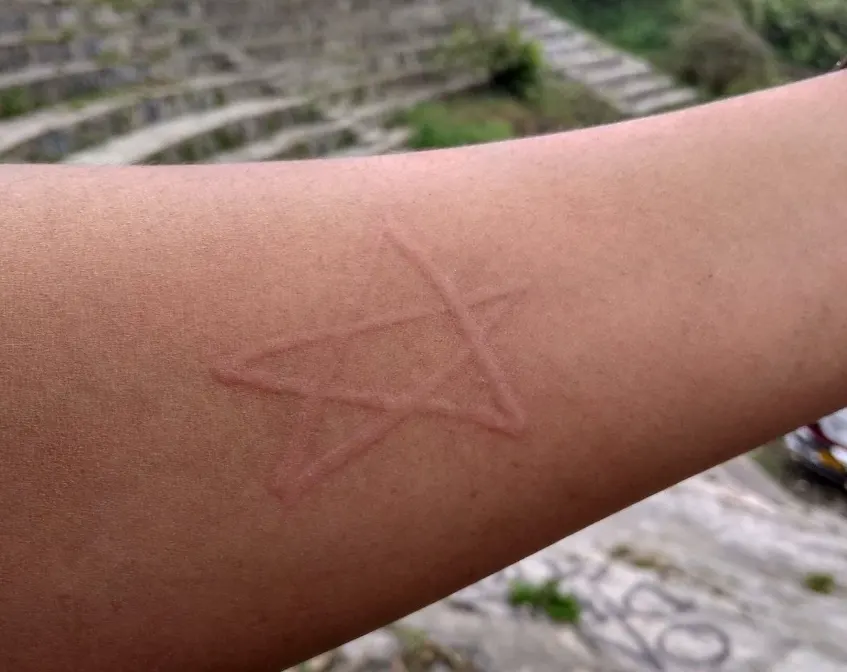
Short answerMost dermatographia welts appear within 2 to 5 minutes of pressure and fade completely within 15 to 60 minutes; welts persisting beyond 24 hours suggest a different condition and should be reviewed by a clinician.
The typical timeline
From pressure to clear skin, a standard flare looks like this:
- 0 to 5 minutes: redness along the line of pressure.
- 5 to 15 minutes: the wheal rises and itching peaks.
- 15 to 60 minutes: the wheal flattens and colour fades.
- Delayed pressure urticaria is a separate variant where swelling starts hours later and can last a day or more.
What makes a flare last longer
Heat, continued scratching, sustained pressure from clothing, alcohol, and stress all extend the window. Cooling the area, removing the pressure source, and resisting the urge to scratch shorten it.
I have noticed my own worst, longest-lasting flares almost always share two things: a hot shower and a stressful day beforehand. Neither one alone seems to do much, but together they reliably push a normal 20-minute welt into something that is still visible an hour later.
What shortens it
A consistent preventive antihistamine routine, cooler showers, a well-maintained skin barrier, and friction-free clothing all reduce both how often flares happen and how long each one runs.
Tracking your own pattern
Because the timeline varies from person to person and even day to day, it is worth keeping a rough log for a couple of weeks: what caused the welt, how long it took to appear, how long it took to fade, and what else was going on that day. Over time this turns a vague sense of 'my skin is unpredictable' into something closer to a personal baseline, which makes it much easier to notice when something is actually different or worsening.
A baseline is also genuinely useful information to bring to a clinician, since 'usually 20 to 30 minutes, but longer after hot showers' is a far more actionable sentence than 'it varies.'
When duration is a red flag rather than a normal variation
Most of the guidance above describes ordinary, uncomplicated dermatographia. It is worth being clear about when duration itself becomes a warning sign rather than just an annoyance. Welts that persist well beyond 24 hours, leave bruising or discoloration behind after they fade, or are accompanied by joint pain or fever are not typical of straightforward dermatographia and deserve a clinical review, since they can point toward a different or additional condition.
Swelling of the lips, tongue, throat, or difficulty breathing at any point is not something to monitor at home — that needs urgent medical attention regardless of how long your ordinary welts usually last.
Does the duration change as the condition evolves?
Many people report that both the frequency and duration of flares shift over months or years, sometimes improving markedly and sometimes flaring up again during periods of higher stress, hormonal change, or illness. This fluctuation is a normal feature of the condition for a lot of people rather than a sign that something has gone wrong, though any significant, sustained change is still worth mentioning at your next check-in.
How a clinician measures and records duration
In a clinical setting, a dermatographism test is often timed and recorded at set intervals, for example checking the wheal at 10, 20, and 30 minutes, so the response can be compared against future visits or against treatment changes. This kind of structured timing is more precise than most people would ever do at home, but it illustrates why a rough personal log, even an imprecise one, is still useful: it gives you and your clinician a shared reference point.
If you are ever asked to keep a symptom diary ahead of an appointment, noting duration alongside triggers and any medication timing will usually be more useful to the clinician than photos alone, though both together are ideal.
Find out what's driving your dermatographia
Answer 12 quick questions and get a personalized severity score, your top drivers, and a staged 30-day plan built around your own skin.
Get My Dermatographia ScoreFrequently asked
- Do dermatographia welts leave scars?
- Typical welts resolve without any mark. Persistent scratching can cause secondary irritation, so keeping nails short and moisturising helps.
- Does dermatographia ever go away?
- It often fluctuates and can remit over months to years, though the timeline varies widely between people.
- Why do some welts fade faster than others on the same day?
- Location, how much pressure was involved, skin temperature, and how recently you took an antihistamine can all shift how quickly an individual welt resolves, even within the same day.
- Is it normal for welts to itch after they have visibly faded?
- A lingering, mild itch after the redness has gone is commonly reported and usually settles on its own; persistent itch without any visible skin change is worth mentioning to a clinician.
- Can cold packs speed up how fast a welt fades?
- Many people find a cool compress helpful for comfort and for constricting the dilated vessels a little faster, though it will not eliminate the underlying histamine release.
Sources
Clinical background on this page is checked against the following published sources. My own experience and interviews are labelled as such in the text.