Dermatographia or Something Else? Psoriasis, Eczema and Contact Dermatitis Compared
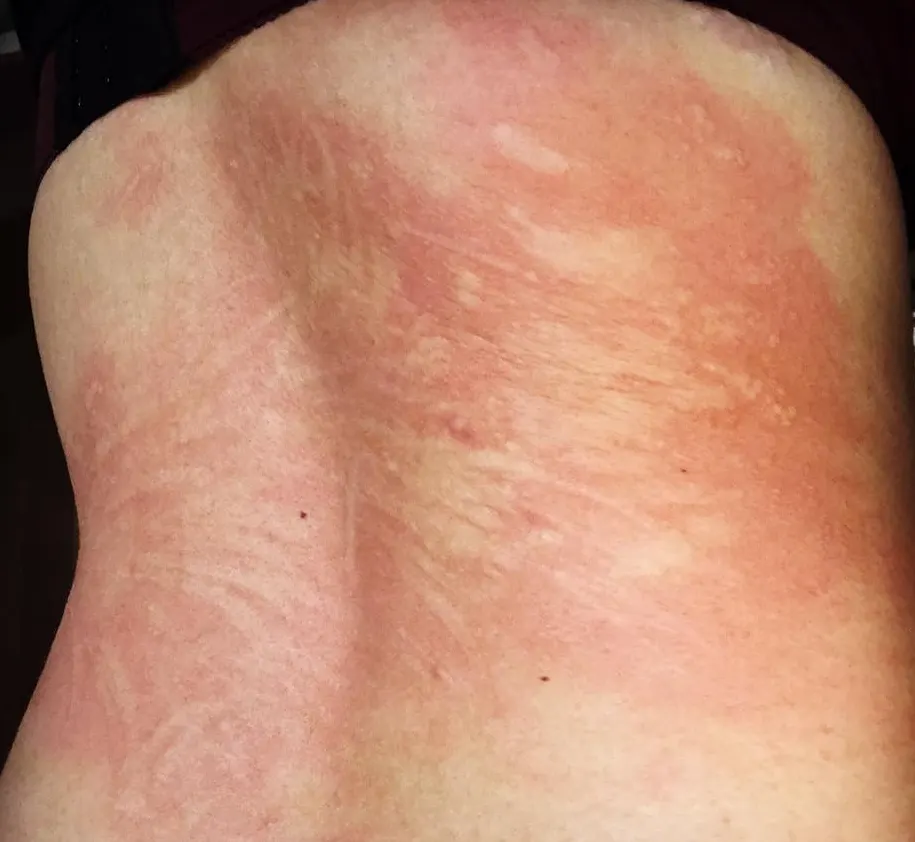
Short answerDermatographia is distinguished from psoriasis, eczema and contact dermatitis by timing and shape: its welts appear within minutes of pressure, trace the exact line of contact, and fade completely within about an hour. Psoriasis plaques persist for weeks with silvery scale, eczema is dry and lichenified over days, and contact dermatitis appears hours after exposure and lasts days in the shape of what touched the skin.
Why this gets confused
'Red itchy skin' is where all of these conditions overlap, and it is also where most people start searching. I spent years assuming I had some form of eczema before anyone said the word dermatographia to me.
The good news is that telling them apart rarely needs a lab. Four questions do most of the work: how fast did it appear, what shape is it, what set it off, and how long does it last?
The four-question test
Run any suspicious patch of skin through these before you go any further.
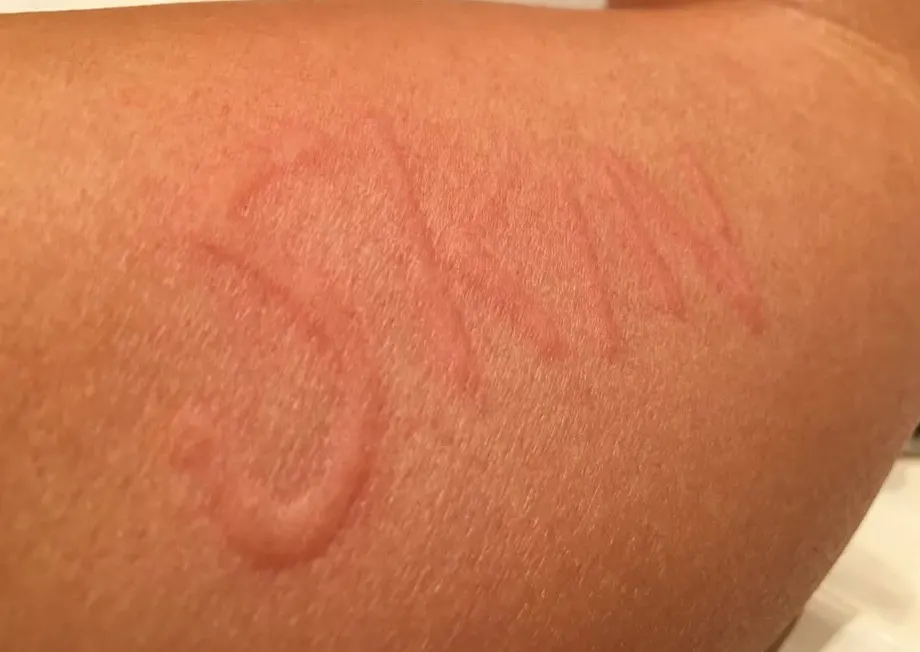
- Timing: dermatographia appears in 1–3 minutes. Contact dermatitis takes hours to a day. Psoriasis and eczema build over days to weeks.
- Shape: dermatographia traces the exact line of the pressure — a strap, a fingernail, a seam. The others form patches whose shape reflects the affected area, not a line of contact.
- Duration: dermatographia clears in 15–60 minutes, usually with no trace. The others persist for days or weeks.
- Trigger: dermatographia needs mechanical pressure. Contact dermatitis needs a substance. Psoriasis and eczema are chronic conditions with flares rather than instant triggers.
Dermatographia vs psoriasis
These two look very different in person, but they share search traffic because both produce raised red areas that itch.
Psoriasis plaques are thick, well-demarcated, and covered in silvery-white scale. They favour elbows, knees, the lower back and the scalp, they persist for weeks or months in the same location, and they are an immune-mediated condition of accelerated skin cell turnover. Nail pitting and joint pain are common companions.
Dermatographia produces no scale at all. The surface is smooth, the mark is transient, and it appears wherever pressure was applied rather than in characteristic locations. If you can wipe a fingernail across clear skin and watch a line rise within two minutes, you are not looking at psoriasis.
One overlap worth knowing: psoriasis has its own pressure phenomenon, the Koebner response, where new plaques form at sites of skin injury. But that takes days to weeks to develop, not minutes.
Dermatographia vs eczema
Eczema (atopic dermatitis) is the most common misdiagnosis I hear about from people in the dermatographia community, partly because both are itchy and both respond somewhat to skin care.
Eczema presents as dry, rough, sometimes weeping or crusted skin, classically in the elbow and knee creases, on the hands, and around the neck. Over time repeated scratching thickens the skin into leathery patches — lichenification. It persists for days to weeks and is strongly associated with asthma and hay fever.
Dermatographia leaves the skin between episodes looking entirely normal. There is no dryness, no thickening, no crusting.
The two genuinely can coexist, and that combination is common enough to be worth naming. Eczema-damaged skin is easier to provoke mechanically, so someone with both often finds their skin-writing reactions worsen during an eczema flare. Treating the barrier helps both.
Dermatographia vs contact dermatitis
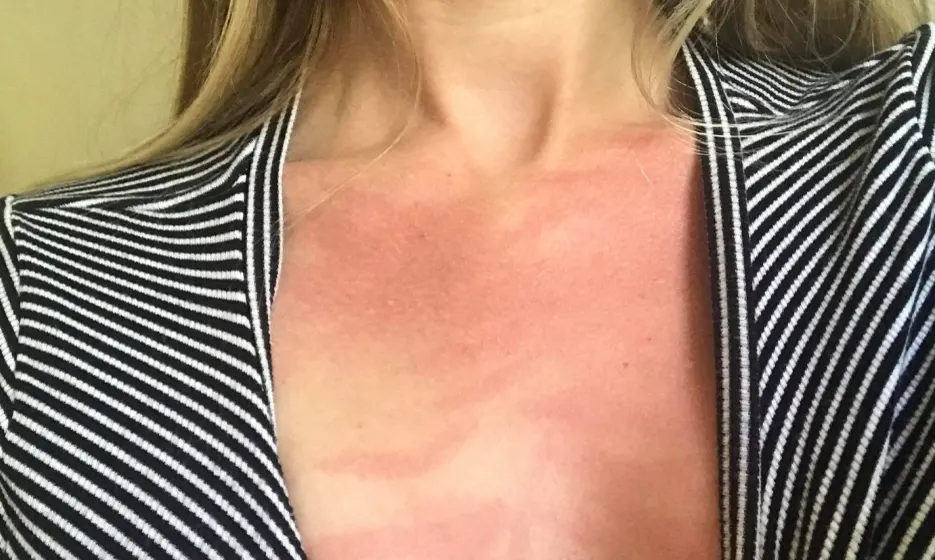
This is the trickiest pair, because both can appear in the shape of an object — a watch strap, a waistband, a necklace — and both can follow contact with clothing.
The separator is timing. Allergic contact dermatitis is a delayed hypersensitivity reaction: it typically appears 12–48 hours after exposure and lasts for days. Irritant contact dermatitis can be faster but still produces a rash that persists, often with dryness, scaling, blistering or weeping.
Dermatographia appears within minutes of the pressure and is gone within the hour, leaving smooth skin behind. It does not blister and it does not scale.
Practical test that costs nothing: take the watch off in the morning and check the skin at two minutes, at one hour, and at the end of the day. Dermatographia is gone by the one-hour check. Contact dermatitis is either still there or only just arriving.
Two more that get mistaken for it
Worth a mention because they come up repeatedly.
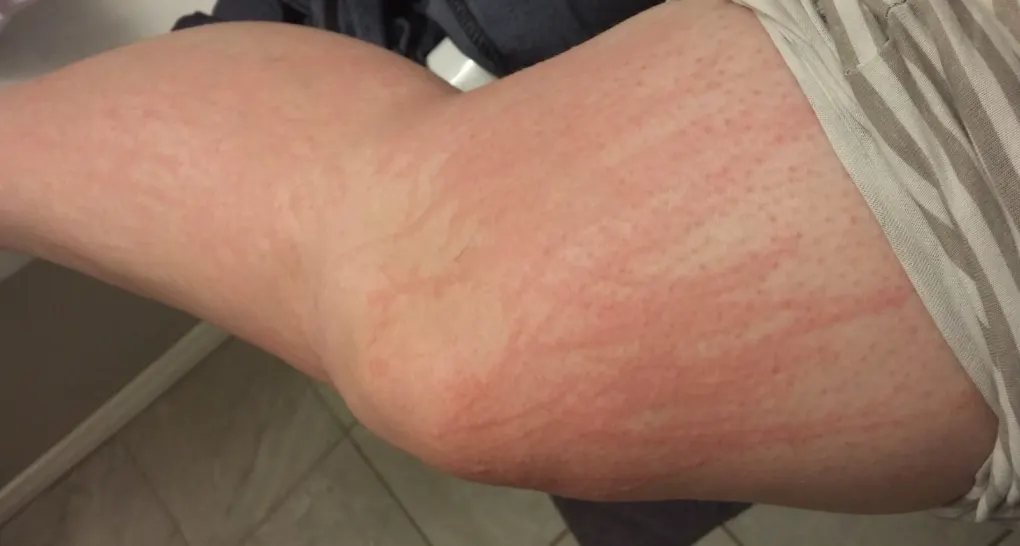
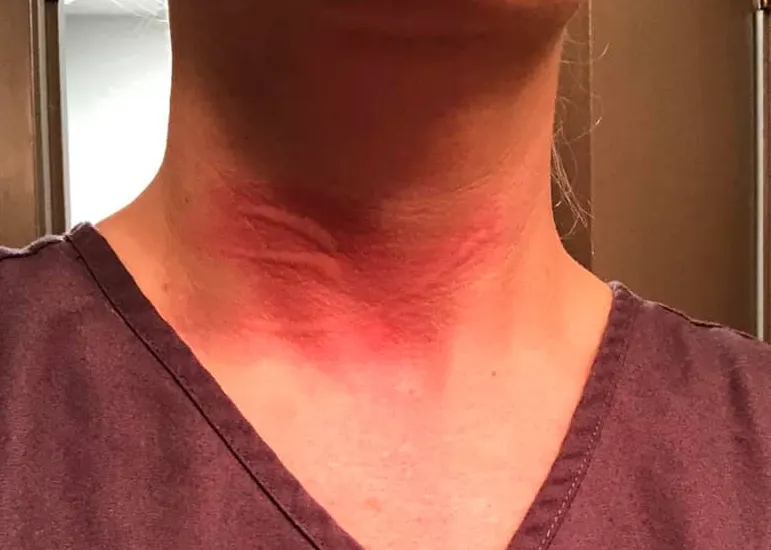
- Cholinergic urticaria: small, intensely itchy bumps that appear when body temperature rises — hot showers, exercise, stress. It is a sibling condition rather than a look-alike, and plenty of people have both. The distinguishing feature is that the trigger is heat, not pressure, and the shape is scattered pinpoints rather than lines.
- Chronic spontaneous urticaria: hives that appear with no physical trigger, often daily, and individual welts can last up to 24 hours. If your hives arrive without you having touched anything, this is worth raising with a clinician.
Quick reference
If you take one thing away, take this comparison.
- Dermatographia: minutes to appear, under an hour to clear, traces the line of pressure, no scale, no residue.
- Psoriasis: weeks, silvery scale, thick well-defined plaques, elbows/knees/scalp/lower back.
- Eczema: days to weeks, dry and rough or weeping, skin creases, thickens with scratching.
- Contact dermatitis: 12–48 hours after exposure, days to clear, shaped like the substance or object, may blister or scale.
- Cholinergic urticaria: minutes after a rise in body heat, tiny scattered bumps rather than lines.
See a doctor if
Self-triage is useful for orientation, not for diagnosis. Book an appointment if any of the following apply.
- Individual welts or patches last longer than 24 hours in one place.
- The skin blisters, weeps, crusts, scales, or leaves a lasting stain.
- You have joint pain, nail changes, fever or fatigue alongside the skin symptoms.
- The itch is affecting your sleep or your mood, whatever the cause turns out to be.
- You are not getting relief from what you have already tried.
- Urgently: swelling of the lips, tongue or throat, or any breathing difficulty.
Find out what's driving your dermatographia
Answer 12 quick questions and get a personalized severity score, your top drivers, and a staged 30-day plan built around your own skin.
Get My Dermatographia ScoreFrequently asked
- How can I tell dermatographia from psoriasis?
- Psoriasis plaques are thick, scaly and persist for weeks in the same place, typically on elbows, knees, scalp and lower back. Dermatographia welts are smooth, appear within minutes of pressure along the exact line of contact, and fade within about an hour with no scale and no residue.
- Can dermatographia be mistaken for eczema?
- Yes, often. Eczema leaves the skin dry, rough and eventually thickened between flares, while dermatographia leaves completely normal-looking skin between episodes. The two can also coexist, and damaged eczema skin tends to provoke more easily.
- Is it dermatographia or contact dermatitis?
- Timing separates them. Dermatographia appears within minutes of pressure and clears within an hour. Allergic contact dermatitis usually appears 12 to 48 hours after exposure to a substance and lasts for days, often with dryness, scaling or blistering.
- Can you have dermatographia and another skin condition at the same time?
- Yes. Dermatographia commonly coexists with eczema, cholinergic urticaria and chronic spontaneous urticaria. Overlap is one of the main reasons a clinical assessment beats self-diagnosis.
- How do I get a clinician to tell these apart?
- Timing is the deciding evidence, so bring it. Say how fast the mark appears, how long it lasts and whether it leaves anything behind. Photographs at five minutes and at one hour settle most of these comparisons in a single visit.
Sources
Clinical background on this page is checked against the following published sources. My own experience and interviews are labelled as such in the text.