Dermatographia Symptoms: Photos, How Long Welts Last, When to Worry
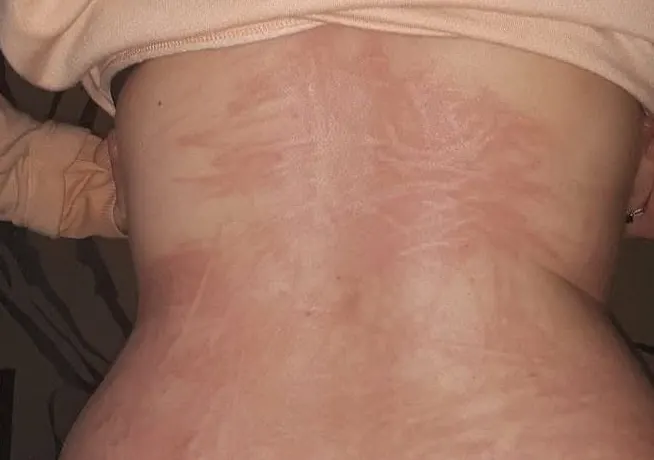
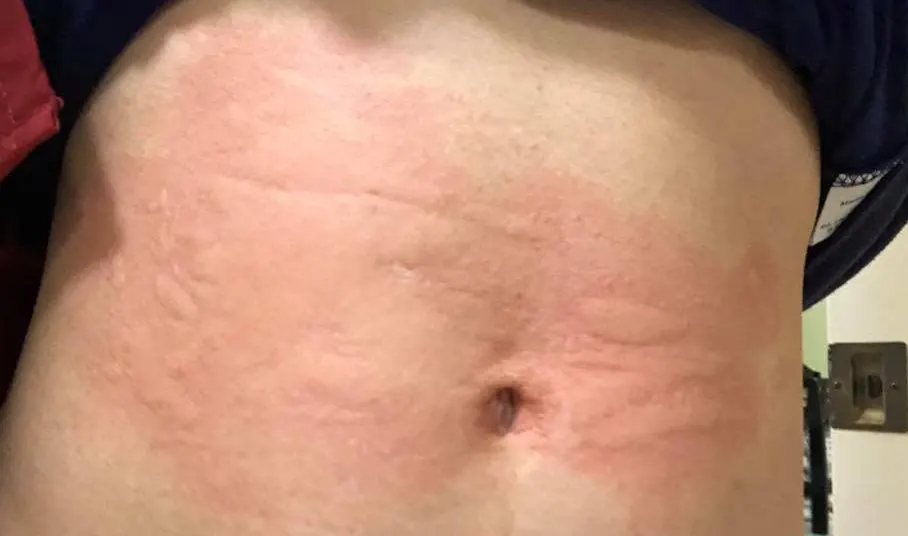
Short answerThe core dermatographia symptom is a raised, red, itchy welt that appears along a line of pressure within 1–5 minutes and fades within 15–60 minutes. Common companions are intense itch out of proportion to the visible mark, warmth or stinging, blotchy flushing on the chest and neck, and pressure bands where clothing sits. Welts lasting over 24 hours or leaving bruising are not typical and need a doctor.
The classic sequence
The timing is the most recognisable feature and it repeats almost identically every time, which is one of the ways clinicians identify it.
I have watched this sequence happen on my own arm more times than I could count, and it is genuinely useful to know it well enough to narrate it, because describing the timing accurately to a doctor is often what gets a fast diagnosis instead of a long round of allergy testing.
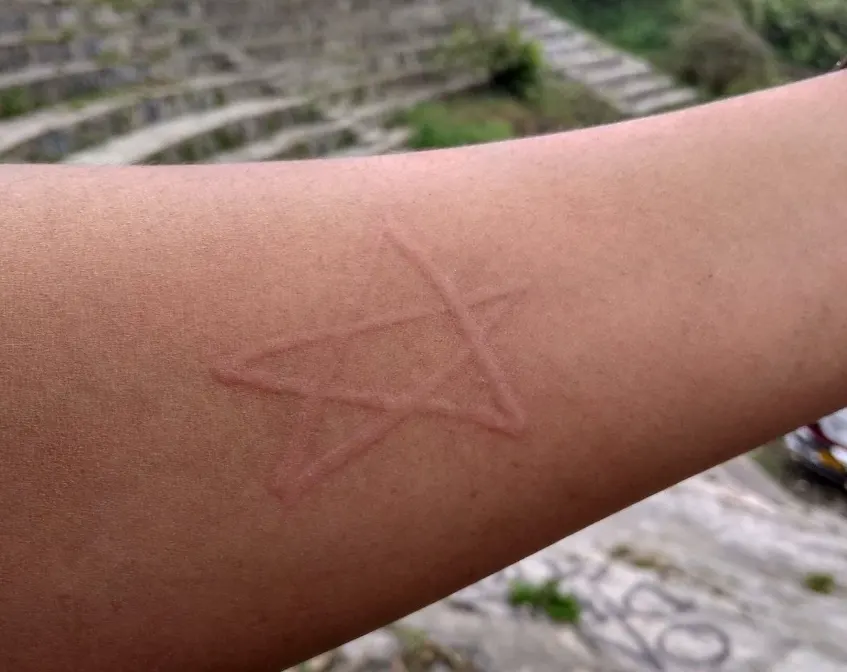
- 1–3 minutes after pressure: a pink or red line appears exactly where contact happened.
- 5–15 minutes: the line lifts into a raised wheal and itch peaks.
- 15–60 minutes: the wheal flattens and colour drains, usually leaving nothing behind.
- On deeper skin tones the redness is less obvious — the raised texture is the reliable sign.
Symptoms beyond the welt
The visible line is only part of it, and often not the part that affects daily life most.
The itch, in particular, deserves more attention than it usually gets, because it is the symptom that actually disrupts sleep, concentration, and mood — the welt itself is mostly a cosmetic inconvenience by comparison. On my worst nights early on, the itch alone kept me awake for hours even though any individual welt had faded within the hour it appeared.
- Itch that is far worse than the mark looks, frequently peaking at night.
- A warm, stinging, or prickling sensation before the welt becomes visible.
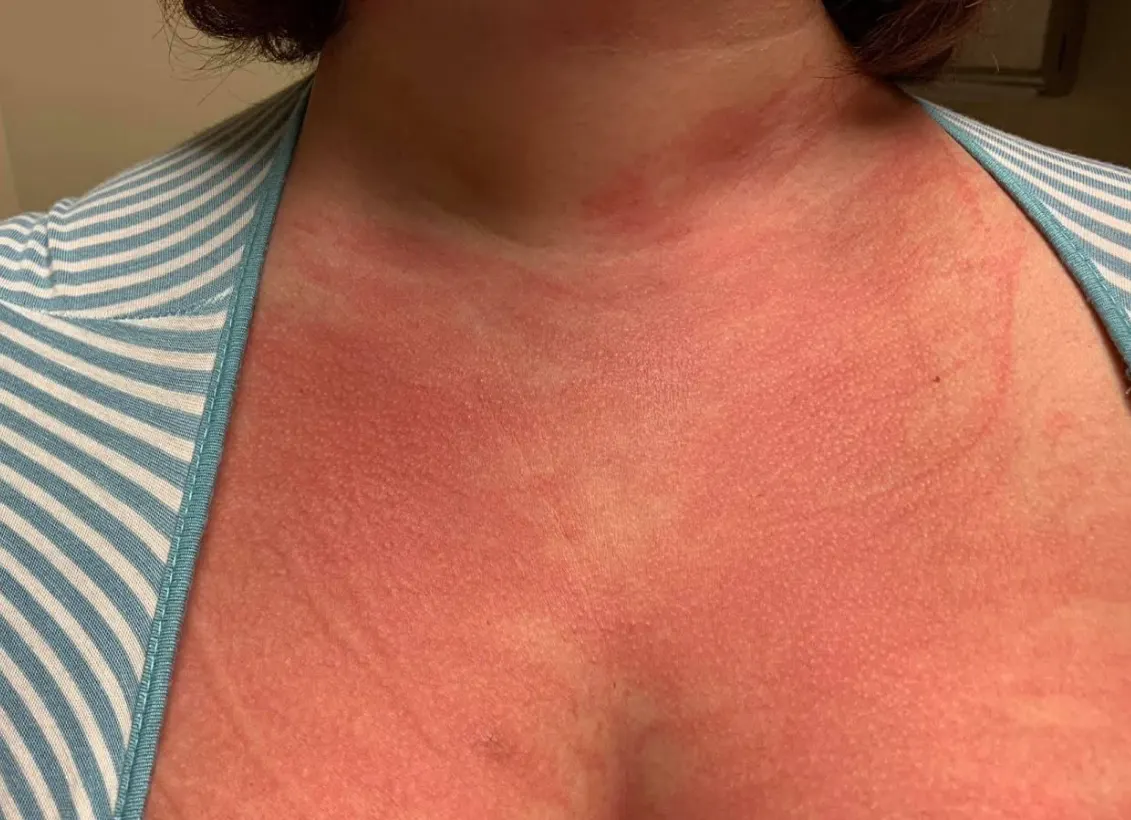
- Blotchy flushing across the chest, neck, and upper back during stress or heat.
- Pressure bands where a waistband, bra band, or bag strap sat for a while.
- Skin that feels tight or sensitive all over on high-reactivity days, before anything appears.
- Disrupted sleep, and marks in the morning from unconscious scratching.
Where it shows up first
Symptoms concentrate wherever clothing and daily movement create repeated contact. Reviewing the list below usually explains most of someone's flare map without any testing.
- Forearms and the backs of hands — the most scratched areas.
- Torso, waist, and lower back where waistbands and seams sit.
- Neck and collarbones from collars and necklaces.
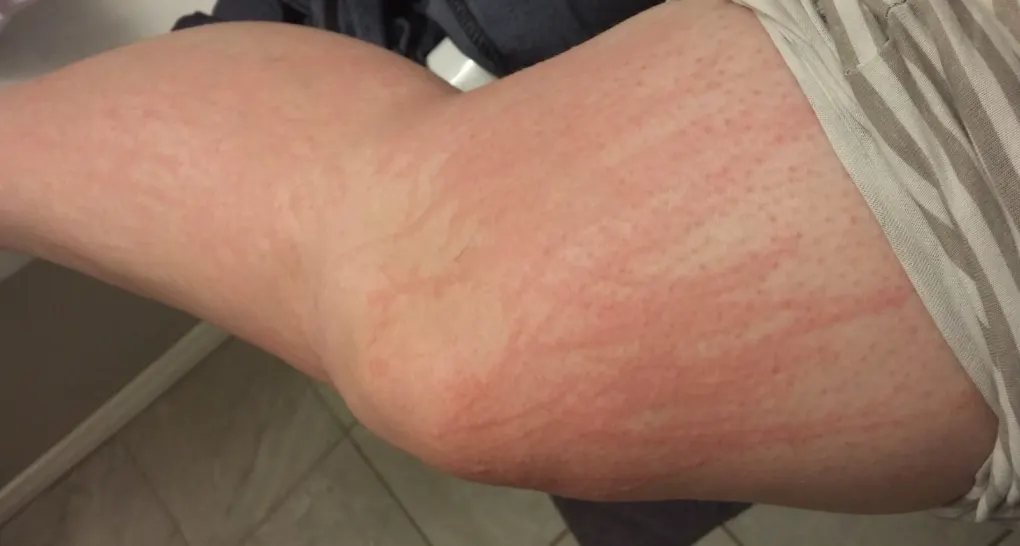
- Thighs from pockets, seams, and sitting.
- Palms and shoulders from carrying and gripping.
How symptoms change over the course of a day
Most people notice a pattern across the day rather than random timing. Mornings after a warm shower are common flare points. Mid-afternoon, with a full day of clothing friction and accumulated stress, is another common peak. Evenings can go either way — calmer if the day was low-friction, or worse if the day involved heat, alcohol, or a stressful event. Mapping your own daily curve for two weeks tells you more about your personal pattern than any general guide can.
How it differs from ordinary hives
Dermatographia welts are linear and follow the shape of whatever touched the skin; spontaneous hives are round or irregular and appear without contact. Dermatographia welts fade in under an hour; spontaneous hives commonly last several hours. Dermatographia is reproducible on demand — stroke the forearm and it appears — which spontaneous hives are not.
Red flags that are not dermatographia
Get medical review promptly if any of the following apply, because they point somewhere else.
- A single welt lasting longer than 24 hours.
- Welts that bruise, leave pigment, or scar.
- Fever, joint pain, or feeling systemically unwell alongside the rash.
- Any lip or tongue swelling, wheeze, or difficulty breathing — this is an emergency.
How clinicians confirm the diagnosis
The stroke test is quick and unambiguous: a clinician runs a blunt instrument, often a tongue depressor, firmly across the skin and watches for the characteristic wheal to develop over the next several minutes. It is usually enough on its own; further testing is generally reserved for cases with red flag symptoms or where an underlying driver like thyroid disease is being considered.
Tracking symptoms usefully
Score three things daily — how fast welts rise, how long they last, and itch severity out of five. Those numbers show improvement long before the welts stop appearing entirely, and they make appointments far more productive than trying to describe a flare from memory.
Look-alike conditions and how to tell them apart
A handful of other conditions get mistaken for dermatographia because they also involve welts, flushing, or itch, and it is worth knowing the distinguishing features so you are not chasing the wrong explanation.
Cholinergic urticaria produces small, intensely itchy bumps a few millimetres across, triggered by a rise in core body temperature from exercise, hot showers, or stress, and they look different from the broad linear welts dermatographia produces along a line of contact. Eczema causes dry, scaly, often chronic patches that do not appear and fade within an hour the way a dermatographia welt does. Contact dermatitis follows exposure to a specific substance, takes hours to a day or two to develop, and lasts much longer than a typical welt. Angioedema causes deeper swelling, often around the eyes, lips, or hands, without the surface wheal texture, and needs prompt medical evaluation, especially if it involves the face or throat.
The single most useful distinguishing test remains the timing and shape: if a mark appears within minutes exactly where you scratched or pressed, follows that line precisely, and fades within an hour, dermatographia is the most likely explanation. Anything that does not fit that pattern is worth mentioning specifically to a doctor rather than assuming it is just a worse version of the same thing.
Documenting a flare for your doctor
Because dermatographia often behaves perfectly during a short appointment, the single most useful thing you can do is arrive with a record instead of a description. Photograph a welt at its peak, ideally within the first fifteen minutes, with a timestamp, and note what caused it, how long it took to rise, and how long it lasted.
Over two to four weeks, a simple daily log — worst welt severity out of five, itch severity out of five, and how many separate flare episodes occurred — turns a vague "it comes and goes" into something a clinician can actually use to judge whether a treatment is working or whether further tests, like thyroid screening, are warranted.
What I tried that didn't help
A few things I hoped would change my symptom picture and didn't. Cold showers instead of hot ones reduced the heat trigger somewhat but did nothing for symptoms driven by stress or clothing friction, so the overall improvement was smaller than I expected. An expensive silk pillowcase, marketed heavily for sensitive skin, made no measurable difference to overnight itch scores over a month of tracking. A month of daily antihistamine dosed lower than my doctor's recommendation, because I wanted to "see if I still needed it," mostly just proved that I still needed the full dose — welts came back within days.
None of these were wasted entirely, since ruling things out is still useful information, but I would not repeat them expecting a different result, and I would encourage tracking honestly enough to notice when something genuinely is not working rather than sticking with it out of hope.
When symptoms mean you should seek urgent care
Most dermatographia symptoms are uncomfortable rather than dangerous, but a few signs cross the line into needing prompt or emergency attention rather than routine follow-up. Seek urgent care for any swelling of the lips, tongue, or throat, difficulty breathing or swallowing, dizziness or fainting, or hives spreading rapidly across large areas of the body, since these can indicate a more serious allergic process rather than typical dermatographia.
Also flag it for a same-week doctor visit, even if not an emergency, if welts are lasting longer than 24 hours, leaving bruising or discoloration behind, or arriving alongside fever, joint pain, or a general feeling of being unwell. None of those are typical dermatographia behaviour, and they deserve a proper look rather than being folded into your usual trigger management routine.
Related reading
If this was useful, these go deeper on the questions people ask next.
Find out what's driving your dermatographia
Answer 12 quick questions and get a personalized severity score, your top drivers, and a staged 30-day plan built around your own skin.
Get My Dermatographia ScoreFrequently asked
- What are the symptoms of dermatographia?
- Raised, red, itchy welts that appear along a line of pressure within minutes and fade within 15–60 minutes, often with itch, warmth or stinging, and blotchy flushing on the chest and neck.
- How long do dermatographia welts last?
- Typically 15 to 60 minutes. Welts lasting more than 24 hours, or leaving bruising, are not typical and should be reviewed by a doctor.
- Does dermatographia itch?
- Usually yes, and the itch is often more disruptive than the visible welt, especially at night.
- Can dermatographia symptoms appear without any visible scratching?
- Yes — tight clothing, seatbelts, waistbands, or even firm hugging can produce the same welts as deliberate scratching, since any sustained pressure can trigger the reaction.
- Why are my dermatographia symptoms worse in the shower?
- Heat dilates blood vessels and lowers the mechanical threshold, and the physical action of washing and towelling adds friction, so showers commonly combine two triggers at once.
- Is it normal for symptoms to appear on the face?
- It is less common than on the arms, torso, or neck, but facial flushing and welting can happen, particularly along glasses frames or where hands touch the face. Persistent facial swelling should be checked by a doctor to rule out other causes.
- Can dermatographia cause skin discoloration that stays after the welt fades?
- Typical welts leave no lasting mark once they fade. Persistent discoloration, bruising, or scarring after a welt is not typical and is worth having assessed rather than assumed to be dermatographia.
Sources
Clinical background on this page is checked against the following published sources. My own experience and interviews are labelled as such in the text.