Raised Itchy Lines on Skin: What Those Scratch Marks Mean
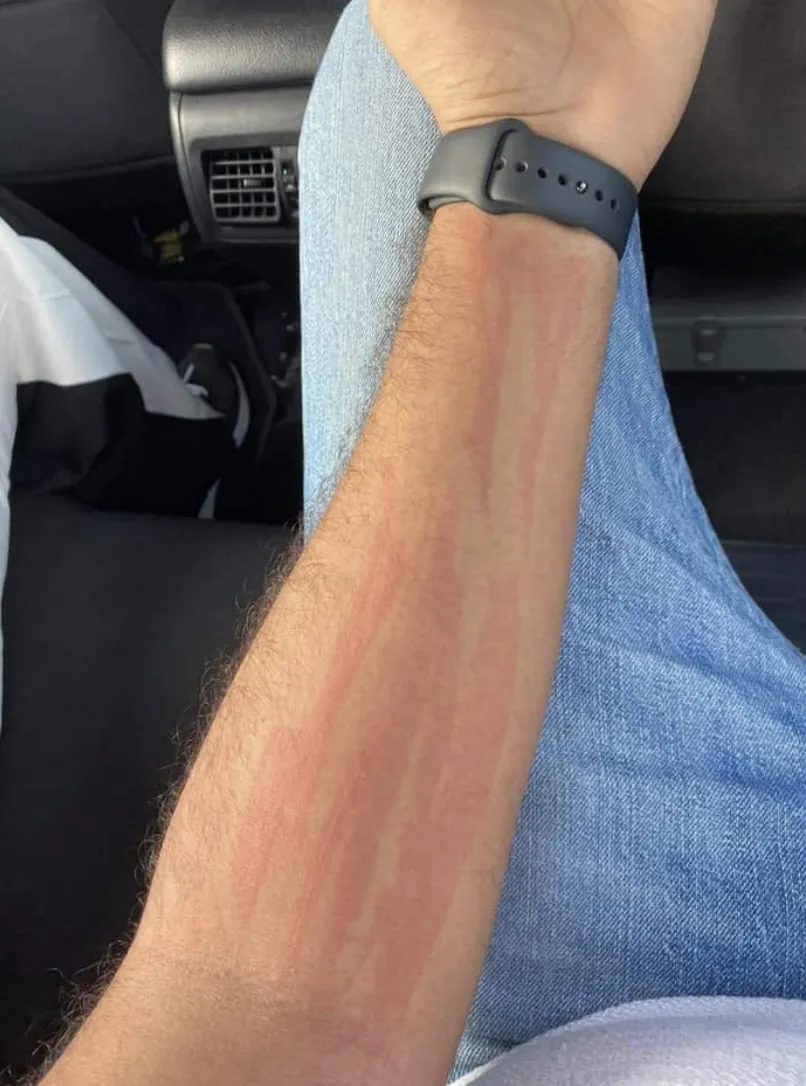
Short answerRaised, itchy lines that appear within a few minutes of scratching and fade within about an hour are almost always dermatographia — a physical form of hives where mechanical pressure makes skin mast cells release histamine. The line traces exactly where the pressure went, sits above the surrounding skin, and leaves no mark once it settles.
What's the medical term for this?
The medical term for raised red lines that look like scratches is dermatographism, also spelled dermographism or dermatographia, and formally called dermatographic urticaria. 'Skin writing' is the everyday name. Plain scratch marks that break the skin are a different thing, called excoriations.
The thing you noticed
Most people find this the same way I did. You scratch an itch on your arm without thinking about it, look down a couple of minutes later, and there is a raised red line sitting exactly where your fingernail went. Not a graze. Not a cut. A swollen line, slightly warm, itchier than the itch you were scratching in the first place.
Then it fades. Twenty minutes, maybe an hour, and the skin looks completely normal again — which is the part that makes people doubt themselves. There is nothing to photograph by the time anyone else is in the room, and nothing to show a doctor at an appointment three weeks later.
If that is what brought you here, you are in the right place, and this is a recognised condition with a name.
What is actually happening under the skin
Your skin contains mast cells — immune cells that sit near blood vessels and nerve endings, loaded with histamine. In most people they ignore ordinary friction. In some of us the threshold is set much lower, and the mechanical force of a fingernail, a seam or a strap is enough to make them release their contents.
Histamine does three things at once, which is why the mark looks and feels the way it does. It makes nearby blood vessels widen, so you get redness. It makes them leak fluid into the surrounding tissue, so the line rises. And it fires the itch nerves directly, so the spot itches more than it did before you touched it.
The line traces your fingernail because that is where the pressure was. This is the detail that separates it from almost everything else — the shape of the mark is the shape of what touched you, not the shape of a rash spreading on its own.
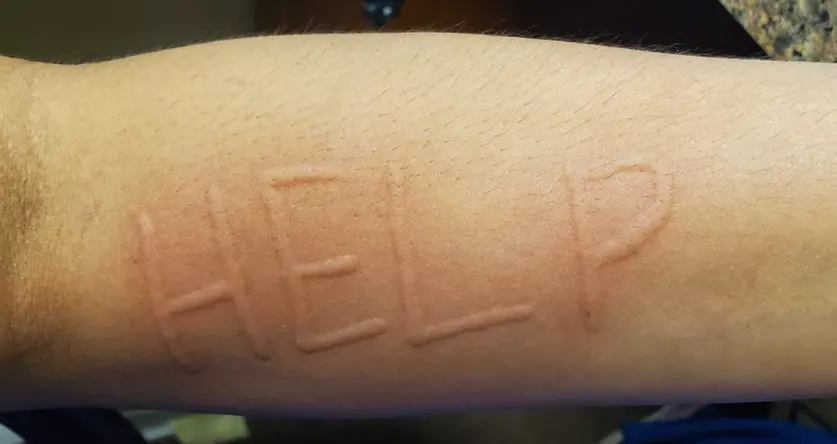
The five-minute test you can do right now
This is the same test a dermatologist runs, and you can do a rough version at home on clear skin — the inner forearm works well.
- Draw a single firm line across the skin with a fingernail or the blunt end of a pen. Firm, not hard enough to break skin.
- At 60 seconds: look for a red line appearing along the stroke.
- At 3 to 5 minutes: look for the line to rise above the surrounding skin, often with a paler centre and a red flare either side.
- At 30 to 60 minutes: check again. It should be gone or nearly gone, with no bruise, no scab and no stain.
- If all four happen, that pattern is the classic dermatographia response. Photograph it at the 5-minute mark, because that is the picture worth bringing to an appointment.
Why it itches more after you scratch
This is the cruel part of the whole thing. Scratching is supposed to relieve an itch. Here it recruits more mast cells, releases more histamine, and produces a bigger, itchier area than the one you started with.
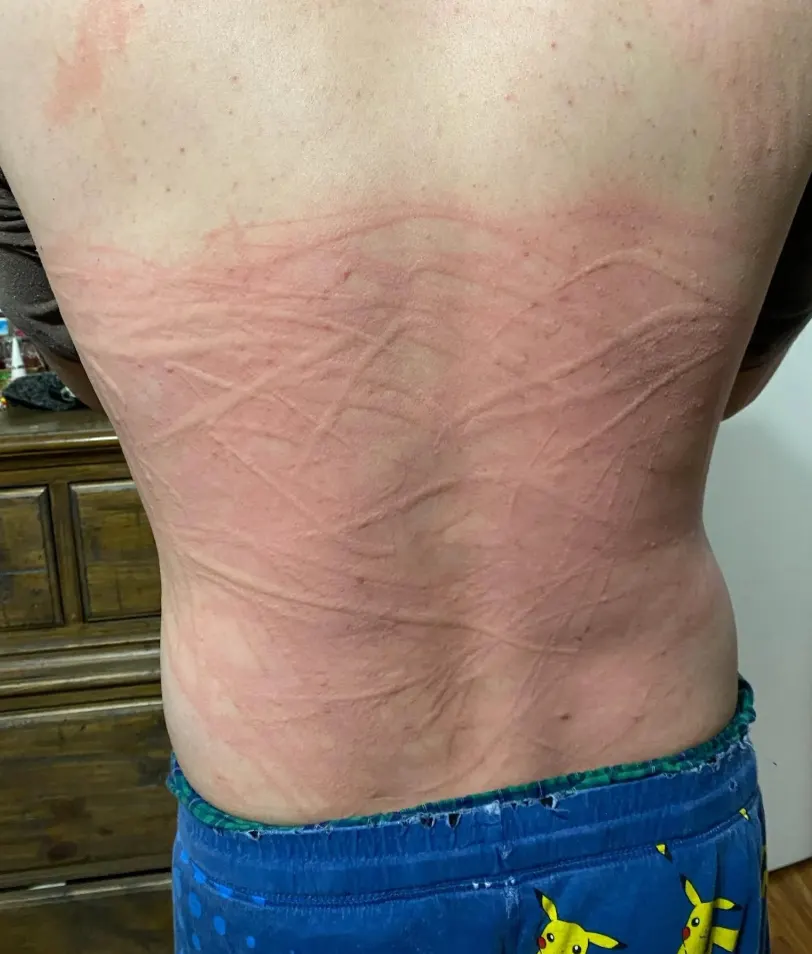
That loop is why people wake up with lines across their back or stomach they do not remember making. Overnight scratching is unconscious, unrestrained by any sense of 'that is enough', and it runs for hours.
Practical things that break the loop: keep nails filed short so the reflexive scratch delivers less force, keep a cold pack in the fridge for the worst spots, and press or tap instead of dragging when you have to touch an itchy area.
What else it could be
Raised lines are quite specific, but a few things do get confused with them. Here is how they separate.
| What you see | Timing | Most likely |
|---|---|---|
| Raised line exactly where you scratched, fades within an hour | 1–5 min to appear | Dermatographia |
| Scattered patches, no clear line, last 6–24 hours | Unpredictable | Chronic spontaneous urticaria |
| Dry, rough, flaking patches in skin creases | Days to weeks | Eczema |
| Rash in the shape of something that touched you, blisters or scales | 12–48 hours after contact | Contact dermatitis |
| Tiny pinprick bumps after a hot shower or exercise | Minutes after heat | Cholinergic urticaria |
| Line that bruises, scabs or leaves a lasting mark | Persists | Skin injury — not dermatographia |
Where the lines usually show up
Anywhere pressure lands, which in practice means a fairly predictable list. Forearms and hands, because that is what you scratch with and what brushes against things. The back and shoulders, from chair backs, bag straps and sleep. The waist, from waistbands and belts. The neck, from collars and necklaces.
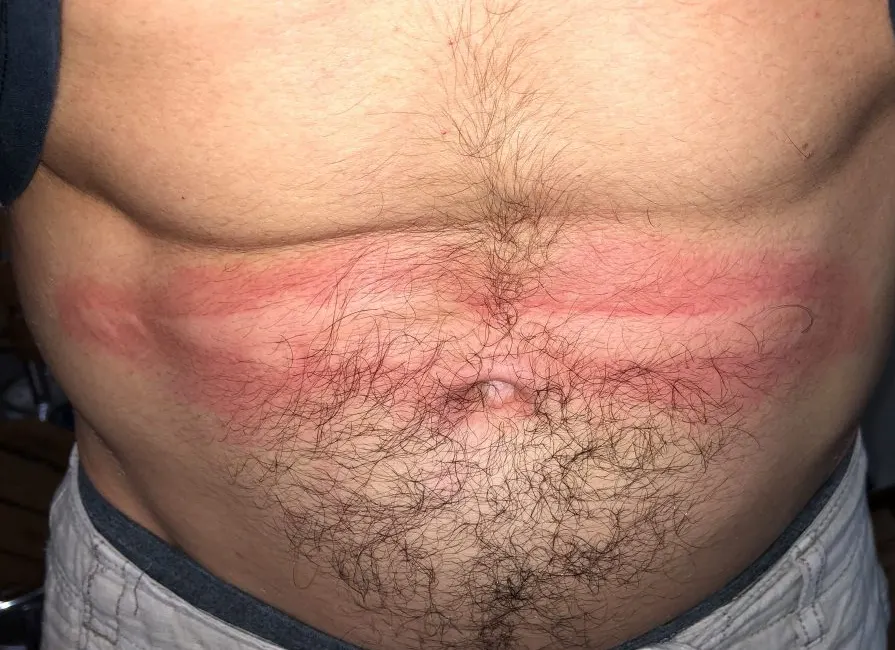
Marks that appear without you scratching are usually clothing. A parallel set of lines across the forearm is almost always a ribbed cuff. A band across the stomach is a waistband. A line along the collarbone is a bra strap or a seatbelt.
Once you start reading the marks as a map of what touched you, the trigger list writes itself.
What to do about it today
Nothing here is a prescription — that conversation belongs with a clinician — but there are three levers that people consistently report making the biggest difference, and two of them cost nothing.
- Friction: audit what touches your skin all day. Seams, cuffs, straps, towel-rubbing after a shower, the strap of a bag on one shoulder.
- Barrier: dry skin itches sooner and gets scratched more. A bland fragrance-free moisturiser on damp skin, twice a day.
- Medication: daily non-sedating antihistamines are the first-line treatment for this and are the piece to raise with a doctor or pharmacist.
When lines are worth a same-day call
Dermatographia itself is not dangerous, but a few things that can accompany hives are. Get urgent care for swelling of the lips, tongue or throat, any difficulty breathing or swallowing, or feeling faint alongside a skin reaction. Those are not dermatographia.
Book a routine appointment if an individual mark lasts more than 24 hours in one place, if the skin blisters or leaves a lasting stain, or if the itch is costing you sleep. All three point somewhere other than a simple pressure reaction.
Find out what's driving your dermatographia
Answer 12 quick questions and get a personalized severity score, your top drivers, and a staged 30-day plan built around your own skin.
Get My Dermatographia ScoreFrequently asked
- What is the medical term for scratch marks that rise into welts?
- The medical term is dermatographism (also spelled dermographism), formally called dermatographic urticaria. Ordinary flat scratch marks from nails are just called excoriations. Raised, itchy lines that look like scratches but appear from light pressure and fade within an hour are dermatographism.
- Why do raised lines appear on my skin when I scratch?
- Pressure destabilises mast cells in the skin, which release histamine. Histamine widens local blood vessels and makes them leak fluid, so a raised red line rises along exactly the path the pressure took. This is called dermatographia.
- How long do the raised lines last?
- Typically 15 to 60 minutes. Deeper pressure or a warm room can stretch that out, but a mark still present after 24 hours in one place is not a typical dermatographia welt and is worth showing a clinician.
- Are raised scratch marks on skin dangerous?
- The marks themselves are benign — they do not scar and they do not signal organ damage. Urgent care is needed only if there is swelling of the lips, tongue or throat, breathing difficulty, or faintness with the reaction.
- Can raised itchy lines appear without scratching?
- Yes. Waistbands, bra straps, watch straps, seatbelts, tight cuffs and even a chair back can supply enough pressure. The mark takes the shape of whatever pressed on the skin.
- What should I actually say at the appointment?
- Describe it mechanically: a raised line appears within minutes of light pressure, it itches, and it flattens within about an hour. That description plus a photo taken at the five-minute mark gets you to the right answer faster than the word 'rash'.
Sources
Clinical background on this page is checked against the following published sources. My own experience and interviews are labelled as such in the text.