Is Dermatographia Dangerous? No. Here's When to See a Doctor
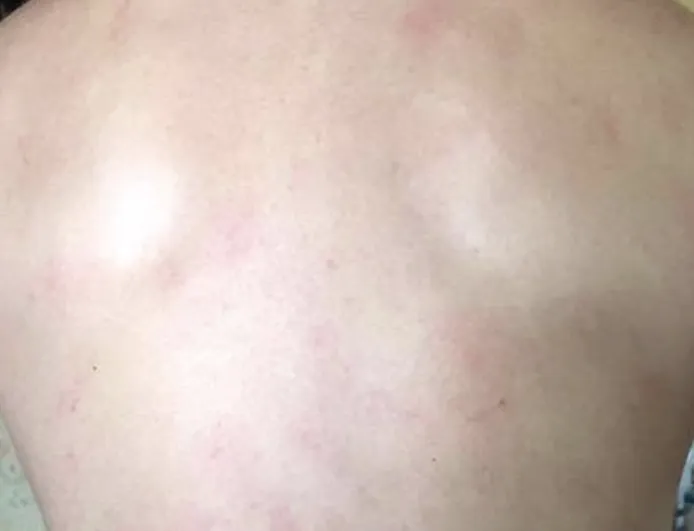
Short answerDermatographia itself is not dangerous. It does not scar in its typical form, it does not damage organs, and it does not turn into a more serious disease. The exceptions worth knowing are swelling of the lips, tongue or throat, any difficulty breathing, or welts that come with faintness — those are signs of a different, urgent reaction and need emergency care, not an antihistamine.
The honest answer up front
I have had dermatographia for more than twenty years. In that time the question I get asked most — by newly diagnosed people, by their partners, and by parents of teenagers who just discovered they can write on their arm — is some version of 'is this going to hurt me?'
The medical answer and my lived answer agree: no. Dermatographia is a benign condition. It is uncomfortable, it is visible, it wrecks sleep during a bad stretch, and it is genuinely exhausting to explain to people who think you are scratching yourself for attention. None of that is the same as dangerous.
What follows is the long version, including the small number of situations where something else is going on and you should stop reading and get seen.
What dermatographia does not do
It helps to be specific about the fears, because most of them can be retired quickly.
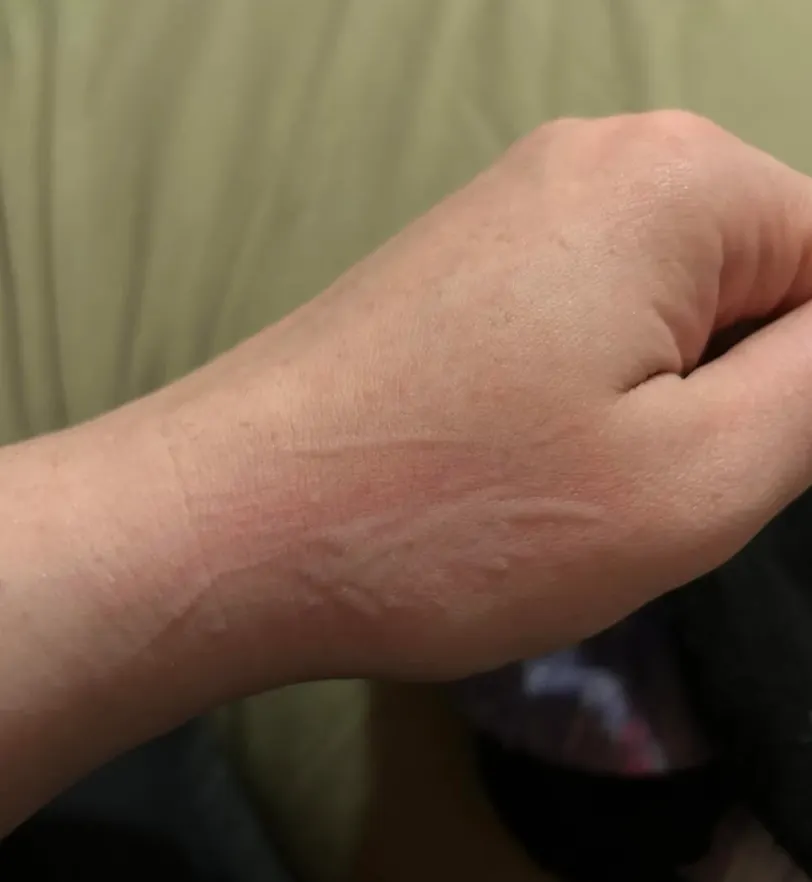
- It does not scar. Typical wheals resolve completely within 15–60 minutes and leave no permanent mark. Scarring, when it happens, comes from repeated hard scratching breaking the skin — not from the welt itself.
- It is not contagious. You cannot pass it to a partner, a child, or anyone you share a towel with.
- It is not cancer and it is not a precursor to cancer. The reaction is a histamine response in the skin, not abnormal cell growth.
- It does not damage your organs. The mast cell activity is local to the skin.
- It is not progressive in the way people fear. It waxes and wanes over years; it does not steadily worsen toward some worse disease.
The symptoms that are not dermatographia — get seen
This is the part worth memorising. Dermatographia produces raised, itchy lines on the skin where pressure was applied. Anything from the list below is outside that pattern and should be treated as a medical emergency rather than a bad dermatographia day.
- Swelling of the lips, tongue, eyelids or throat.
- Any tightness in the throat, a change in your voice, wheeze, or difficulty breathing or swallowing.
- Feeling faint, dizzy, or a racing heart alongside skin symptoms.
- Vomiting or stomach cramps that arrive at the same time as widespread hives.
- Welts accompanied by a fever, joint pain, or feeling systemically unwell.
Why those symptoms are different
Dermatographia is a localised skin reaction: mast cells in the dermis release histamine along the line of pressure, blood vessels widen, fluid leaks into the tissue, and you get a wheal. The whole event stays in the skin.
Anaphylaxis and angioedema involve the same mediators but a much wider distribution, including the deeper tissue of the airway. That is what makes them dangerous, and it is why they need adrenaline and emergency care rather than a daily antihistamine.
Having dermatographia does not raise your risk of anaphylaxis. But because both involve hives, it is worth being able to tell them apart quickly — the distinction is airway and systemic involvement, not how red or itchy the skin looks.
Welts that behave unusually are worth a conversation
Not urgent, but worth raising at your next appointment rather than filing away:
- Individual welts that last longer than 24 hours in the same spot — typical dermatographia clears in under an hour.
- Welts that leave bruising or a brown stain behind as they fade.
- Welts that hurt or burn more than they itch.
- Hives that appear with no physical trigger at all, especially if they have been coming daily for more than six weeks.
- New skin symptoms alongside weight loss, night sweats, or persistent fatigue.
The real cost is quality of life, not physical risk
Calling dermatographia benign is medically accurate and emotionally incomplete. Benign describes what it does to your tissue, not what it does to your week.
Sleep is where I feel it most. Itch reliably peaks in the evening, and a night spent half-awake scratching a waistband line is a night that costs you the next day. There is a well-documented link between chronic urticaria and both sleep disruption and low mood, and it deserves to be taken seriously by your clinician rather than waved off because the condition is not physically harmful.
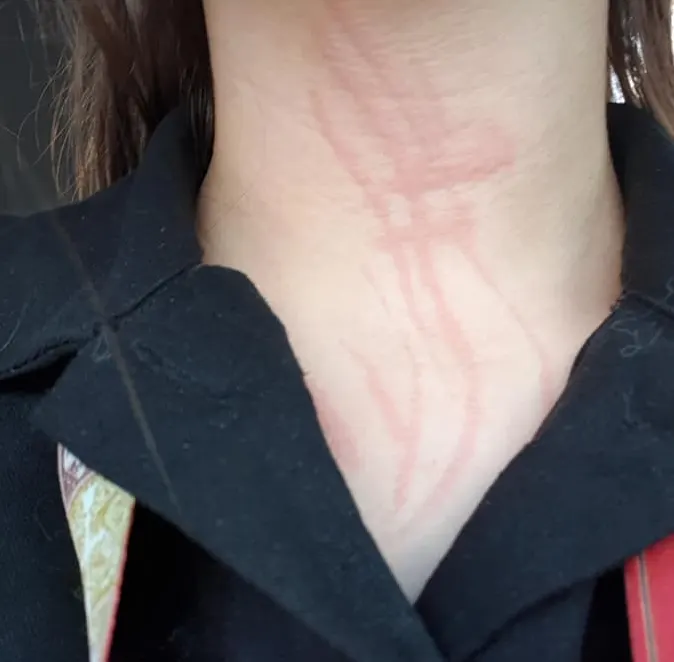
The visible side matters too. Explaining to a colleague why there is a red line across your neck, or fielding the assumption that you have been hurt, is a small tax that gets paid over and over.
What actually helps
Since the risk is to comfort rather than to health, treatment is aimed squarely at comfort — and there is a lot you can do.
Most people get meaningful relief from three levers used together: a consistent preventive antihistamine routine agreed with a clinician, removing mechanical friction from clothing, straps and bedding, and protecting the skin barrier so it tolerates more pressure before it reacts.
Related reading
If this was useful, these go deeper on the questions people ask next.
Find out what's driving your dermatographia
Answer 12 quick questions and get a personalized severity score, your top drivers, and a staged 30-day plan built around your own skin.
Get My Dermatographia ScoreFrequently asked
- Is dermatographia dangerous?
- No. Dermatographia is a benign form of physical urticaria. The welts are a local histamine reaction in the skin, they typically fade within an hour, and they do not scar or cause organ damage. Swelling of the lips, tongue or throat, or any breathing difficulty, is a different reaction and needs emergency care.
- Can dermatographia be a sign of cancer?
- Almost never. Dermatographia is extremely common and in nearly everyone it has no link to cancer. Doctors only look further when welts come with other unexplained signs, such as weight loss, night sweats, fevers or swollen glands. If you have those alongside the welts, mention them to your doctor; welts on their own are not a warning sign.
- Can dermatographia turn into something worse?
- It does not progress into a more serious disease. It can fluctuate in severity over years, and some people also develop chronic hives that appear without a physical trigger — that is a separate condition worth discussing with a clinician, not a worsening of dermatographia itself.
- Does dermatographia leave permanent scars?
- The wheals themselves resolve without a mark. Scarring or long-term discolouration usually comes from repeated hard scratching that breaks the skin, which is one of the strongest arguments for treating the itch rather than enduring it.
- When should I go to the emergency room?
- Go immediately for swelling of the lips, tongue, eyelids or throat, difficulty breathing or swallowing, voice change, faintness, or hives accompanied by vomiting and a racing heart. Those signs point to angioedema or anaphylaxis, not dermatographia.
- What symptoms mean go now rather than book an appointment?
- Swelling of the lips, tongue or throat, difficulty breathing or swallowing, dizziness or a feeling of collapse. Those are anaphylaxis symptoms, not dermatographia, and they need emergency care immediately.
Sources
Clinical background on this page is checked against the following published sources. My own experience and interviews are labelled as such in the text.