Can Dermatographia Be Completely Cured? An Honest 20-Year Answer
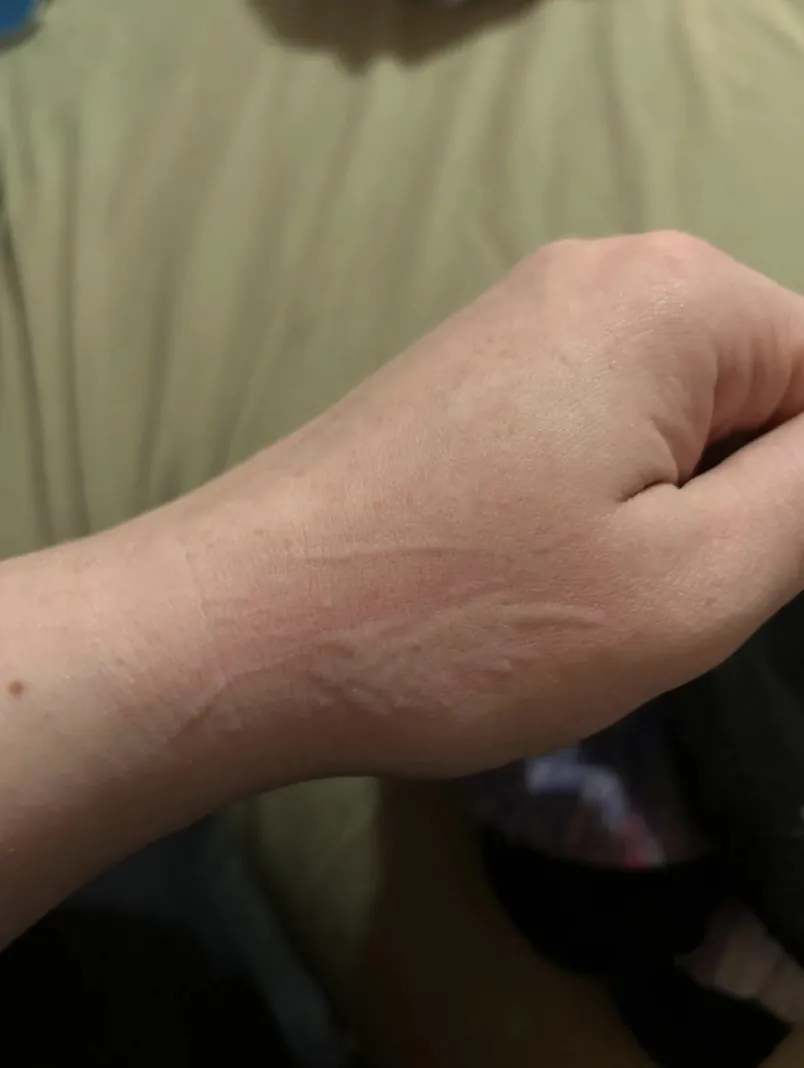
Short answerThere is no proven permanent cure for dermatographia, but a large share of people reach long remission — months or years with no visible welts — and many eventually stop reacting altogether. Remission is driven by consistent antihistamine control, removing mechanical friction, and protecting the skin barrier, not by any single product or protocol.
What people actually mean by 'cured'
When I searched for a cure in my first years with this, I wanted one thing: to scratch my arm and see nothing happen. That is a fair definition, and it is worth being precise about it, because 'cured' and 'in remission' get used interchangeably online and they are not the same.
A cure means the underlying mast cell sensitivity is permanently gone. Remission means the reaction threshold has risen so far that normal life — a backpack strap, a hot shower, a scratch — no longer crosses it. From the inside, remission feels identical to a cure. The difference only shows up if a bad flu, a stressful year, or a course of medication drags the threshold back down.
Almost everyone who says online that they were completely cured is describing durable remission. That is not a disappointing outcome. It is the realistic goal, and it is genuinely achievable.
I want to be honest about why this distinction matters practically, not just semantically. If you believe you need a cure, you will keep hunting for one product, one supplement, one detox that flips a switch, and you will burn years and money doing it. If you understand you are managing a threshold, you build habits that actually move that threshold, and you stop being disappointed when an occasional bad week still happens after years of calm.
What the evidence says about resolution
Symptomatic dermographism is usually described in the literature as a chronic inducible urticaria that persists for years and then often resolves on its own. Reported average durations cluster in the range of a few years to around a decade, with wide variation between people. Spontaneous resolution is common enough that many dermatologists mention it at the first appointment.
That matters for how you plan. If the natural history for many people is 'this fades eventually', then the job in the meantime is not chasing a cure — it is keeping the skin calm enough that the condition does not run your day while the clock runs.
It is worth saying plainly that nobody can predict exactly where you sit on that curve. Some people have a mild, self-limiting episode lasting months, usually tied to a specific trigger like a virus or a new medication. Others carry it, on and off, for twenty years — I am one of them. Neither outcome tells you anything is being done wrong. The variability itself is the honest answer, even though it is not a satisfying one.
- Most cases are idiopathic — no single underlying cause is found to remove.
- Onset is often traceable to an infection, a medication, a very stressful period, or barrier damage.
- When an underlying driver exists and is treated (thyroid disease, an infection, a triggering drug), symptoms can fall away quickly.
- Antihistamines control the reaction; they do not shorten or lengthen the condition itself.
My own timeline, without the marketing gloss
I was diagnosed in 2008 after months of assuming I was allergic to my own laundry detergent. The first five years were the worst: daily welts, sleep wrecked by itching, and a running mental list of shirts I could not wear.
What changed was not one discovery. It was three boring levers pulled at the same time and held for months: a preventive daily antihistamine agreed with my doctor rather than a reactive one taken after a flare, a wardrobe stripped of seams and tight straps, and a barrier routine that meant my skin stopped starting each day already irritated.
I now go long stretches with nothing visible. Then a stomach bug or a brutal work quarter arrives and the lines come back for a few weeks. That is remission, honestly described.
There was a middle stretch, around year eight or nine, where I genuinely believed it was gone. I stopped my antihistamine, wore whatever I wanted, stopped moisturising twice a day. It came back within about six weeks, and worse than before, because my skin had lost the conditioning those habits had built. That relapse taught me more than any of the good years did: the habits are not a temporary bridge to a cure, they are the maintenance that keeps the remission stable.
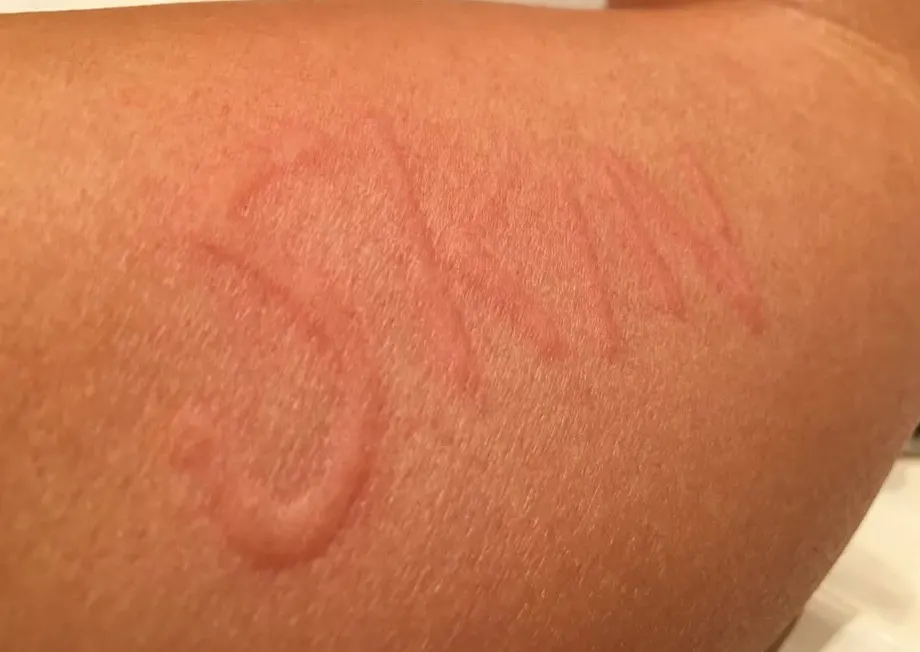
Things sold as cures that are not
Every few months a new 'permanent fix' circulates. Being specific about what fails is more useful than being vague about what works.
- Elimination diets: helpful for a minority with a genuine histamine load problem, useless as a cure for most.
- Detoxes and parasite cleanses: no mechanism, no evidence, and they often damage the barrier further.
- Stopping antihistamines to 'let the body heal': this does not retrain mast cells; it just returns the welts.
- Single supplements marketed as mast cell cures: some are reasonable support, none are curative.
- Expensive 'anti-histamine' skincare lines: a good moisturiser matters, but the marketing language on the label does not indicate any special curative property.
- Alternative therapies promising to 'reset the nervous system': stress reduction genuinely helps the threshold, but that is different from a cure, and the framing is often used to sell an expensive course.
What a realistic remission plan looks like
If you want the best shot at long remission, aim at the threshold rather than the symptom. Every lever below raises the amount of pressure your skin will accept before it reacts.
None of these individually feels dramatic. That is the point. Dermatographia responds to compounding small changes held consistently, not to a single heroic intervention. I think of it the same way I think of dental health — nobody expects one great brushing session to fix a decade of neglect, and nobody should expect one great skincare purchase to fix a mast cell threshold either.
- Consistent daily antihistamine dosing at a level your clinician sets, taken preventively for months rather than in reaction to flares.
- Removing repetitive mechanical friction: seams, waistbands, bag straps, tight collars, aggressive towel drying.
- Barrier repair: a fragrance-free ceramide moisturiser applied to damp skin, twice daily, for at least eight weeks before judging it.
- Heat and stress management, because both lower the threshold across the whole body rather than at one spot.
- Sleep: poor sleep and itch feed each other, and silk bedding plus a cooler room breaks that loop for a lot of people.
- Patience measured in months, not days — the threshold moves slowly in both directions.
How to know your threshold is rising
Progress with dermatographia is gradual, so it is easy to miss. Track the shape of the reaction rather than whether one happened: how fast a welt rises, how high it lifts, how long it lasts, and how badly it itches. When welts start fading in fifteen minutes instead of an hour, you are winning even if they still appear.
A simple weekly log — a line or two, not a spreadsheet obsession — is enough to catch the trend. I kept mine on my phone's notes app for years: date, rough severity out of five, and anything unusual that day. Looking back over three months of entries told me far more than any single day ever did, and it gave my dermatologist something concrete to work from instead of my memory of 'it's been bad lately.'
What relapse actually feels like, and why it is not failure
The hardest psychological part of long remission is the first relapse after a good stretch. It feels like a verdict — like the years of habit-building were wasted. They were not. A relapse after eighteen months of calm skin is not the same condition as the constant daily flaring I had in year one; it responds faster to the same tools because the underlying groundwork is still there.
When I relapse now, I do not panic or start hunting for a new miracle product. I go back to basics for two to four weeks: strict antihistamine timing, a friction audit of whatever has changed in my wardrobe or routine, and extra attention to the moisturiser routine. It almost always settles back down within that window, which itself is useful information — it tells me the underlying threshold recovery is intact even when a temporary stressor pushed it down.
When to escalate beyond self-management
If welts are constant despite a genuine, consistent effort at the basics for eight to twelve weeks, that is the point to ask a doctor about dose escalation or second-line options rather than trying yet another home remedy. And if you ever notice swelling of the lips or tongue, difficulty breathing, or wheeze alongside welts, that is not ordinary dermatographia — treat it as an emergency and seek urgent care immediately.
Related reading
If this was useful, these go deeper on the questions people ask next.
Find out what's driving your dermatographia
Answer 12 quick questions and get a personalized severity score, your top drivers, and a staged 30-day plan built around your own skin.
Get My Dermatographia ScoreFrequently asked
- Can dermatographia be completely cured?
- There is no proven permanent cure. Many people reach long remission where welts stop appearing in normal daily life, and for a substantial number the condition resolves on its own over several years.
- How many years do people typically live with it?
- Reported durations vary widely, commonly from a couple of years to around a decade, with periods of remission and relapse in between.
- Will antihistamines cure it?
- No. They block the histamine effect so welts do not form, which controls symptoms very effectively, but they do not change the underlying mast cell sensitivity.
- Does dermatographia ever come back after years of remission?
- Yes, it can. A viral illness, a stressful period, or stopping the habits that kept the threshold high can bring welts back after long quiet stretches. Restarting the same basics usually settles it faster than the first time around.
- Is it possible to be born with dermatographia or grow out of it?
- It can appear at any age, including childhood, and some children do grow out of it by adulthood. Adult-onset cases follow a less predictable course, but resolution over time is still common.
- Should I keep taking antihistamines once I feel cured?
- Talk to your clinician about tapering rather than stopping abruptly. Many people reduce dose gradually while watching for returning symptoms rather than quitting outright the day they feel better.
- Can pregnancy or menopause change the course of dermatographia?
- Hormonal shifts are commonly reported as affecting flare frequency, though the direction varies between individuals. If you notice a pattern around a hormonal change, mention it to your doctor.
Sources
Clinical background on this page is checked against the following published sources. My own experience and interviews are labelled as such in the text.