Dermatographia Causes and Triggers: What Sets Skin Writing Off
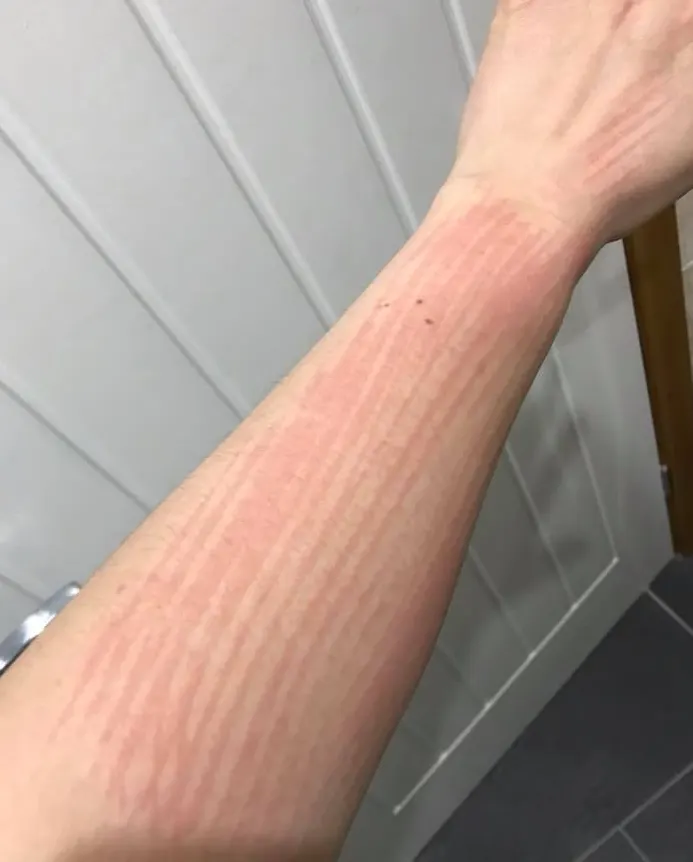
Short answerDermatographia is caused by unusually sensitive skin mast cells that release histamine in response to mechanical pressure, producing a wheal along the line of contact. Most cases are idiopathic, though onset is often linked to infection, medication, thyroid disease, prolonged stress, or skin barrier damage. Day-to-day flares are driven by friction, heat, stress, alcohol, and dry skin.
The mechanism in plain language
Mast cells sit throughout the skin holding granules of histamine and other mediators. In dermatographia these cells are set on a hair trigger: mechanical force alone is enough to make them degranulate, where in most people it would take an allergen.
Once histamine is released, local blood vessels widen and leak fluid into the surrounding tissue. That fluid is the raised wheal, the widened vessels are the red flare around it, and histamine binding to nerve endings is the itch. Because the release follows exactly where the pressure went, the welt traces the line — which is why you can write on your skin.
Researchers still do not fully understand why some people's mast cells sit this close to their trigger point while most people's do not. Some theories point to IgE antibodies bound to the mast cell surface reacting to a stimulus we cannot yet identify; others focus on structural changes in how mast cells are anchored in the skin after an inflammatory episode. Neither is settled science, and it is one of the honest gaps in what dermatology currently knows about this condition.
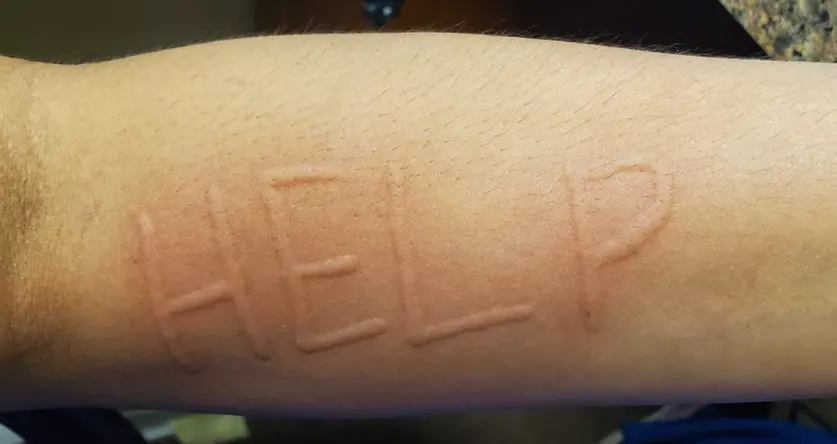
Why it starts: causes versus triggers
It helps to separate the two. A cause is why you have the sensitivity at all. A trigger is what produces a welt today given that you have it. Most people spend years hunting for a cause when their leverage is almost entirely on the trigger side.
In my case, the honest answer to 'what caused it' is that I do not fully know. There was a bad flu the winter before symptoms started, and a stressful job change around the same time, and I have always assumed one or both played a role. But I have never had a test confirm a single cause, and most people I have talked to over the years describe the same fuzzy, unconfirmed origin story. That is normal, not a failure of investigation.
- Idiopathic: the most common category — no identifiable underlying cause.
- Post-infectious: onset in the weeks after a viral or bacterial illness, including after COVID for a number of people.
- Medication-related: some drugs, notably certain antibiotics and opioids, can provoke it.
- Thyroid and autoimmune conditions: associated with chronic urticaria and worth screening for.
- Prolonged stress: not a cause on its own, but a common companion at onset.
- Barrier damage: after eczema, sunburn, or aggressive skincare, the skin reacts at lower pressure.
The everyday triggers that decide your day
These are the levers you can actually pull. Every one of them shifts the threshold — the amount of pressure needed before a welt forms.
It is worth noticing that these triggers stack additively rather than independently. A hot shower after a stressful day, followed by a tight waistband at dinner, is three small threshold-lowering events happening within a few hours of each other. Individually none might cause a visible welt; together they often do. Understanding the stacking effect explains a lot of the 'why today and not yesterday' confusion people feel early on.
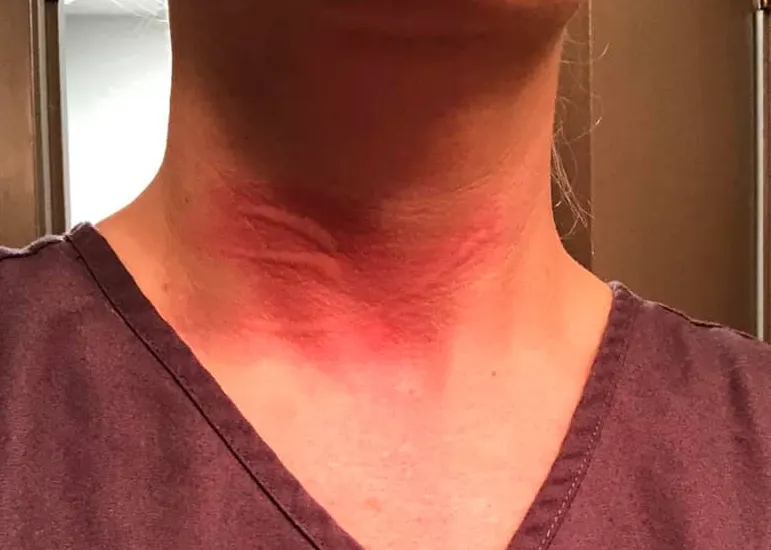
- Friction and pressure: seams, waistbands, bra bands, bag straps, watch bands, tight collars, towel drying.
- Heat: hot showers, saunas, exercise, hot weather, and overheated bedrooms.
- Stress and poor sleep: both lower the threshold across the whole body at once.
- Alcohol and high-histamine food: raise baseline histamine load.
- Dry skin: a compromised barrier reacts to pressure it would otherwise tolerate.
- Scratching itself: the most self-reinforcing trigger there is, because relief lasts seconds and the welt lasts an hour.
Myths worth dropping
A few beliefs keep circulating and cost people time and money.
- It is not contagious and has nothing to do with hygiene.
- It is not a classic allergy — the pathway overlaps, but there is no allergen to avoid.
- It is not caused by 'toxins', and detox protocols do not address the mechanism.
- Anxiety does not create it, although stress genuinely worsens it.
- It is not caused by poor diet alone, even though diet can shift the threshold for some people.
- It does not mean your immune system is broadly malfunctioning — most people with dermatographia are otherwise healthy.
Why some triggers matter more for you than for someone else
Two people with the same diagnosis can have almost opposite trigger profiles. One person flares mainly from heat and barely notices food; another is fine in the heat but flares hard after wine. This is why generic advice only goes so far, and why tracking your own pattern for a few weeks is more useful than following someone else's routine exactly. The mechanism is shared; the dominant lever is individual.
Turning triggers into a plan
Once you know which triggers dominate for you, the plan writes itself: friction-dominant people get the biggest win from a wardrobe and bedding audit, heat-dominant people from temperature control, and stress-dominant people from sleep and load management. Everyone benefits from barrier repair.
When a trigger search should stop and a doctor visit should start
If welts are frequent and severe despite a thorough relief quiz, or if they come with fever, joint pain, or feeling unwell generally, that points beyond simple dermatographia and warrants a medical work-up, including thyroid function and a review of current medications. And any swelling of the lips or tongue, or breathing difficulty, needs urgent medical attention immediately rather than more self-investigation.
A simple trigger-testing method
You do not need a lab to work out your dominant trigger, just a bit of discipline. Pick one suspected trigger at a time — say, hot showers — and test it in isolation for a week while keeping everything else as stable as you can. Take a hot shower one day and a lukewarm one the next, and score your welt severity and itch on a 0–5 scale a few hours later.
Repeat with the next candidate trigger the following week: tight waistbands, a stressful workday, a glass of wine, a poor night's sleep. After four to six weeks working through your personal shortlist, a pattern usually emerges — most people find one or two dominant triggers do most of the damage, with the rest contributing only marginally. That is the trigger worth building your routine around first.
Resist testing three variables at once. It feels efficient but it produces data you cannot actually interpret, and you will end up guessing again in a month.
Documenting a flare for your doctor
A doctor's appointment is short, and dermatographia often behaves itself right when you need it to show off. The fix is to bring a record instead of relying on memory. Note the date and time of flares, what you were doing in the hour before, how quickly the welt rose, how long it lasted, and its shape — linear pressure marks look very different from round spontaneous hives.
A few photos taken at the peak of a flare, timestamped, are genuinely useful, especially if you can capture one within the first fifteen minutes of onset. If your doctor is deciding whether to run thyroid or other blood work, a log showing frequency and severity over two to four weeks gives them something concrete to act on, rather than a single description of "it comes and goes."
What I tried that didn't help with triggers
A few things I invested real time and money in in the trigger-hunting phase, without payoff. Allergy testing for environmental allergens came back clear, which in hindsight makes sense since dermatographia is a pressure response rather than a classic allergy, but nobody explained that to me at the time. A course of expensive probiotics marketed for "histamine balance" made no measurable difference over eight weeks of tracking. Switching to entirely new, unscented everything — detergent, soap, shampoo — all at once made it impossible to tell what, if anything, helped, and in the end nothing in that batch turned out to matter for me.
The lesson I would pass on is to change one variable at a time even when it is tempting to overhaul everything after a bad week. It is slower, but it is the only way the data means anything.
Look-alike triggers that point somewhere else
Occasionally what looks like a dermatographia trigger is actually a different condition. Cold urticaria produces welts after cold exposure rather than pressure, and cholinergic urticaria produces small, intensely itchy bumps after a rise in body temperature from exercise or a hot shower, distinct from the broader flush dermatographia produces. Both can coexist with dermatographia, which is part of why triggers sometimes seem to multiply over time — you may be dealing with more than one reactive pathway at once, not just a worsening of the original one.
If a specific trigger produces a reaction that looks meaningfully different from your usual welts — smaller, more intensely itchy bumps, or welts that appear without any contact at all — mention that distinction to your doctor specifically, since it can change the working diagnosis.
Find out what's driving your dermatographia
Answer 12 quick questions and get a personalized severity score, your top drivers, and a staged 30-day plan built around your own skin.
Get My Dermatographia ScoreFrequently asked
- What infections or conditions are linked to dermatographia?
- Onset is often reported after viral infections, including COVID-19, and some reports link it to H. pylori, parasites and other infections, although most cases have no clear trigger. Thyroid autoimmunity such as Hashimoto's is more common in people with chronic hives, so a doctor may check thyroid levels and antibodies if your symptoms are persistent.
- What causes dermatographia?
- Overly sensitive skin mast cells release histamine in response to mechanical pressure. Most cases are idiopathic, with onset sometimes following infection, medication, thyroid disease, prolonged stress, or barrier damage.
- Is dermatographia an autoimmune condition?
- It is not classified as autoimmune, though it is associated with autoimmune thyroid disease and other chronic urticarias, which is why clinicians sometimes screen for them.
- Can stress cause skin writing?
- Stress does not create the underlying sensitivity, but it reliably lowers the threshold so less pressure is needed to produce a welt.
- Can dermatographia be genetic?
- A clear inherited pattern has not been firmly established, though some people report other family members with chronic hives or sensitive skin. It is not considered a classic hereditary condition in the way some skin diseases are.
- Why did my dermatographia start suddenly with no obvious trigger?
- Many cases are idiopathic, meaning no clear cause is ever identified even after a reasonable medical work-up. This is frustrating but common, and it does not affect the treatment approach much either way.
- Can certain medications make dermatographia worse?
- Yes — some antibiotics, opioids, and other drugs have been reported to provoke or worsen chronic hives including dermatographia. Mention all current medications to your doctor if symptoms started or worsened after a new prescription.
- Does weather affect dermatographia triggers?
- Many people report worse symptoms in hot, humid weather and in the dry air of winter heating, for different reasons — heat dilates vessels and lowers the threshold, while dry winter air damages the skin barrier.
Sources
Clinical background on this page is checked against the following published sources. My own experience and interviews are labelled as such in the text.