How Rare Is Dermatographia? About 2–5% of People Have It
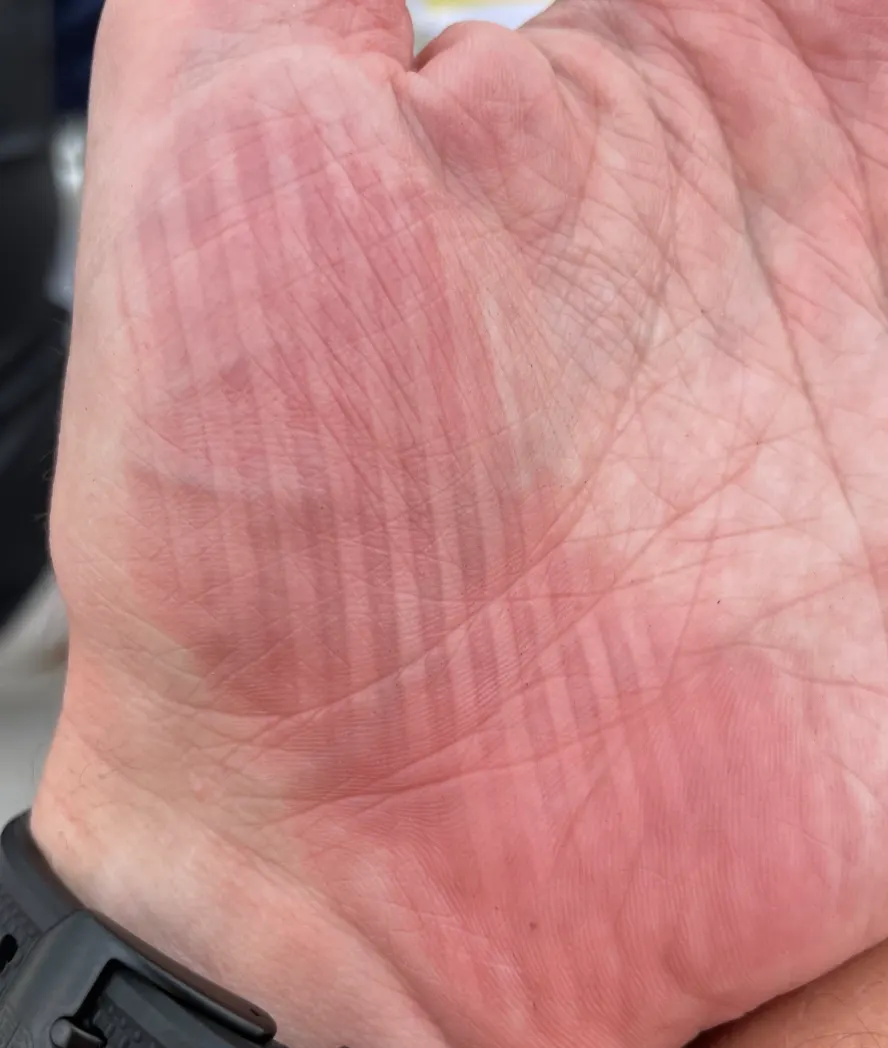
Short answerEstimates suggest 2 to 5 percent of the general population show dermographism — a visible welt when the skin is stroked. Most of those people have the simple, non-itchy form and never seek care. Symptomatic dermatographia, the itchy version people actually get diagnosed with, is the most common of the physical or inducible urticarias and is most often identified in people in their twenties and thirties.
The headline number
The figure quoted most often is that 2 to 5 percent of people display dermographism — draw a firm line across their skin and a visible welt rises. Some series put it higher, depending on how much force the examiner uses and how they define a positive result.
That range makes it one of the more common skin findings in medicine. On the low end it is roughly one person in fifty; on the high end, one in twenty. In a full commuter train carriage, several people can write on their own arm and most of them do not know it.
So if you have just discovered you can do this, the honest framing is that you have found something unusual enough to be interesting and common enough that nobody in dermatology is going to be surprised by it.
Why that number overstates the condition
Here is the important caveat that most articles skip. The 2 to 5 percent figure counts everyone who produces a welt, including the large majority who have simple dermographism — the version with no itch and no consequence.
Symptomatic dermatographia, where the welts itch and clothing and straps set them off without any deliberate scratching, is considerably less common. It is the version that leads people to a doctor, and it is the version this site is about.
That gap explains a frustrating experience a lot of people report: a clinician strokes your arm, sees the line, says 'yes, that's dermographism, it's very common', and moves on. The line was never the point. The itch is.
How it compares to other urticarias
Placing it in context, using the ranges most commonly cited in the literature.
| Condition | Rough prevalence | Note |
|---|---|---|
| Dermographism (any, including simple) | 2–5% of people | Most have no itch |
| Symptomatic dermatographia | Well under 1% | The most common inducible urticaria |
| Chronic spontaneous urticaria | ~0.5–1% at any time | Hives with no physical trigger |
| Cholinergic urticaria | ~0.2–0.5% | Heat and exercise triggered; often coexists |
| Cold urticaria | Rare | Another inducible form |
| Any urticaria in a lifetime | ~20% of people | Mostly acute and short-lived |
Who tends to get it
The pattern in published series is fairly consistent, though none of these are hard rules and plenty of people fall outside them.
- Age: most commonly identified in the twenties and thirties, though it occurs at any age including childhood.
- Sex: slightly more often reported in women, as with urticaria generally.
- Atopy: people with eczema, asthma or hay fever are over-represented.
- Onset: frequently follows an infection, a course of medication, or a period of significant stress — though many cases have no identifiable trigger at all.
Why it feels rarer than it is
Most people with dermatographia have met almost nobody else who has it, which makes the prevalence figures feel wrong. There are a few reasons for that.
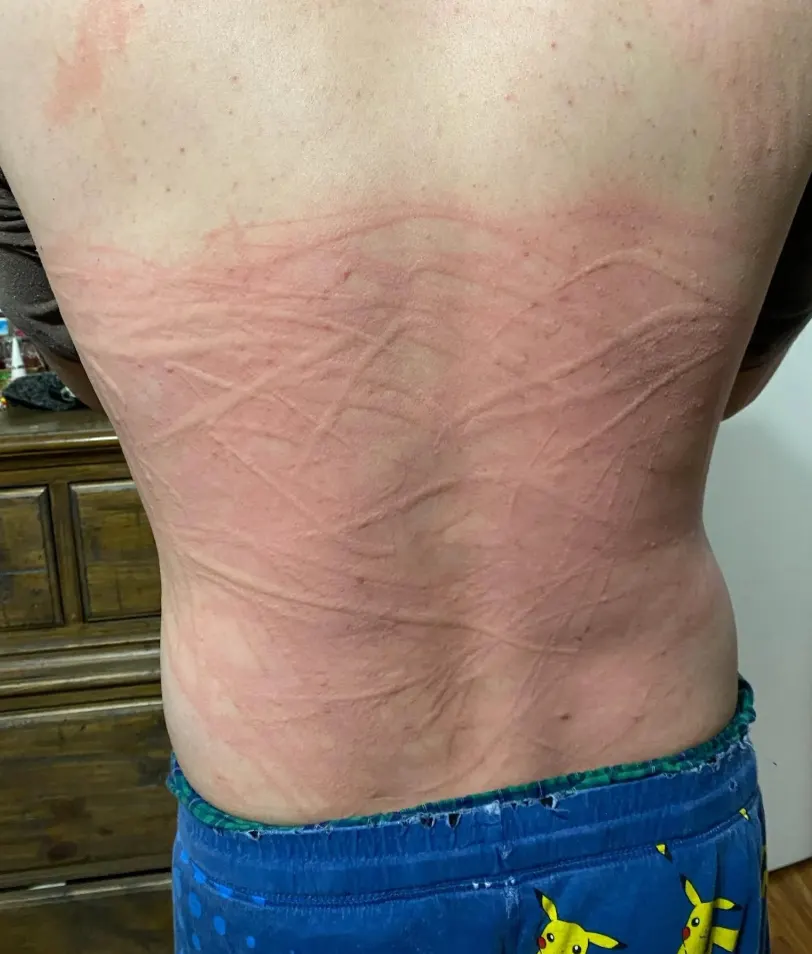
It is invisible on schedule. The marks are gone within the hour, so unless someone happens to be present in the five-minute window, it does not exist socially. Nobody sees it at work.
It is under-diagnosed. The simple form causes no symptoms so it is never mentioned, and the symptomatic form is regularly filed as 'hives' or 'sensitive skin' without the specific term ever being used.
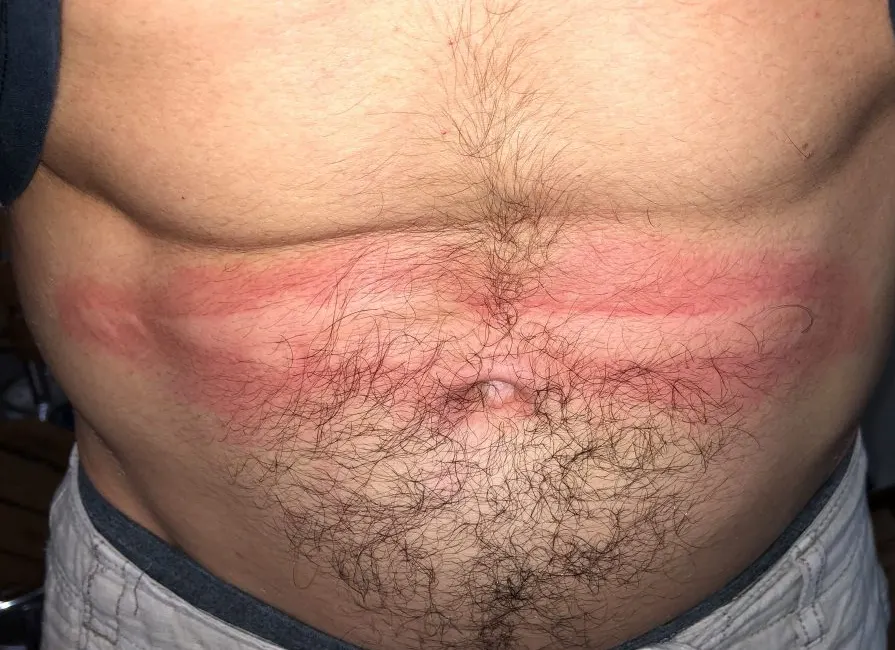
And it is hidden by clothing. Waist, back, shoulders and thighs take most of the pressure, and those are precisely the areas nobody sees.
Our own numbers
Population prevalence tells you how many people have it. It says nothing about how severe it is for the people who do — and that data barely exists in public.
That is why this site runs the Dermatographia Index. Everyone who takes the free 12-question assessment contributes an anonymous severity score, and the Index publishes the running totals: how many people have scored, the average severity, the distribution across mild, moderate and severe, and which triggers and symptom drivers come up most often.
It is self-reported and self-selected, so it is not an epidemiological study and we do not present it as one. What it is, is the largest openly published set of severity data on this condition that we are aware of, and it grows every day. If you want to know where you sit relative to everyone else who has answered, that is the page.
Why prevalence matters to you personally
Two practical reasons, beyond curiosity.
First, it is a useful thing to say in an appointment. 'This is the most common of the inducible urticarias and mine is the symptomatic form' communicates in one sentence that you know the difference between the harmless finding and the condition, and it tends to change the shape of the conversation.
Second, it means you are not an anomaly. A lot of people with this spend years assuming they have something nobody has heard of, which delays them asking for help. You have a named, studied, treatable condition, and there are a lot of people in the same position.
Find out what's driving your dermatographia
Answer 12 quick questions and get a personalized severity score, your top drivers, and a staged 30-day plan built around your own skin.
Get My Dermatographia ScoreFrequently asked
- How common is dermatographia?
- Around 2 to 5 percent of the general population show dermographism — a visible welt when the skin is firmly stroked. Most of those have the simple, non-itchy form. The symptomatic, itchy version that people seek treatment for is considerably less common but is still the most frequent of the inducible urticarias.
- What percentage of people can write on their skin?
- Commonly cited figures put it at roughly 1 in 20 to 1 in 50 people, though estimates vary with how much pressure is applied during testing and how a positive result is defined.
- Is dermatographia rare?
- Not as a physical finding — it is one of the more common skin responses in the population. The itchy, symptomatic form is much less common, and because the marks fade within an hour and often sit under clothing, it is widely under-recognised.
- Who is most likely to have dermatographia?
- It is most often identified in people in their twenties and thirties, is reported slightly more often in women, and is over-represented in people with eczema, asthma or hay fever. It can begin at any age.
- If it is this common, do I still need to see anyone?
- Common does not mean it should not be treated. Most people with it never get diagnosed and never get offered a dosing plan that actually works, which is exactly why one appointment is worth it.
Sources
Clinical background on this page is checked against the following published sources. My own experience and interviews are labelled as such in the text.