Every Name for Skin Writing: Dermographism, Dermatographism and More

Short answerDermatographia, dermatographism, dermographism and dermographia all refer to the same condition: raised welts that appear where the skin is stroked or scratched. The formal medical term is dermatographic urticaria, also called urticaria factitia or symptomatic dermographism, and its ICD-10 code is L50.3. Informal names include skin writing, skin writing disease and skin writing hives. 'Skin graphia' and 'dermatagraphia' are common misspellings of the same thing.
Why one condition has ten names
This is genuinely one of the frustrating things about looking the condition up. You search for what you have, land on four different spellings, and reasonably wonder whether they are four different diseases.
They are not. The variation comes from two Greek roots — derma (skin) and graphein (to write) — being combined in slightly different ways over a century of medical writing, plus a set of informal names that people invented because 'dermatographic urticaria' is not something anyone says out loud.
It is all the same thing: skin that raises a welt where it is stroked.
The formal medical names
These are the terms you will see in clinical notes, journals and a dermatologist's letter.
| Term | Where you will see it | What it means |
|---|---|---|
| Dermatographic urticaria | Clinical and academic writing | The full formal name: hives produced by writing on the skin |
| Symptomatic dermographism | UK and European clinical use | Dermographism that itches — the 'symptomatic' distinguishes it from the harmless silent version |
| Urticaria factitia | Older and European literature | Latin: artificially produced hives |
| Factitious urticaria | Occasional clinical use | Same meaning as urticaria factitia |
| Inducible urticaria (physical) | Modern guideline classification | The umbrella category that dermatographia sits inside, alongside cold, heat and pressure urticaria |
The four spellings people actually search
All four of these are in real use and none of them is wrong enough to correct anyone over.
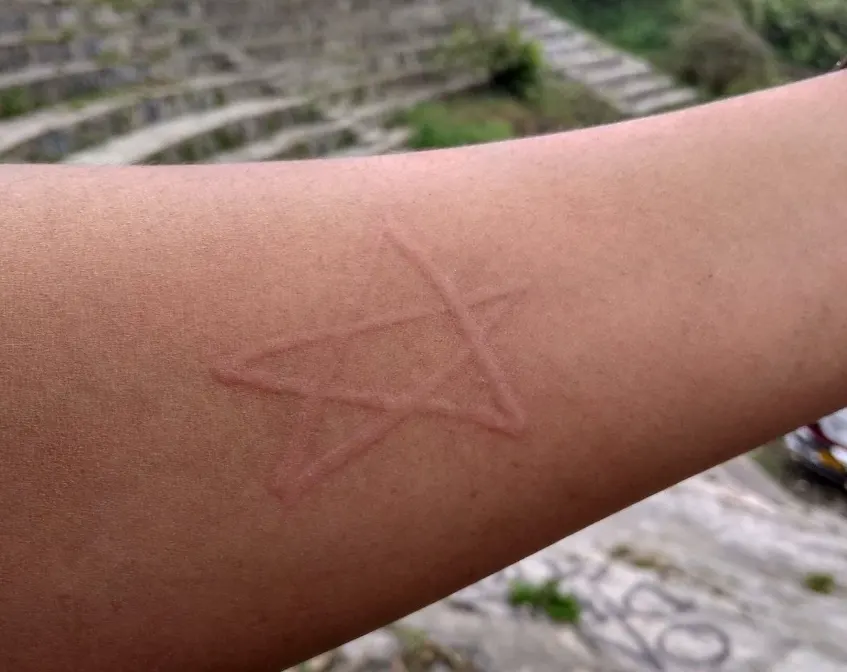
- Dermatographia — the most common spelling in US patient-facing writing, and the one this site uses.
- Dermatographism — the same word with the -ism ending; common in medical writing.
- Dermographism — drops the 'ato'; the standard form in UK and European clinical use.
- Dermographia — the US-style ending on the shortened root.
Informal names
These are what people call it in conversation, on forums and in search bars, and they are worth knowing because a lot of the most useful community discussion sits under them rather than under the clinical term.
- Skin writing — the plain-English description, and the most widely understood.
- Skin writing disease — common phrasing, though 'disease' overstates it slightly; it is a benign condition, not a progressive illness.
- Skin writing hives — accurate, and helpfully signals the connection to urticaria.
- Dermatographism urticaria / dermatographia urticaria — redundant but very common, since urticaria is already implied.
- Writing on skin condition, scratch writing skin — descriptive phrasings people reach for before they know the name.
Common misspellings
If you arrived here from one of these, you spelled it close enough. Listing them because search engines treat them as separate terms and people genuinely struggle to find information under the variant they typed.
- Skin graphia — a phonetic split of the word
- Dermatagraphia, dermetographia, dermatographia — vowel swaps in the middle
- Dermographism vs dermatographism — both correct, frequently assumed to be a typo of each other
- Dermatographic urticaria vs dermatographia urticaria — the first is the formal adjective form
- Skin dermatographia, dermatographia skin condition — redundant but harmless
One distinction that does matter
Among all these interchangeable names, there is one real clinical split worth understanding: simple dermographism versus symptomatic dermographism.
Simple dermographism is the harmless version. A firm stroke produces a visible line, but it does not itch and it does not interfere with anything. A meaningful share of the general population has it and never knows or cares.
Symptomatic dermographism is the one people seek help for. The same welts, plus itch — often significant itch, often worse at night, often triggered by clothing and straps rather than deliberate scratching. When this site says dermatographia, this is what it means.
That is why a doctor might look at your skin, say 'yes, that's dermographism', and treat it as unremarkable. The word that changes the conversation is the itch.
What to say to a doctor
You do not need the vocabulary to get taken seriously, but the right two sentences shorten the appointment considerably.
Try: 'When my skin is scratched or pressed, a raised itchy welt appears within a few minutes and fades within about an hour. It happens from clothing and straps, not just scratching, and the itch disturbs my sleep.' That description names the condition without needing to name it.
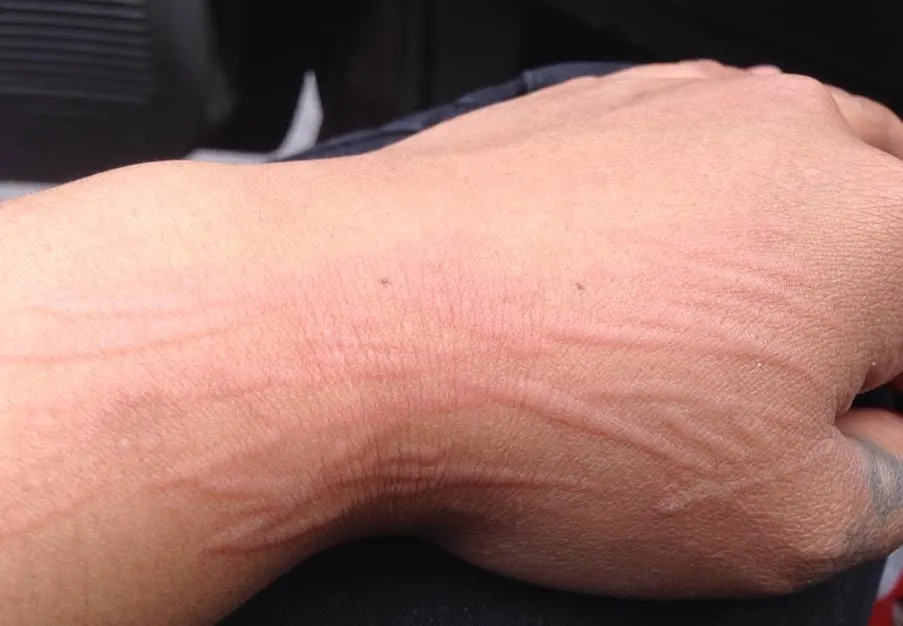
Bring a photo taken at the five-minute mark, because the evidence will not survive the wait in reception.
Find out what's driving your dermatographia
Answer 12 quick questions and get a personalized severity score, your top drivers, and a staged 30-day plan built around your own skin.
Get My Dermatographia ScoreFrequently asked
- What is the ICD-10 code for dermatographism?
- Dermatographic urticaria is coded L50.3 in ICD-10. Doctors use the same code whether the chart says dermatographism, dermographism or dermatographia.
- Is skin writing disease the same as dermatographia?
- Yes. Skin writing, skin writing disease and skin writing hives are informal names for dermatographia, formally called dermatographic urticaria or symptomatic dermographism.
- What is the correct spelling — dermatographia or dermographism?
- Both are correct. Dermatographia is the common US patient-facing spelling; dermographism is standard in UK and European clinical use. Dermatographism and dermographia are also in use, and all four refer to the same condition.
- What does skin graphia mean?
- It is a common misspelling of dermatographia — from the Greek for skin (derma) and writing (graphein). If you searched for skin graphia, you are looking for dermatographia.
- Do I have simple dermographism or the symptomatic kind?
- Simple dermographism produces visible welts without itch and is harmless and fairly common. Symptomatic dermographism produces the same welts with significant itch, often triggered by clothing and pressure, and is what people usually mean by dermatographia.
- Does the name my doctor uses change the treatment?
- No. Dermatographism, dermographism, urticaria factitia and symptomatic dermographism all describe the same thing and lead to the same management. The name only matters when you are searching for information or reading your own notes.
Sources
Clinical background on this page is checked against the following published sources. My own experience and interviews are labelled as such in the text.