White Lines After Scratching: What White Dermographism Means
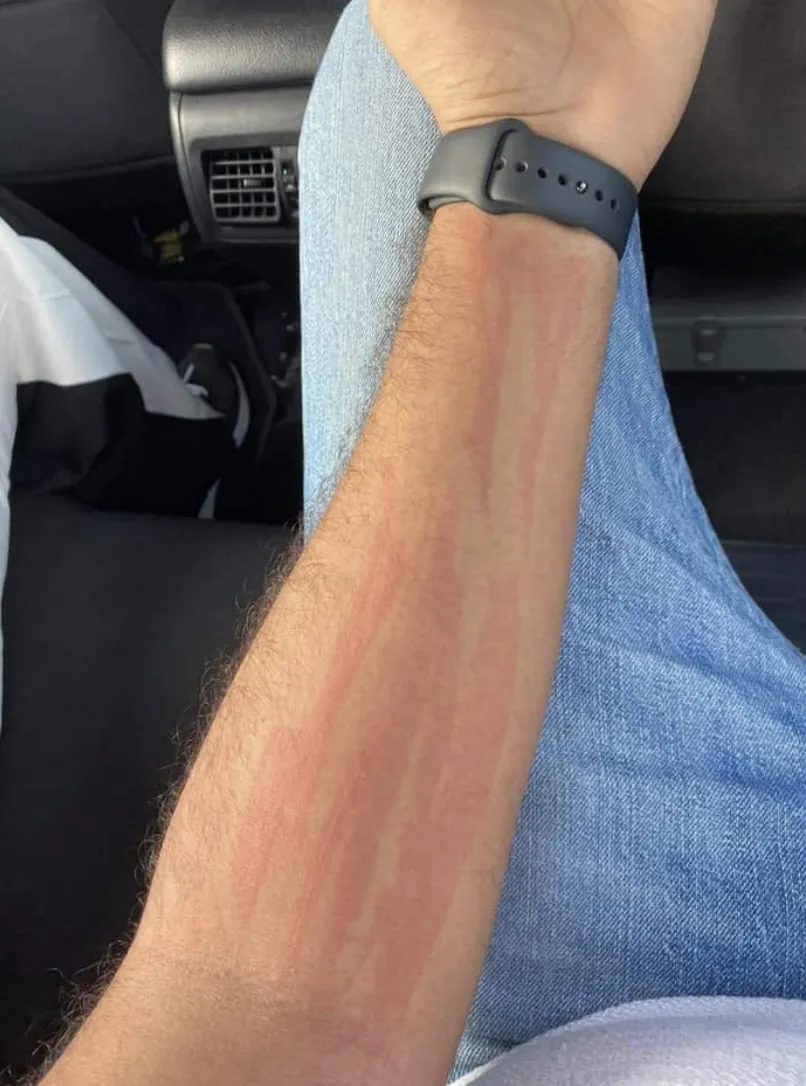
Short answerA white line where you scratched, rather than a red raised one, is called white dermographism. Instead of the small blood vessels widening and leaking, they briefly constrict, leaving a pale stripe that fades within a couple of minutes. It is most strongly associated with eczema and very dry, atopic skin, and it is generally harmless — but it is a different reaction from classic dermatographia and usually calls for barrier care rather than antihistamines.
Red line, white line: two opposite reflexes
Stroke normal skin and you get a brief red line — the ordinary vascular reflex, gone in under a minute. In dermatographia that reflex overshoots: histamine floods the area, vessels widen and leak, and you get a raised, itchy weal that lasts fifteen minutes to an hour.
White dermographism goes the other way. The small vessels tighten instead of opening, blood is squeezed out of the stroked area, and you are left with a pale line against slightly flushed surrounding skin. It usually appears within a minute and disappears within two or three.
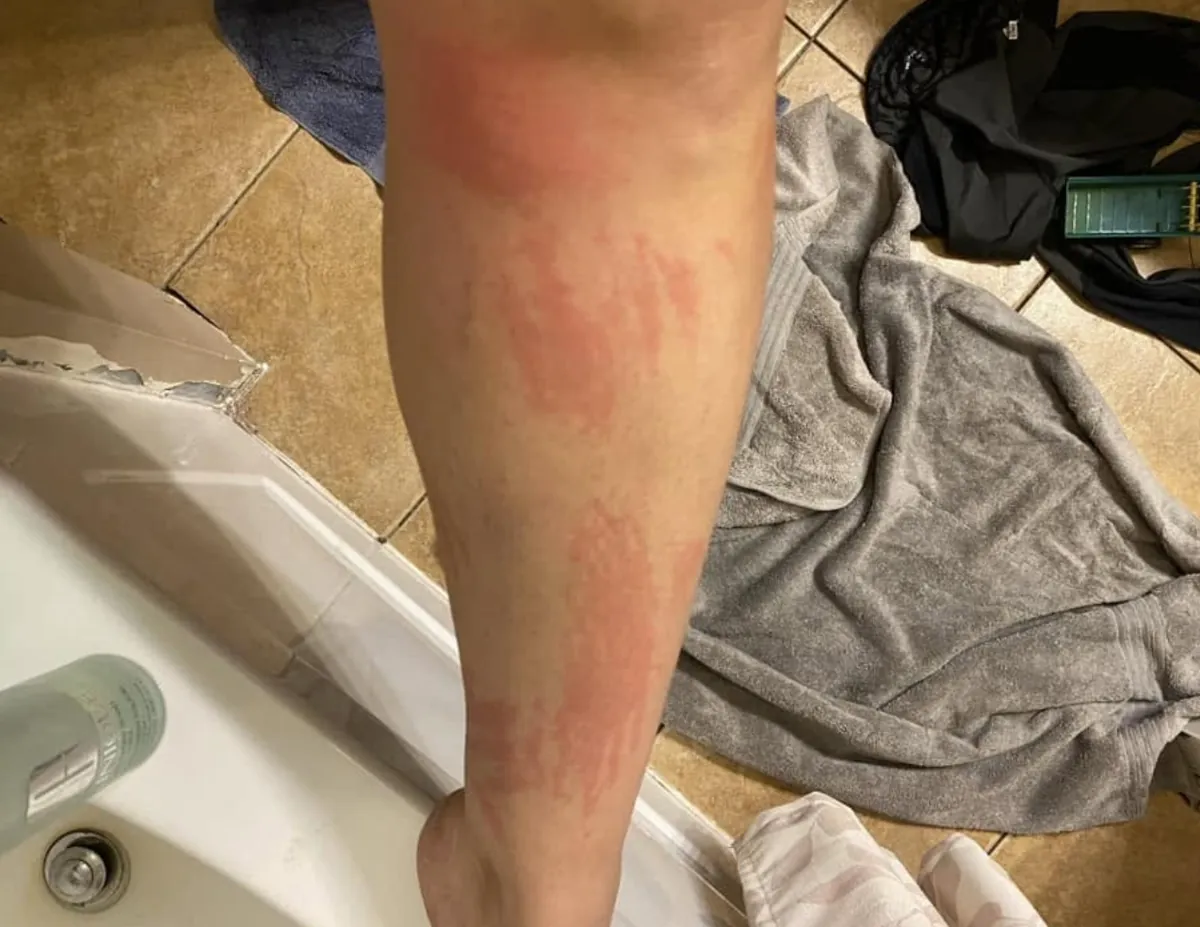
The two can coexist. Plenty of people get a red weal on the forearm and a white streak on a dry, eczema-prone patch behind the knee, because the reaction depends as much on the state of the skin as on the person.
What it is associated with
White dermographism is classically described in atopic dermatitis — eczema — and in the very dry skin that accompanies it. It is common enough there that dermatologists have used it as a supporting sign for decades.
Extremely dry skin without diagnosed eczema can do the same thing, and so can skin in the middle of a flare that is already inflamed. Cold environments make it more noticeable.
What it is not: it is not a sign of poor circulation, and it is not a marker of anything dangerous on its own. If pale patches persist for far longer than a couple of minutes, or the skin is genuinely numb or cold to the touch rather than just pale, that is a different question worth taking to a doctor.
Telling them apart at home
Draw a single line down the inside of your forearm with the flat edge of a fingernail or a pen cap, then watch a clock.
| White dermographism | Dermatographia (red) | |
|---|---|---|
| Color | Pale or white stripe | Red, then raised and pink-white in the center |
| Raised? | No, flat | Yes, a palpable ridge |
| Itch | Little or none | Often intense |
| Onset | Under a minute | 1–5 minutes |
| Duration | 1–3 minutes | 15–60 minutes, sometimes longer |
| Usual context | Eczema, very dry or atopic skin | Inducible urticaria; mast cell driven |
What actually helps
Antihistamines do very little for a white line, because histamine is not what is producing it. The useful work is barrier work.
- A thick fragrance-free emollient or ceramide cream twice a day, applied to damp skin after washing.
- Shorter, cooler showers; skip soap on the dry areas and use a non-foaming cleanser.
- Treat any underlying eczema properly — a topical prescribed by a clinician does more for this than anything on a supermarket shelf.
- If you also get red raised itchy welts, treat that half separately with a daily non-drowsy antihistamine.
Find out what's driving your dermatographia
Answer 12 quick questions and get a personalized severity score, your top drivers, and a staged 30-day plan built around your own skin.
Get My Dermatographia ScoreFrequently asked
- Why do I get white lines instead of red ones when I scratch?
- Your small skin vessels are constricting rather than dilating. This is called white dermographism and is most often seen in eczema-prone or very dry skin.
- Is white dermographism a sign of dermatographia?
- No — it is essentially the opposite reaction. Dermatographia produces a raised, itchy red weal driven by histamine; white dermographism produces a flat pale line that fades in a couple of minutes.
- Do antihistamines help white dermographism?
- Generally not, because histamine is not driving it. Moisturizing and treating any underlying eczema is the more effective approach.
- Should I see a doctor about white lines on my skin?
- Not urgently. It is worth mentioning at a routine appointment, especially if your skin is very dry or you have eczema. Pale areas that stay pale for a long time, or feel cold or numb, need proper assessment.
Sources
Clinical background on this page is checked against the following published sources. My own experience and interviews are labelled as such in the text.