Red Dots, Bumps and Bruises After Scratching: What They Mean
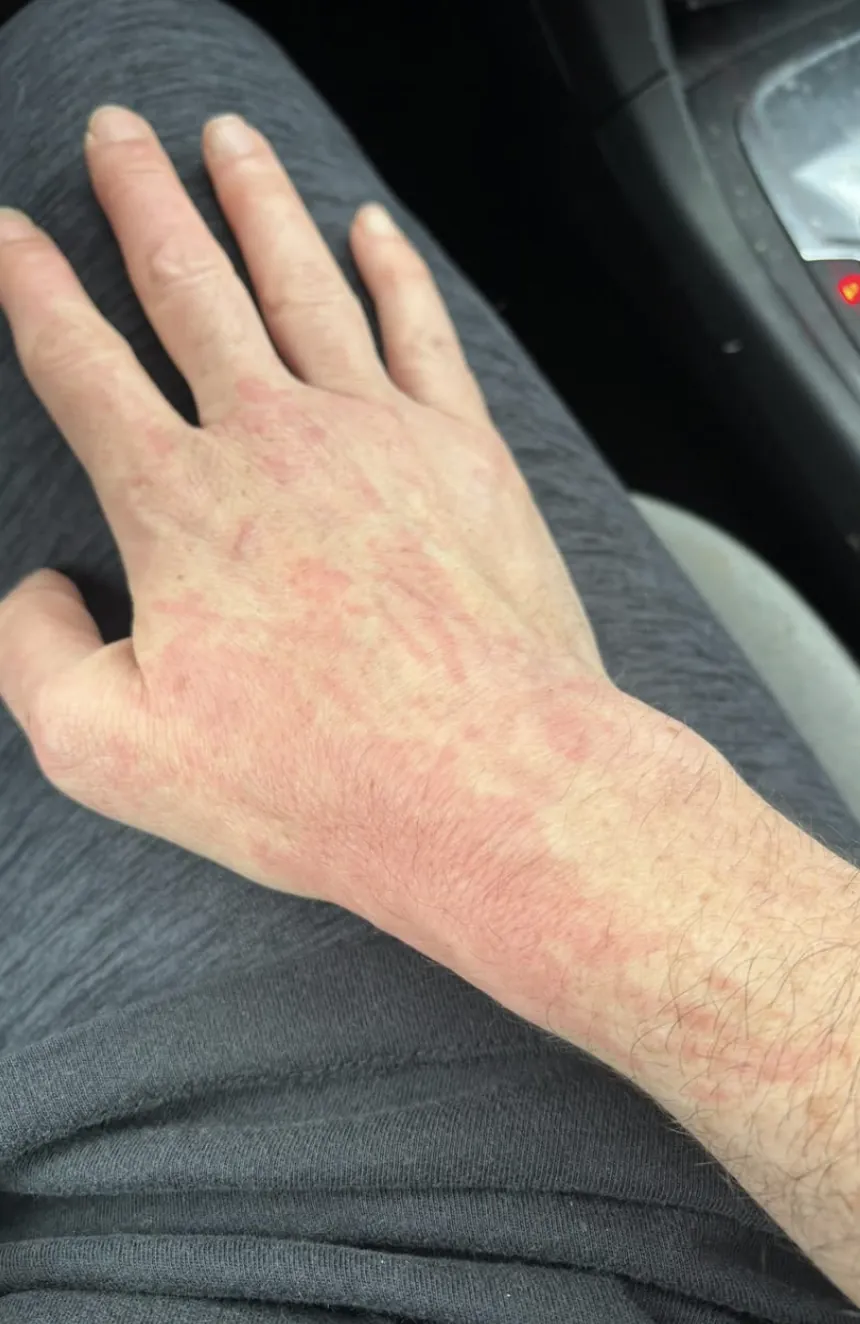
Short answerDermatographia leaves raised welts that trace the scratch and fade within an hour. Pinpoint red dots that do not fade under pressure are petechiae, bruising after light scratching suggests fragile vessels or a clotting issue, and pus-topped bumps around hairs are folliculitis. Only the first is dermatographia — the others need a clinician.
Start with the fade test
The single most useful thing you can do with any mark on your skin is press a clear glass or your fingertip against it firmly and watch what happens.
Marks caused by widened blood vessels — including dermatographia welts and ordinary redness — go pale under pressure and colour back in when you let go. Marks caused by blood that has actually leaked out of the vessel do not blanch at all. That distinction sorts most of what people worry about into two very different piles.
The four things people usually mean
These four get confused constantly, and they behave completely differently.
| What it looks like | Blanches? | How long it lasts | Likely cause |
|---|---|---|---|
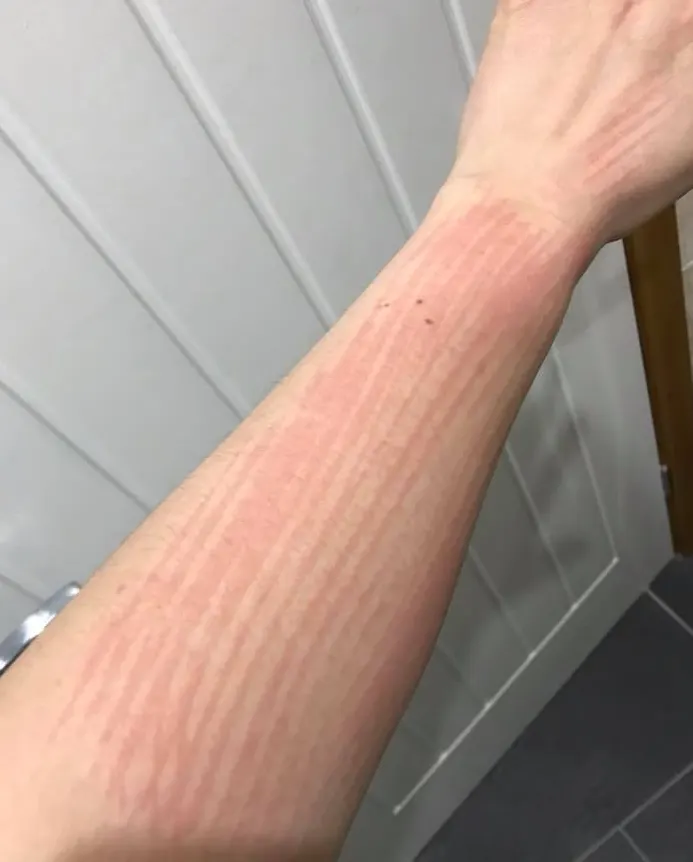
| Raised red line tracing the scratch, itchy | Yes | 15–60 minutes | Dermatographia — histamine wheal. |
| Tiny flat red or purple pinpoints | No | Days, fading to brown | Petechiae — small vessel bleeding. Needs assessment. |
| Bruise-like patch after light contact | No | Days to weeks | Easy bruising — fragile vessels, medication, or a clotting issue. |
| Small bumps centred on hairs, sometimes pus | Partly | Days | Folliculitis — irritated or infected follicles. |
Why dermatographia never leaves dots
In dermatographia the vessel stays intact. Histamine makes it leaky enough for clear fluid to seep into the surrounding skin, which is what lifts the line into a welt. When the histamine clears, that fluid drains back and the skin looks untouched.
Red blood cells are too large to pass through in that process, which is why a genuine dermatographia welt leaves nothing behind. If you are consistently left with pinpoint dots or lasting discolouration, something other than a plain histamine wheal is happening and it is worth a professional look.
Bumps rather than lines
Some people scratch and get scattered bumps instead of a clean raised line. There are a few ordinary explanations. Scratching over a hair-bearing area irritates follicles, producing bumps that sit exactly where hairs emerge. Repeated scratching of the same patch over weeks thickens the skin into rough, itchy plaques — lichen simplex — which is a response to chronic scratching rather than a separate disease.
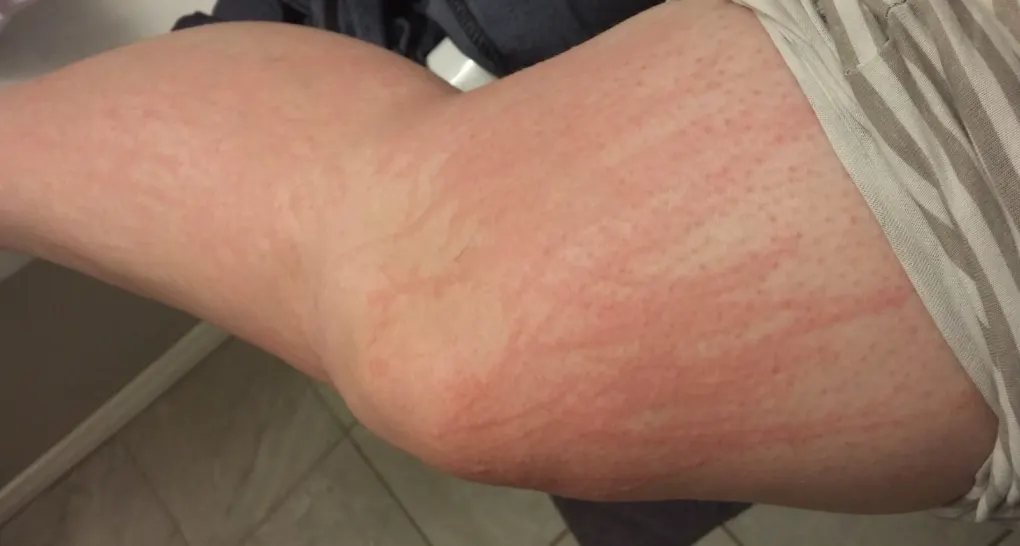
And in some people the wheal simply breaks up into blotches rather than a continuous line, particularly on the chest, neck and thighs where skin is thinner. That is still dermatographia; it just does not photograph as neatly.
The marks that are worth a same-week appointment
Most post-scratch marks are harmless. These are the exceptions, and none of them are things to sit on.
- Pinpoint red or purple dots that do not blanch under pressure.
- Bruising from pressure that would not normally bruise anyone.
- Marks lasting longer than 24 hours, or leaving brown staining behind.
- Any welt that is painful or burning rather than itchy.
- Bumps with pus, spreading warmth, or fever.
- Bleeding gums or frequent nosebleeds alongside skin marks.
Keeping ordinary scratch marks calm
If your marks are the standard dermatographia sort, the goal is simply to interrupt the scratch cycle before it damages skin: nails filed short, a cool compress instead of a scratch, fragrance-free moisturiser twice daily to keep the barrier intact, and consistent antihistamine cover if a clinician has recommended it.
Broken skin is what turns a self-limiting welt into something that lingers. Almost everything that leaves a lasting mark in dermatographia is the scratching, not the condition.
Find out what's driving your dermatographia
Answer 12 quick questions and get a personalized severity score, your top drivers, and a staged 30-day plan built around your own skin.
Get My Dermatographia ScoreFrequently asked
- Why do I get tiny red dots after scratching?
- Pinpoint dots that do not fade when you press on them are petechiae — small vessels leaking blood into the skin. That is not dermatographia and it should be assessed by a clinician.
- Is it normal to bruise after scratching?
- Not from typical dermatographia, which leaves no mark once the welt fades. Easy bruising can relate to medication, age, or a clotting problem, so it is worth investigating rather than assuming it is part of the condition.
- Why do I get bumps instead of a raised line?
- Scratching hair-bearing skin can irritate follicles, and on thinner skin the wheal often breaks up into blotches instead of forming a continuous line. Both are common.
- How long should marks from dermatographia last?
- Typically 15 to 60 minutes. Anything still visible after 24 hours, or that leaves discolouration behind, does not fit the usual pattern.
- Which of these marks should be looked at properly?
- Anything that does not blanch when you press it, anything that leaves a bruise or a lasting brown stain, and anything still there the next day. Those are not dermatographia and deserve a proper look.
Sources
Clinical background on this page is checked against the following published sources. My own experience and interviews are labelled as such in the text.