Does Dermatographia Hurt? Burning, Stinging and Sore Skin
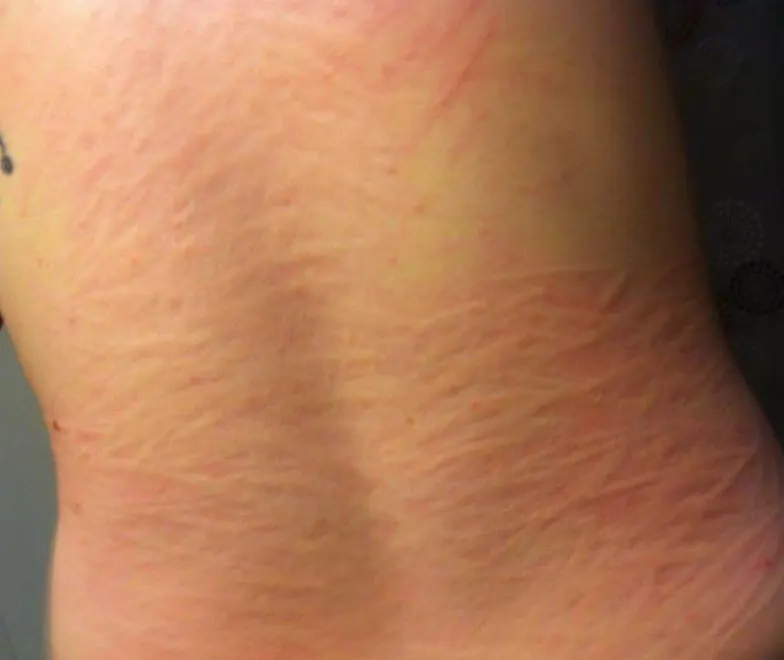
Short answerDermatographia is usually itchy rather than painful, but a hot, burning or stinging sensation along the welt is common and normal — histamine activates the same skin nerve fibres that carry both itch and irritation. Genuine pain, deep soreness, bruising or bleeding is not typical of the welts themselves; it usually comes from scratching damage, or from a different condition worth having examined.
Itch, burn, sting: three words for one nerve system
When histamine floods a patch of skin it activates thin unmyelinated nerve fibres — the same population that signals itch and low-grade irritation. Which sensation you consciously register varies from person to person and even flare to flare. Some people only ever say itchy. Others describe heat, prickling, or a stinging line as though they had been caught by a nettle.
All of those are ordinary descriptions of the same reaction. A burning wheal is not a sign that your case is worse or more dangerous than an itchy one.
Where it does become useful information is in the pattern. Burning that arrives with warmth, exercise or a hot shower, in small pinpoint spots rather than lines, points toward cholinergic urticaria alongside or instead of dermatographia — and that has a slightly different management approach.
What dermatographia should not feel like
Some sensations are worth separating out, because they suggest something is going on beyond the wheal-and-flare response:
| Sensation | Typical of dermatographia? | What it may point to |
|---|---|---|
| Itch along a scratch line | Yes | Ordinary histamine response |
| Warm, burning or stinging line | Yes | Same response; nerve fibres read as heat |
| Deep aching or throbbing | No | Pressure urticaria, infection, or a non-skin cause |
| Raw, sore, broken skin | No — from scratching | Excoriation; risk of infection |
| Pain with fever or spreading redness | No | Possible cellulitis — needs same-day medical care |
| Bruise-like or purple marks | No | Petechiae or easy bruising; get it checked |
Delayed pressure urticaria: the painful cousin
There is a related condition that genuinely does hurt. In delayed pressure urticaria, sustained pressure — a shoulder strap, sitting on a hard chair, standing for hours — produces deep, tender swelling that appears three to twelve hours later and can last a day or more. People consistently describe it as sore or aching rather than itchy.
It can occur alongside dermatographia, and it responds less well to antihistamines, so it is worth naming specifically if that is what you are experiencing. A dermatologist will recognise the description immediately.
When the soreness is really the scratching
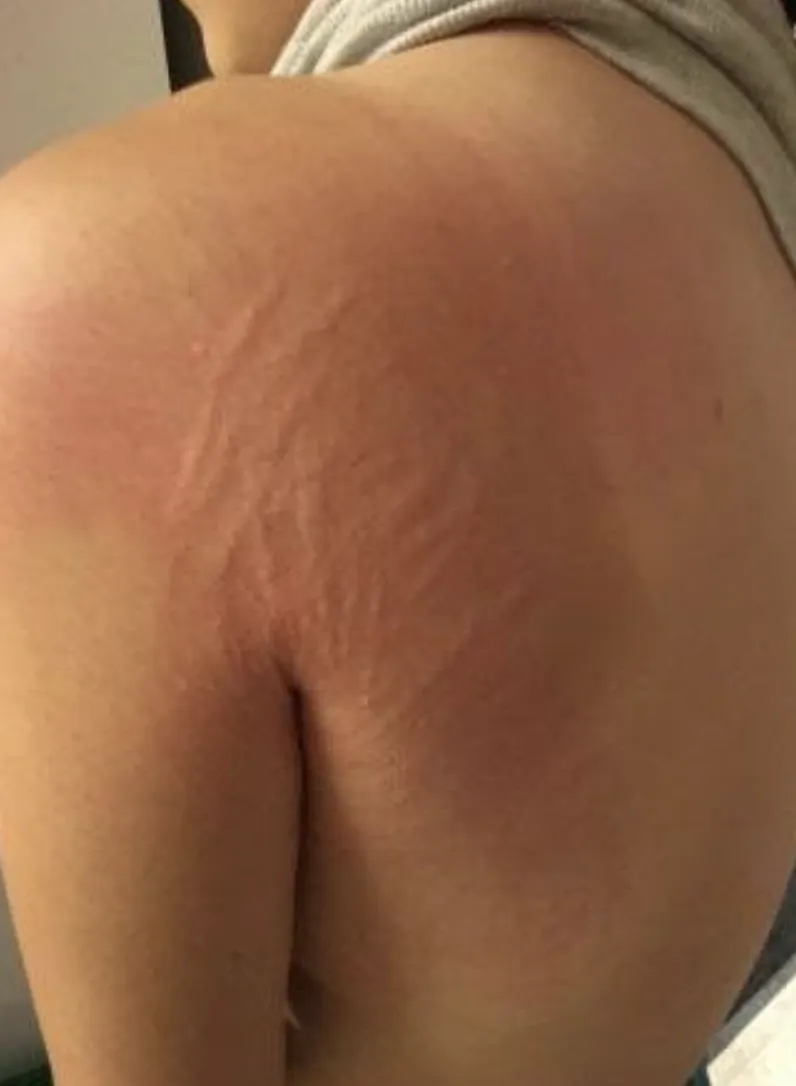
By far the most common reason dermatographia hurts is damage you have done reaching for relief. Scratching hard enough to break the surface leaves raw lines that sting in the shower, scab, and take days rather than minutes to clear. Unlike the welts, those marks can leave temporary discoloration behind.
The clue is timing. A wheal that appears in three minutes and fades within an hour is the condition. A sore line that is still there tomorrow morning is an injury.
Practical fixes that work better than willpower: nails filed short, a cold pack on the itchiest area for a few minutes rather than fingernails, light cotton layers at night, and treating the itch properly with cover from a clinician-agreed antihistamine schedule.
Bleeding, blisters and other things to get looked at
Occasional pinpoint bleeding from scratched skin is unremarkable. Blistering within a welt, welts that bruise as they fade, welts that hurt more than they itch, or individual lesions that stay in the same place for more than 24 hours are not features of ordinary dermatographia and warrant an appointment — urticarial vasculitis is uncommon, but it is the reason those specific features are on every clinician's checklist.
Add fever, spreading redness, or hot tender skin and that becomes urgent rather than routine.
What actually reduces the burning
Cooling is the fastest thing available to you. A cool compress or a cool shower narrows the dilated vessels and quiets the nerve signalling within minutes, and it does not interact with anything you are taking.
Beyond that, the mainstay is the same as for the itch: consistent second-generation antihistamine cover as agreed with your doctor, keeping skin temperature down, and reducing friction from clothing. Menthol and alcohol-heavy after-sun style products feel cold at first but frequently make stinging worse on broken skin.
Find out what's driving your dermatographia
Answer 12 quick questions and get a personalized severity score, your top drivers, and a staged 30-day plan built around your own skin.
Get My Dermatographia ScoreFrequently asked
- Is it normal for dermatographia welts to burn rather than itch?
- Yes. Histamine activates nerve fibres that some people read as heat or stinging instead of itch. It is a normal variation, not a sign of a more serious case.
- Why does my skin sting in the shower after a flare?
- Usually because scratching broke the surface. Hot water on excoriated skin stings and also dilates vessels, which restarts the itch. Lukewarm water helps on both counts.
- Can dermatographia cause deep, aching pain?
- Not typically. Deep tender swelling hours after sustained pressure is more suggestive of delayed pressure urticaria, which is managed differently and worth naming to a dermatologist.
- Should painful welts be treated any differently?
- The first-line approach is the same, but pain that dominates the picture is a reason to be assessed rather than to keep self-managing.
- Do the marks left behind after scratching mean scarring?
- Ordinary welts leave nothing. Marks that persist for days come from broken skin and usually fade over weeks; repeated deep scratching in one spot is the main scarring risk.
Sources
Clinical background on this page is checked against the following published sources. My own experience and interviews are labelled as such in the text.