Spicy Food, Histamine and Itchy Skin
Short answerSpicy food makes many people itch because capsaicin raises body temperature and triggers a flush, and heat is one of the most reliable amplifiers of skin itch. Separately, some foods are high in histamine (aged cheese, cured meat, fermented food, red wine) and others prompt your own cells to release histamine (alcohol, shellfish, strawberries, tomatoes). Neither is a true allergy, and neither needs a permanent restrictive diet — a short, structured trial tells you far more than cutting everything out.
Spicy food: it is mostly the heat
Capsaicin, the compound that makes chili hot, binds a receptor on your nerve endings that normally responds to physical heat. Your body reacts as though you are genuinely overheating: skin vessels open, you flush, you sweat.
For anyone with reactive skin, that is the problem. Warmth and sweating both make itch more intense and lower the threshold for a reaction, which is why a curry can leave you scratching your arms and back rather than your mouth. The chili is not attacking your skin; it is turning the dial on a system that was already sensitive.
The practical consequence is that you may not need to give up spice at all. Eating earlier, in a cooler room, with water instead of alcohol, is often enough to keep the same meal from becoming an evening of itching.
High-histamine foods versus histamine-releasing foods
These two categories get merged constantly, and separating them makes the whole subject easier to manage.
High-histamine foods contain histamine already, usually because they have been aged, cured, fermented, or stored a while. Histamine-releasing foods contain little themselves but prompt your own mast cells to let go of theirs.
| Category | Common examples | Why it matters |
|---|---|---|
| High in histamine | Aged cheese, cured and smoked meat, sauerkraut, soy sauce, vinegar, leftovers kept more than a day, red wine, beer | Adds to the histamine load your body has to clear |
| Histamine-releasing | Alcohol, shellfish, strawberries, tomatoes, citrus, chocolate, some nuts | Prompts your own cells to release histamine |
| Amplifiers | Alcohol, heat, exercise, poor sleep | Do not add histamine but lower the threshold at which skin reacts |
Alcohol is usually the biggest single factor
Alcohol appears in every column above. Red wine and beer are high in histamine, alcohol itself prompts release, it dilates skin vessels, it disrupts sleep, and it slows the enzyme that breaks histamine down.
If you only test one thing, test this one. Two weeks without alcohol is the single most informative experiment most people can run on itchy skin, and it is far easier to interpret than a fifteen-food elimination.
How to test food properly
A blanket low-histamine diet is restrictive, hard to sustain, and rarely necessary. A structured trial answers the question in a few weeks without rearranging your life permanently.
- Keep a simple log for two weeks first: what you ate, when, and a 0–10 itch score that evening. Do not change anything yet.
- Look for repeats, not one-offs. A food that shows up on three bad evenings out of four is a signal; one bad night after pizza is not.
- Remove one suspect group at a time for two weeks — alcohol first, then aged and fermented foods.
- Reintroduce deliberately, on a normal day, and watch for 24 hours. A food that causes nothing on reintroduction goes straight back on the menu.
- Eat fresh rather than stored. Histamine builds up in leftovers, so freezing portions on the day you cook helps more than avoiding whole categories.
When it is not food at all
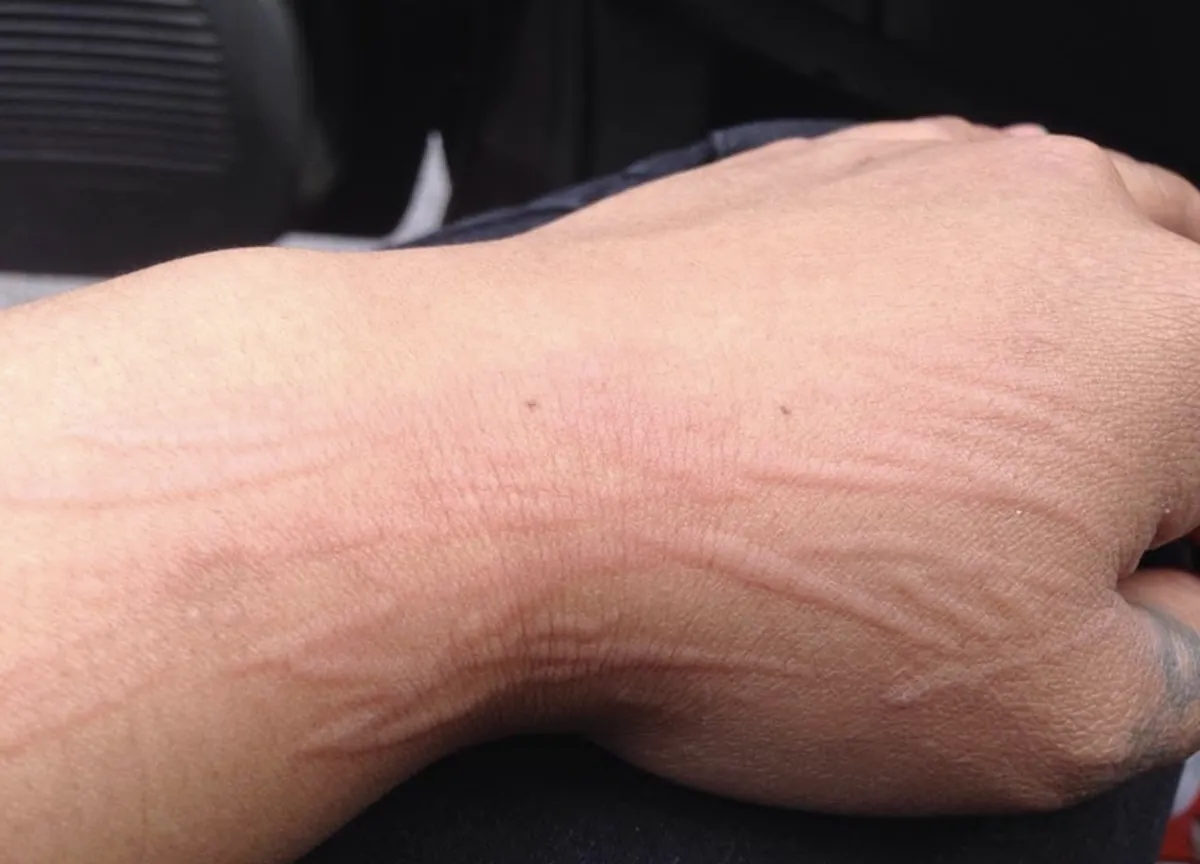
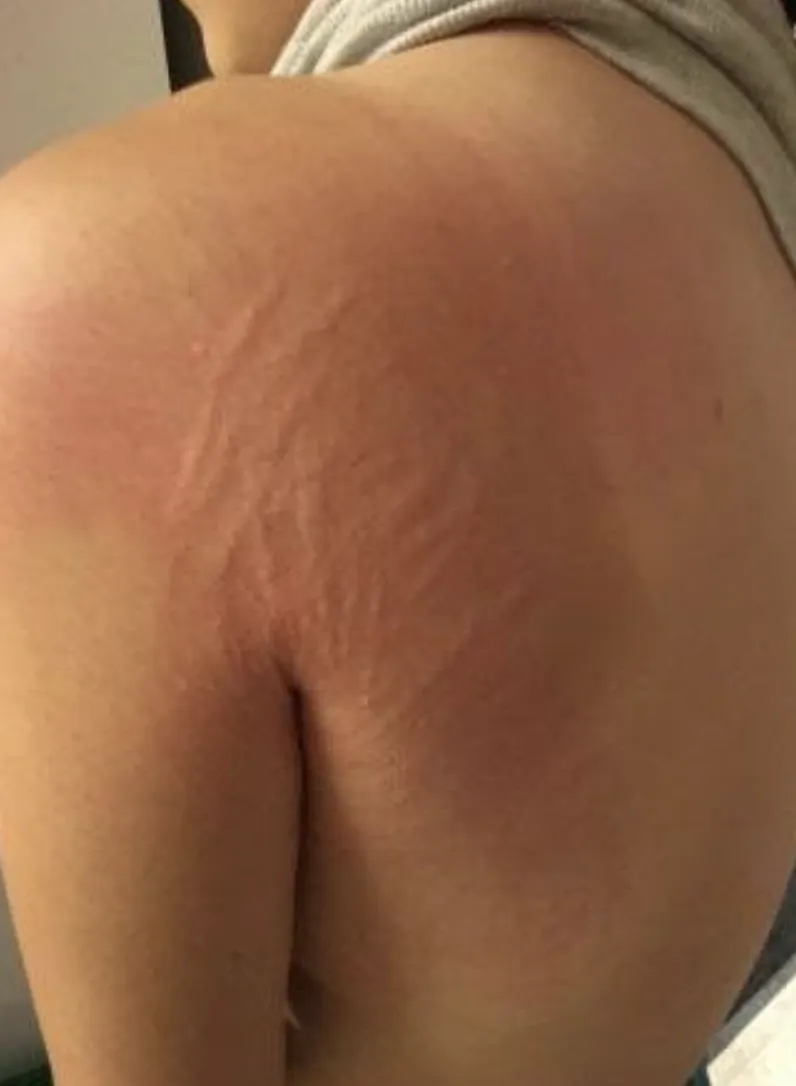
If your itch comes with raised lines exactly where you scratched, food is a secondary factor at best — that pattern is dermatographia, and it responds to antihistamines far better than to a diet.
And if any food causes lip or tongue swelling, throat tightness, or breathing difficulty, that is not histamine intolerance. That is a possible allergy, and it needs emergency care and a proper allergy assessment rather than an elimination diet.
Find out what's driving your dermatographia
Answer 12 quick questions and get a personalized severity score, your top drivers, and a staged 30-day plan built around your own skin.
Get My Dermatographia ScoreFrequently asked
- Why does spicy food make me itchy?
- Capsaicin activates the same nerve receptor as physical heat, so your body flushes and sweats. Warmth and sweating both intensify itch in reactive skin, which is why the reaction shows up on your arms and back rather than your mouth.
- Is a histamine intolerance the same as a food allergy?
- No. An allergy is an immune reaction to a specific protein and can be dangerous. Histamine intolerance is a dose-related difficulty clearing histamine, so symptoms depend on how much you have accumulated rather than on a single food.
- Which foods are highest in histamine?
- Aged cheese, cured and smoked meats, fermented foods such as sauerkraut and soy sauce, vinegar, red wine, beer, and leftovers that have been stored for more than a day.
- Should I go on a low-histamine diet?
- Not as a first step. Log symptoms for two weeks, cut alcohol, then trial one group at a time. Long-term blanket restriction is hard to sustain and rarely earns its cost.
Sources
Clinical background on this page is checked against the following published sources. My own experience and interviews are labelled as such in the text.