Is Dermatographia a Sign of Something Serious?
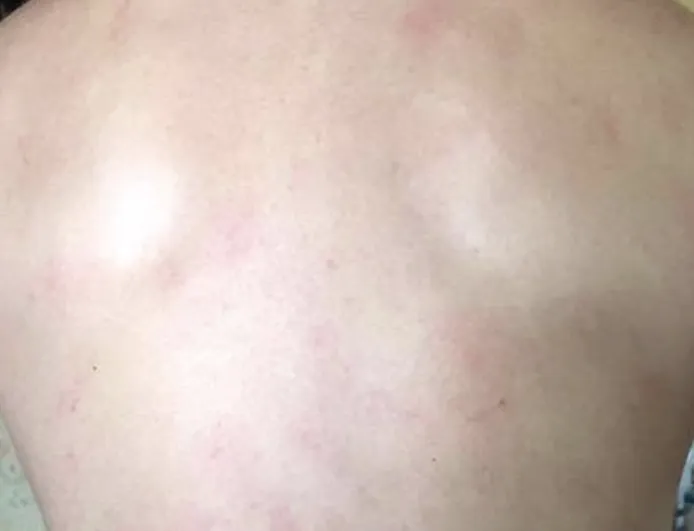
Short answerFor the overwhelming majority of people, dermatographia is a benign, isolated skin condition and not a sign of cancer or any underlying serious disease. It is common, it does not damage organs, and it does not progress. A small number of people develop it alongside a thyroid disorder, a persistent infection or, very rarely, a blood or mast cell disorder — which is why doctors pay attention to specific accompanying signs such as unexplained weight loss, fever, night sweats, bone pain or welts that bruise, rather than to the welts themselves.
The short answer to the question you actually searched
Dermatographia is not a sign of cancer. It is one of the physical urticarias, it affects a meaningful share of the population, and in the large majority of cases it exists on its own with nothing behind it.
The reason the question comes up so often is that 'unexplained hives' appears on general symptom checkers next to serious conditions, and search engines are not careful about separating spontaneous hives with no trigger from a welt that appears exactly where you scratched and disappears within the hour. Those are different presentations with very different implications.
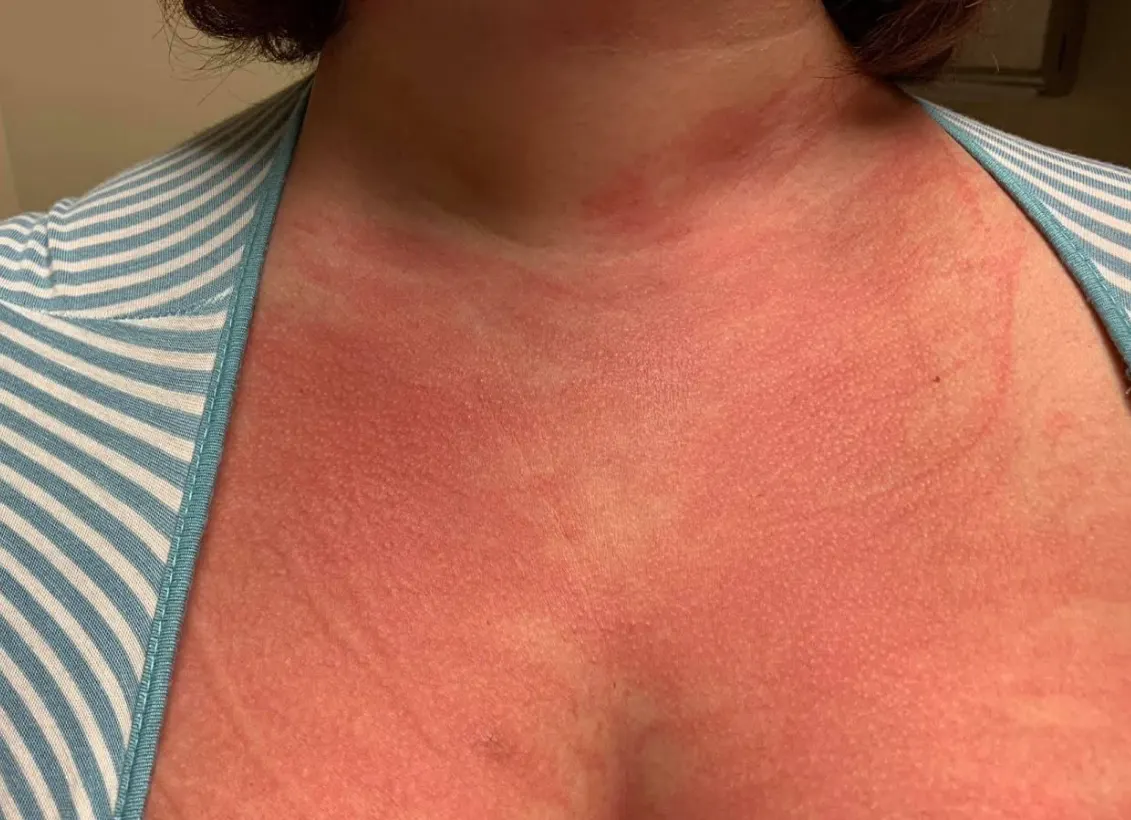
If your welts appear where pressure was applied and fade within about an hour, you are describing textbook dermatographia.
What it is not
Worth stating plainly, because each of these is a question people arrive with:
- Not cancer, and not a recognised early warning sign of it.
- Not contagious — nobody can catch it from you.
- Not an autoimmune attack on your skin in the way psoriasis or lupus involve the immune system.
- Not progressive: it does not spread to organs or get structurally worse over years, even when it persists.
- Not scarring, unless skin is repeatedly broken by scratching.
The conditions that genuinely can sit behind it
A minority of people do have something else in the picture. The associations clinicians look for are:
| Condition | How common | Clues that prompt testing |
|---|---|---|
| Thyroid disease (often autoimmune) | The most frequent association | Fatigue, weight change, cold or heat intolerance |
| Persistent infection (e.g. H. pylori, parasitic) | Uncommon | Gut symptoms, travel history |
| Medication effect (opioids, NSAIDs, some antibiotics) | Uncommon but easily missed | Onset within weeks of a new drug |
| Mast cell disorders including mastocytosis | Rare | Flushing, faints, gut symptoms, bone pain, brown skin patches |
| Blood disorders / lymphoma | Very rare | Weight loss, fever, night sweats, swollen lymph nodes |
The red flags that change the answer
None of the following are features of dermatographia. Any of them alongside your skin symptoms is a reason to be seen rather than reassured by an article:
- Unexplained weight loss, drenching night sweats, or persistent fever.
- Swollen lymph nodes that do not settle.
- Individual welts that stay in one place for more than 24 hours, hurt more than they itch, or leave a bruise as they fade.
- Swelling of the lips, tongue or throat, or any difficulty breathing — that is emergency care, immediately.
- Repeated faintness, flushing episodes, or collapse alongside skin reactions.
- Bone pain, or unexplained bruising and bleeding.
What a doctor will actually do
For straightforward dermatographia, usually very little: the diagnosis is clinical, made by stroking the skin and watching the line rise. No biopsy, no allergy panel, no imaging.
If there is a reason to look further, the standard first pass is a full blood count, inflammatory markers, and thyroid function. Wider testing is directed by what else is going on rather than done as a fishing expedition, and a good clinician will explain why each test is being ordered.
If your welts are refractory to standard treatment, a referral to dermatology or immunology is reasonable — not because the condition is dangerous, but because there are further treatment options beyond over-the-counter antihistamines.
The real cost of it, which is not medical
Saying dermatographia is benign is not the same as saying it does not matter. Broken sleep, visible marks on the face and neck, avoiding certain clothes, and the constant background awareness of your own skin all add up. That is worth treating properly even though nothing dangerous is happening underneath.
In our own reader data, sleep disruption is the single most reported cost of living with it — well ahead of anything to do with appearance.
Find out what's driving your dermatographia
Answer 12 quick questions and get a personalized severity score, your top drivers, and a staged 30-day plan built around your own skin.
Get My Dermatographia ScoreFrequently asked
- Can dermatographia be an early sign of cancer?
- No. It is not recognised as an early warning sign of cancer. The features that would concern a doctor — weight loss, fever, night sweats, swollen nodes — are separate symptoms, not the welts.
- Should I ask for blood tests?
- For isolated skin writing, usually not. If you also have fatigue, weight change or other systemic symptoms, a blood count and thyroid check are the reasonable first step.
- Does having dermatographia mean my immune system is weak?
- No. It reflects mast cells that release histamine at a low mechanical threshold, not a deficient or failing immune system.
- Is dermatographia classed as a disease or a disability?
- It is classified medically as a form of inducible urticaria. It is not usually considered disabling, though severe refractory cases that disrupt sleep and work deserve proper specialist treatment.
- Can it turn into something worse later?
- It does not transform into another disease. Some people's dermatographia becomes more persistent or overlaps with chronic spontaneous urticaria, which is a change in severity rather than in nature.
Sources
Clinical background on this page is checked against the following published sources. My own experience and interviews are labelled as such in the text.