Is Dermatographia Hereditary?
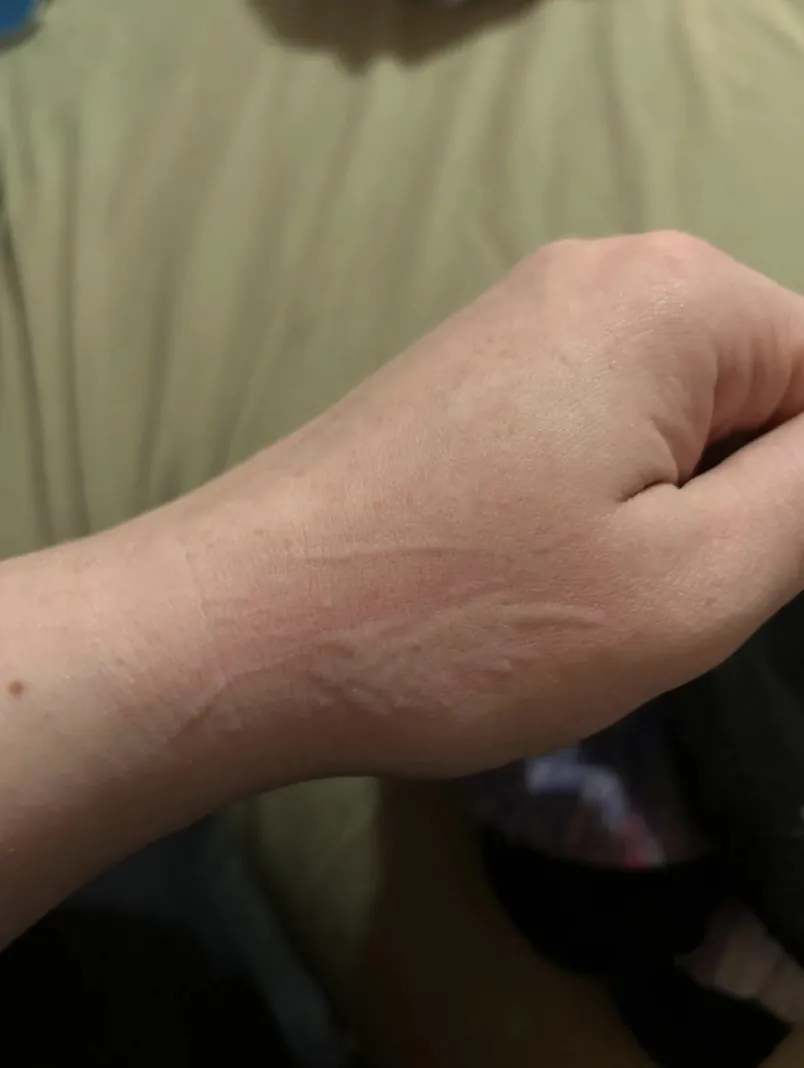
Short answerDermatographia is not an inherited disease in the way that, for example, cystic fibrosis is — there is no single gene that passes it on. It does cluster in some families, most likely because a general tendency toward allergy and reactive mast cells is inherited. Having a parent with it slightly raises your odds, but most people with dermatographia have no affected relative at all, and most children of people with it never develop it.
The short answer, and why it is not shorter
There is no gene test for dermatographia and no established inheritance pattern. Standard dermatology references describe it as an acquired condition — something that appears in a life rather than something you are born carrying.
At the same time, plenty of people write to say their mother had it, or that two of their three children write on their skin. Both of those things can be true, and the way to hold them together is to separate the condition from the trait underneath it.
What probably is inherited
Atopy — the general predisposition to allergic conditions like eczema, asthma, and hay fever — is strongly familial. So is the underlying reactivity of mast cells and a tendency toward autoimmune conditions such as thyroid disease, both of which are overrepresented in people with chronic urticaria.
What you may inherit, then, is not skin writing. It is a lower threshold: mast cells that need less provocation. Whether that threshold is ever crossed depends on the rest of your life — an infection, a stressful stretch, a hormonal shift, a new medication.
This is why family histories look patchy rather than clean. Inherited susceptibility plus a variable trigger produces exactly the scattered pattern people describe.
The rare exception worth knowing about
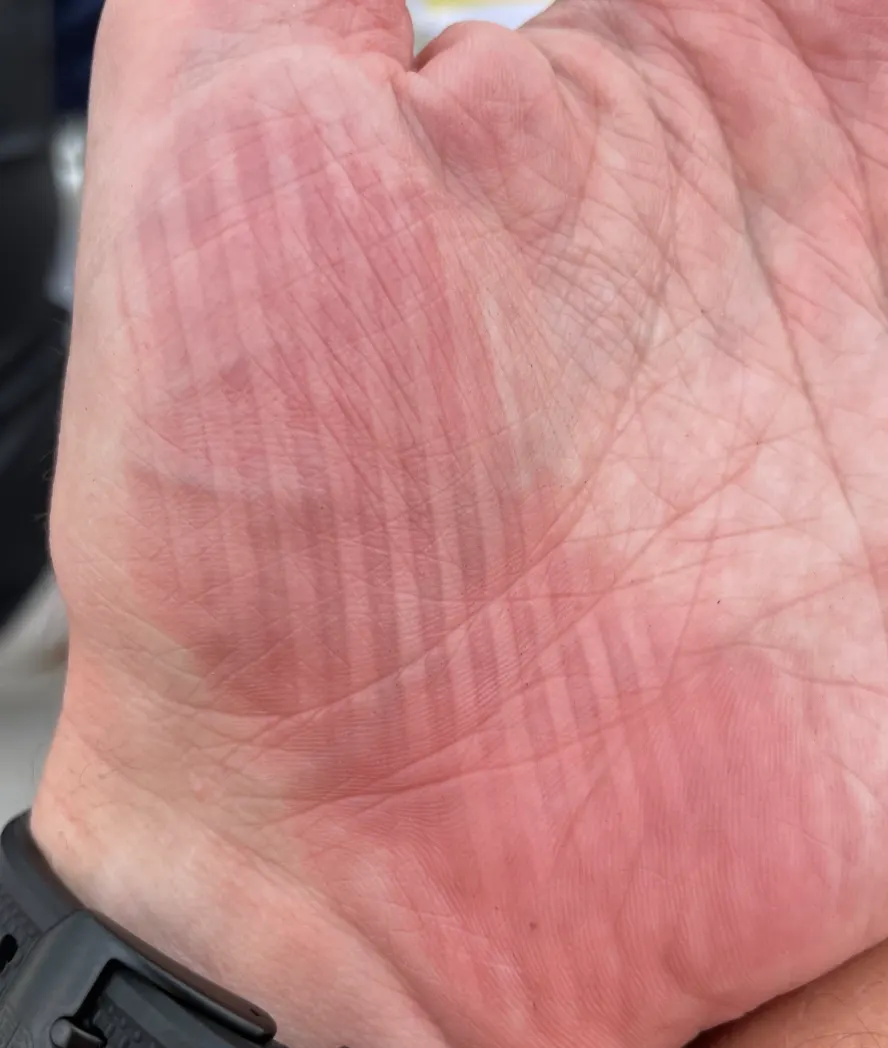
There is a genuinely inherited relative in this family of conditions: familial cold urticaria, part of a group of rare autoinflammatory syndromes that pass down through generations and produce hives after cold exposure, often with fever and joint pain.
That is a different condition from dermatographia, and it is rare. It comes up here only because if several people in your family get hives with fevers and aching joints from childhood, that pattern deserves a specialist rather than a self-diagnosis of skin writing.
If your child has it
Dermatographia is common in children and teenagers, and childhood cases are more likely than adult ones to fade on their own. The most useful things you can do are unglamorous: keep nails short, keep skin moisturized so the itch–scratch loop has less to feed on, and treat it as a nuisance rather than an illness so it does not become a source of anxiety.
A pediatrician or dermatologist can confirm it in seconds with a blunt stroke on the back, and can advise on child-appropriate antihistamine dosing. What you should not do is assume it was passed down and therefore permanent — neither half of that is well supported.
What to tell a doctor
Family history is still worth mentioning even though it is not diagnostic. Tell them about relatives with hives, eczema, asthma, hay fever, or thyroid disease — that cluster is more informative than whether anyone else specifically writes on their skin, and it can prompt the thyroid check that occasionally changes the whole picture.
Find out what's driving your dermatographia
Answer 12 quick questions and get a personalized severity score, your top drivers, and a staged 30-day plan built around your own skin.
Get My Dermatographia ScoreFrequently asked
- Can dermatographia be passed from parent to child?
- Not directly. There is no known single gene for it. What can be inherited is a general tendency toward allergic and mast cell reactivity, which makes the condition somewhat more likely but far from certain.
- Is dermatographia genetic or autoimmune?
- Neither label fits cleanly. It is an inducible urticaria driven by mast cell release. A subset of chronic urticaria cases have an autoimmune component, and susceptibility appears partly heritable, but dermatographia itself is classed as acquired.
- My child writes on their skin — should I be worried?
- Usually not. It is common in children, harmless in itself, and more likely to fade over time than adult-onset cases. Get it confirmed by a clinician if it is itchy enough to disturb sleep or school.
Sources
Clinical background on this page is checked against the following published sources. My own experience and interviews are labelled as such in the text.