Dermatographia and Hormones: Perimenopause, Periods and Pregnancy
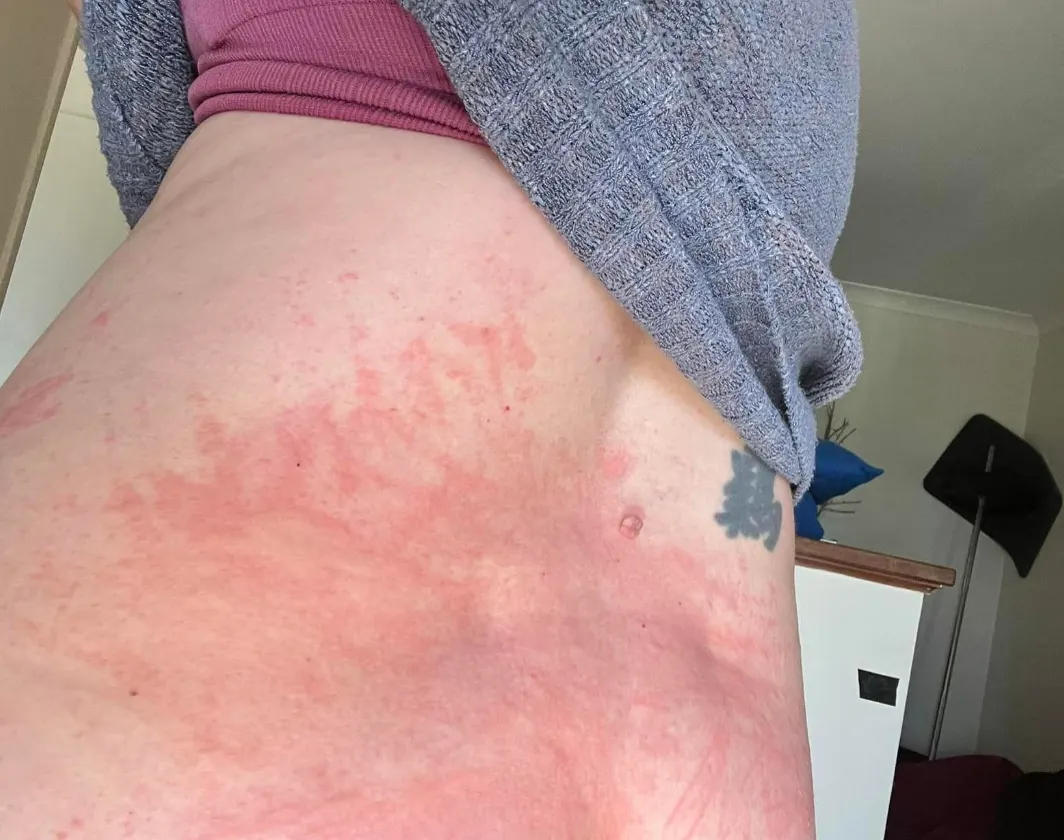
Short answerEstrogen and progesterone both influence how easily mast cells release histamine, so dermatographia commonly appears or worsens during perimenopause, in the days before a period, and during pregnancy or the postpartum months. The condition itself is the same; the hormonal shift lowers the threshold at which your skin reacts. Tracking symptoms against your cycle is the fastest way to confirm the pattern, and daily antihistamine cover through the predictable flare window is the usual first step.
Why hormones show up in this story at all
Dermatographia is a mast cell problem. Mechanical pressure destabilizes mast cells in the skin, they release histamine, small blood vessels widen and leak, and a raised line appears where you scratched. Anything that makes those cells easier to tip over makes the reaction bigger — and sex hormones do exactly that.
Mast cells carry estrogen receptors. In laboratory work, estrogen makes mast cells release their granules more readily, and progesterone tends to have the opposite, stabilizing effect. That is the mechanism behind a pattern that thousands of people describe without ever hearing the word mast cell: the skin behaves differently at different points in the month, and differently again once the cycle itself starts changing.
None of this makes hormonal dermatographia a separate disease. It is the same condition with a moving threshold.
Perimenopause: the most common version of this
Perimenopause is the phase before periods stop for good, and it can run for years. Estrogen does not glide downward in it — it swings, sometimes to levels higher than in a normal cycle, then drops sharply. Those swings are the part that skin notices.
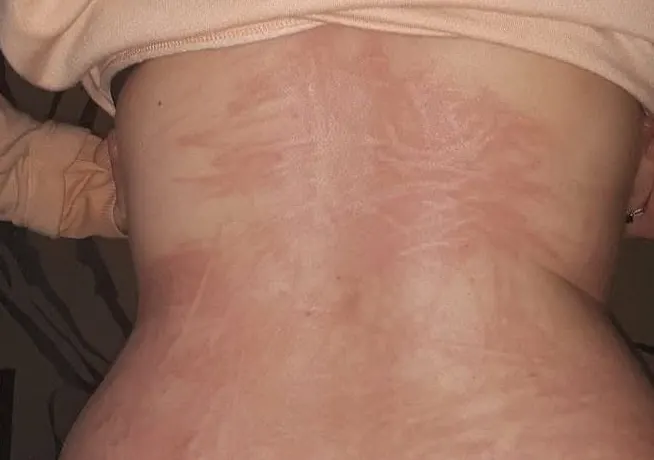
A lot of people who reach this site in their forties describe the same thing: skin that was unremarkable for decades suddenly writes. A bra strap leaves a raised band. A stretch after gardening leaves fingernail lines that stay for twenty minutes. Nothing about their life changed, so the trigger feels invisible.
It is worth saying plainly that perimenopause causes plenty of other itching too — dropping estrogen thins skin and reduces its ability to hold water, which is dry, all-over itch rather than a raised line where you scratched. You can have both at once, and they need different responses: barrier care for the dryness, antihistamines for the welts.
The week before your period
The luteal phase — the roughly two weeks between ovulation and your period — is where cyclical flares cluster. Progesterone peaks and then falls off a cliff in the days before bleeding starts, and that fall is when many people report their skin is at its most reactive.
There is a rare and much more dramatic condition at the far end of this spectrum called autoimmune progesterone dermatitis, where a rash appears on the same days of every cycle and clears when the period ends. That is not what most people with cyclical dermatographia have, but if your reaction is tightly locked to the same three or four days every single month, it is worth naming to a dermatologist.
For everyone else, the practical version is simpler: if you know which week is bad, you can cover it rather than react to it.
Pregnancy and the months after
Pregnancy goes in both directions. Some people find their skin calms considerably, particularly in the second trimester; others develop dermatographia for the first time while pregnant. Both are reported, and neither predicts the other.
Postpartum is the harder window. Hormones drop fast, sleep disappears, and stress runs high — three things that each independently lower the reaction threshold. A flare that starts in the first few months after birth often has all three behind it, not one.
Medication choices in pregnancy and breastfeeding are genuinely a clinician's call, not an internet one. Several second-generation antihistamines are widely used in pregnancy and some are considered compatible with breastfeeding, but which one and at what dose depends on you. Ask; do not guess, and do not stop a prescribed medicine on the strength of a web page.
Thyroid: the check worth asking for
Chronic urticaria and autoimmune thyroid disease overlap far more than chance would explain, and thyroid problems are themselves more common in the years around menopause. If your skin has changed and you also have fatigue, weight change, hair thinning, or temperature intolerance, thyroid function and thyroid antibodies are a reasonable thing to ask your doctor to check.
It will not always find anything. When it does, treating it can change the skin picture entirely, which makes it one of the higher-value tests on the list.
What to actually do about it
The internal trigger is not something you can avoid the way you can avoid a scratchy sweater, so the plan shifts from avoidance to cover and evidence.
- Track for two or three cycles. Note the date, a 0–10 severity number, and anything obvious like heat, alcohol, or a bad night. Two months of that turns a vague feeling into a pattern a doctor can act on.
- Take a daily non-drowsy H1 antihistamine through the predictable window rather than only after a reaction. Prevention works far better than rescue in this condition.
- Treat the dryness separately. A fragrance-free ceramide moisturizer twice a day addresses the perimenopausal itch that antihistamines will not touch.
- Lower the mechanical load in the bad week: looser waistbands, no underwire, softer bedding, cooler showers.
- Bring the tracking log to your appointment. Cyclical patterns are taken much more seriously on paper than in a sentence.
Find out what's driving your dermatographia
Answer 12 quick questions and get a personalized severity score, your top drivers, and a staged 30-day plan built around your own skin.
Get My Dermatographia ScoreFrequently asked
- Can menopause cause dermatographia?
- Menopause and perimenopause do not cause the condition outright, but the estrogen swings of perimenopause make skin mast cells release histamine more readily, which is why many people notice skin writing for the first time in their forties or fifties.
- Why is my dermatographia worse before my period?
- Progesterone falls sharply in the days before bleeding starts, and that drop coincides with the most reactive window for many people. If it recurs on the same cycle days every month, mention it to a dermatologist.
- Will dermatographia go away after pregnancy?
- Sometimes. Flares that begin in pregnancy often settle once hormones stabilize, but the postpartum months — with disrupted sleep and high stress on top of the hormonal drop — can be worse before they get better.
- Can hormone replacement therapy help or worsen skin writing?
- Both are reported. Steadier hormone levels help some people, while others notice more reactivity after starting. It is worth tracking symptoms for the first two or three months and reporting the change to whoever prescribed it.
Sources
Clinical background on this page is checked against the following published sources. My own experience and interviews are labelled as such in the text.